

Getting the length of your graduation gown right is one of the most important details for looking sharp on your big day. The sweet spot? A hem that lands somewhere between your knee and your ankle. Aiming for that classic mid-calf length ensures you look put-together in photos and honor the tradition of the ceremony.
Finding Your Perfect Graduation Gown Length
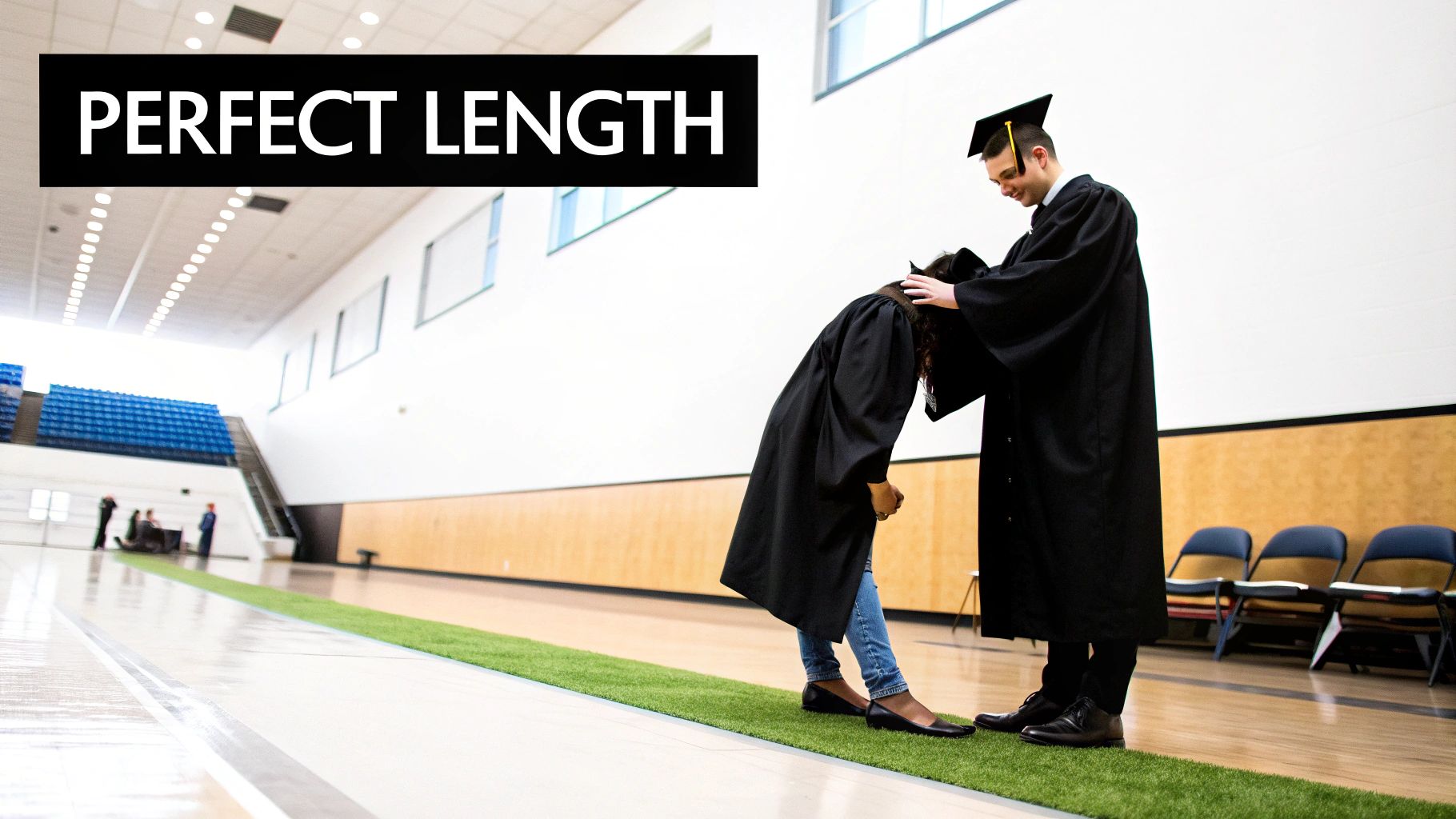
Think of your graduation gown as more than just clothing—it's the uniform that celebrates all your hard work. Getting the fit right is essential, and nothing matters more than the length.
If it's too short, it can look a bit awkward and informal. If it’s too long, you risk tripping as you walk across the stage to get your diploma. That mid-calf standard isn't just for looks; it strikes the perfect balance between formality and safe, easy movement.
Your Height Is the Key
Here’s the good news: sizing a graduation gown is incredibly simple. It’s based almost entirely on your height. You can forget about complicated chest or waist measurements.
Gown manufacturers design sizes to correspond directly to your height, measured from the top of your head to the floor. This makes finding the right fit for high school caps and gowns or more elaborate university regalia a breeze.
Pro Tip: Always measure your height without shoes on. The gown is designed to drape correctly based on your natural height, not the extra inches you get from your dress shoes or heels.
To make it even easier, here’s a quick reference table. Just find your height, and you’ll see the recommended gown size right next to it.
Quick Gown Length and Size Guide by Height
| Wearer's Height | Recommended Gown Size | Typical Gown Length (Inches) |
|---|---|---|
| 4'6" – 4'8" | 39 | 39" |
| 4'9" – 4'11" | 42 | 42" |
| 5'0" – 5'2" | 45 | 45" |
| 5'3" – 5'5" | 48 | 48" |
| 5'6" – 5'8" | 51 | 51" |
| 5'9" – 5'11" | 54 | 54" |
| 6'0" – 6'2" | 57 | 57" |
| 6'3" – 6'5" | 60 | 60" |
As you can see, the sizing system is designed to take the guesswork out of the process, giving you a reliable starting point for finding that perfect fit.
Why Gown Length Is a Centuries-Old Tradition
Ever wondered why graduation gowns are so long? It’s not just a random style choice. That sweeping length is a tradition that goes back hundreds of years to the very first European universities. The specific length of graduation gown is a direct nod to the scholarly robes worn in the Middle Ages.
Believe it or not, those early gowns were practical. In the unheated, drafty halls of universities like Oxford, long, heavy robes were essential for warmth. They also acted as a great equalizer, creating a uniform look that put the focus on scholarship, not social status.
That spirit of unity and academic identity is still a huge part of graduation today. Over the centuries, the tradition evolved, and specific gown lengths and styles were created to represent different levels of academic achievement.
From Medieval Robes to Modern Regalia
The idea of using a gown to show academic rank became more structured over time. When the tradition came to the United States, it brought with it a clear set of rules. For example, a bachelor's gown is designed to fall around mid-calf, has simple pointed sleeves, and is always worn closed.
As a scholar moves up the academic ladder, their regalia gets more detailed. A master's gown is a bit longer and has distinctive oblong sleeves. The doctoral gown is the longest and most impressive of all, featuring full, bell-shaped sleeves decorated with rich velvet bars. You can dive deeper into this fascinating backstory in our post on the history of academic regalia.
The graduation gown is more than just an outfit; it's a symbolic garment connecting every graduate to a long and proud history of scholarly pursuit. Each specific length and sleeve style tells a story about the wearer's academic journey and accomplishments.
Upholding a Visual Legacy
These very specific lengths for each academic level are maintained to preserve the visual heritage of the commencement ceremony. When a sea of graduates stands together, that standardization creates a powerful, dignified image that honors both their hard work and the institution's legacy.
For anyone earning an advanced degree, the differences are especially meaningful. The extra length and unique sleeves of master's and doctoral gowns set them apart from the undergraduates, visually marking their deeper expertise. It’s a visual hierarchy that adds a profound layer of meaning to the whole ceremony.
How to Measure for a Perfect Gown Fit
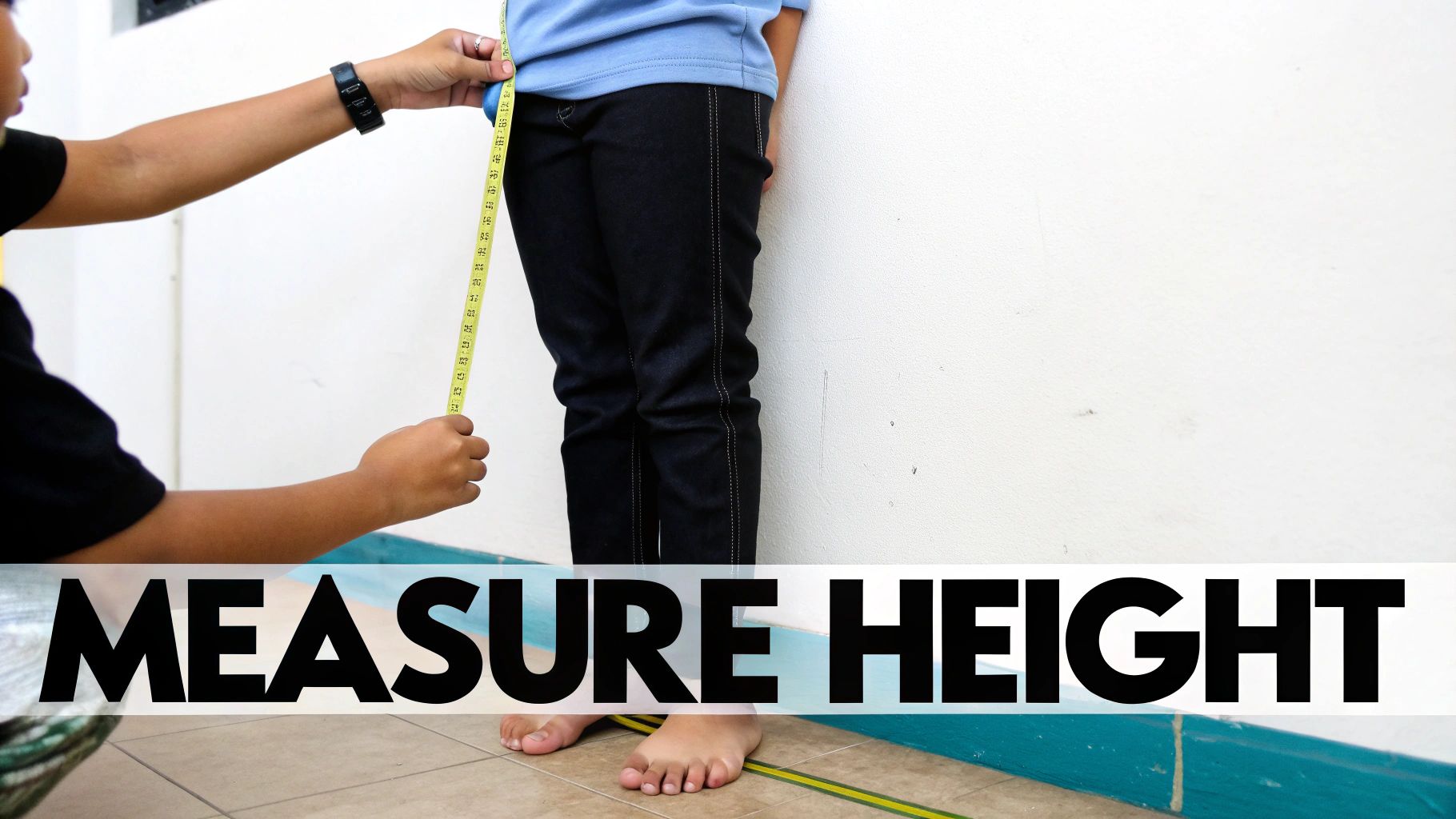
Thankfully, taking the guesswork out of gown sizing is much easier than it seems. Unlike getting fitted for a suit or a formal dress, figuring out the right length of graduation gown really just boils down to one key measurement. It's a quick and simple process.
The single most important factor is your height. Graduation gowns are sized to correspond directly to how tall you are, which helps create that uniform, dignified look across the entire graduating class. This straightforward system means you don't have to get bogged down with chest, waist, or inseam numbers.
Step 1: Your Foundational Measurement
To get started, you'll just need a friend to help and a reliable measuring tape to ensure you get an accurate number. Just follow these simple steps to get that all-important measurement:
- Take Off Your Shoes: Your shoes will add extra height and throw off the gown's drape, so be sure to measure barefoot. Stand up straight against a wall with your back flat and your feet together.
- Look Straight Ahead: Keep your chin parallel to the floor. This posture ensures you're standing at your true, natural height without slouching or stretching.
- Measure from Head to Toe: Have your friend measure from the very top of your head straight down to the floor. That number is exactly what you'll use to find your size on the sizing chart.
Once you have your height, you can confidently find your match. If you want a more detailed walkthrough, we've got even more tips in our complete guide on how to measure for your cap and gown.
Step 2: Considering Gown Fullness
While height determines the length, some graduates might need a bit more room through the body for a comfortable fit. This is where a quick secondary check comes in.
If you have a broader build, keep an eye out for suppliers that offer a "full fit" option. These gowns are designed with extra room across the chest and shoulders without adding any extra length. This prevents the gown from feeling tight or restrictive and ensures it drapes properly for the ceremony.
Crucial Tip: Don't forget to account for the shoes you plan to wear on graduation day! While you measure barefoot, the final hemline will obviously be affected by your footwear. It's a great idea to try on your gown with your actual shoes to make sure it hangs perfectly—ideally right at that classic mid-calf spot.
This final check is your best bet to avoid any last-minute surprises. It confirms the gown isn’t so long that it becomes a tripping hazard or so short that it looks awkward. A perfect fit means you can walk across that stage with total confidence.
Gown Lengths for Every Academic Level
The length of your graduation gown isn't just about getting the right fit; it's a tradition that visually represents your academic journey. Think of it like a uniform that signifies rank. The specific cut, sleeve style, and even the length of your gown tells a story about how far you've come, creating a clear and respected visual language during the commencement ceremony.
Each academic level has its own distinct regalia. As you climb the educational ladder, the gown becomes more elaborate. This progression ensures that from the moment you walk into the ceremony, your hard work and the degree you've earned are instantly recognizable.
High School and Bachelor’s Gowns
For graduates earning their high school diploma or bachelor’s degree, the gowns are the simplest. The design focuses on a clean, uniform look that highlights the collective success of the entire graduating class.
- Length: The standard here is a mid-calf length. The gown should fall comfortably below the knee but stay well above the ankle. This looks formal and polished without becoming a tripping hazard as you walk across the stage.
- Sleeves: You can always spot a bachelor's gown by its long, pointed sleeves. They’re kept simple and unadorned.
- Overall Style: The gown features a basic yoke at the top and is meant to be worn closed, which keeps the look neat and tidy.
Today’s sizing charts make it easy to get this right. For example, if you're between 5'3" and 5'5", you'll likely need a size 48 gown to hit that perfect mid-calf spot. You can learn more about how height and weight translate to the right fit by exploring the latest graduation gown size charts.
To better see how these gowns stack up against one another, let's break down their key features.
Graduation Gown Features by Academic Level
This table offers a quick comparison of gown characteristics across the different academic degrees, from the familiar bachelor's gown to the distinguished doctoral regalia.
| Academic Level | Typical Gown Length | Sleeve Style | Key Features |
|---|---|---|---|
| Bachelor's | Mid-calf | Long, pointed, and open | Simple yoke, worn closed for a uniform look. |
| Master's | Mid-calf | Oblong, closed at the end with a slit for the arm. | The most distinctive feature, setting it apart from bachelor's gowns. |
| Doctoral | Fuller, longer cut | Large, bell-shaped sleeves | Adorned with 3 velvet chevrons on sleeves and velvet front panels. |
As you can see, while the length might be similar for bachelor's and master's degrees, the real tell-tale signs are in the sleeves and decorative elements.
Master’s Gowns
When you move up to a master's degree, the gown gets a noticeable upgrade to signify that next level of academic accomplishment. While it often hangs at the same mid-calf length as a bachelor's gown, the sleeves are what truly set it apart.
A master's gown has unique, oblong sleeves that are sewn shut at the end. Your arms actually come out through a slit at the wrist, allowing the long, decorative part of the sleeve to hang down. It's the key identifier of a master's graduate.
This might seem like a small detail, but it's a crucial part of academic tradition. It immediately distinguishes master's candidates from the sea of undergraduates they might be graduating with.
Doctoral Gowns
The doctoral gown is, without a doubt, the most impressive piece of academic regalia. It’s designed to reflect the highest level of scholarship and stands out in every way, from its length and cut to its rich, luxurious materials.
The length of graduation gown for a doctorate is typically much fuller and a bit longer than the others, giving it a more substantial and commanding presence on stage.
But there’s more that makes it special:
- Sleeves: Doctoral gowns feature dramatic, bell-shaped sleeves that add to their distinguished look.
- Velvet Trim: They are always trimmed with rich velvet. You’ll see three velvet bars, called chevrons, on each sleeve, plus wide velvet panels running down the front of the gown. This velvet can be black or a specific color representing the graduate’s field of study.
These details make the doctoral gown unmistakable. To really get into the history and symbolism behind it all, check out our complete guide to the PhD cap and gown. It's the ultimate symbol of years of dedication and a true mark of expertise.
How to Style Your Complete Graduation Outfit
You’ve got the right length of graduation gown—now it's time for the fun part: pulling your whole look together. Styling your graduation outfit is all about creating a polished, cohesive appearance where every piece works in harmony. It’s about making sure your cap, gown, hood, and stole all look like they belong together as you walk across that stage.
Think of your gown as the canvas. The accessories, like your academic hood or stole, add the vibrant colors and layers that tell your unique academic story. A master's or doctoral hood, for instance, is specifically designed with a longer, fuller cut to drape perfectly over the more elaborate gowns for those degrees. Likewise, any graduation stoles you wear should lay flat and smooth against your chest, ending well above your gown's hemline to keep the entire outfit looking balanced and sharp.
What to Wear Underneath
What you choose to wear under your gown is surprisingly important. The name of the game is comfort and class, without adding a lot of extra bulk that could make you overheat.
- Keep It Light: Ceremonies can get warm, fast. Stick with lightweight, breathable fabrics to stay comfortable in a packed auditorium or on a sunny field.
- Professional Attire: A classic collared shirt, a simple blouse, dress pants, or a tasteful dress are all great options. It's best to skip the casual stuff like jeans and t-shirts for this occasion.
- Comfortable Shoes: This is a big one. You'll be standing around and walking more than you think. Choose dress shoes or low heels that won't have you wincing by the end of the day.
This diagram helps visualize how the regalia for each academic level is distinct, building in complexity from one degree to the next.

As you can see, the higher the degree, the more distinguished the regalia becomes. It's a visual representation of your academic journey and a tradition recognized all over the world.
A Cohesive and Global Tradition
The tradition of graduation attire is a massive one. With more than 200 million students graduating across the globe each year, the demand for well-fitting regalia has never been greater. This global market has pushed suppliers to offer an incredible range of gown lengths and sizes, ensuring every graduate can find a perfect fit. You can read more about this growing market on OpenPR.
In the end, every single piece of your outfit, from your caps and gowns right down to the tassel, should feel like it's part of a unified whole. Each element is steeped in tradition, coming together to create a dignified look that truly honors your amazing accomplishment.
Common Questions About Graduation Gown Length
Figuring out the final details for your graduation outfit can bring up a few last-minute questions. To make sure you feel totally confident on the big day, we’ve put together some simple answers to the most common questions about the length of a graduation gown and how it should fit.
Think of this as your quick guide to getting it right, so you can focus on celebrating your achievement without any wardrobe worries.
How Far Off the Ground Should a Gown Be?
The classic, proper look for a graduation gown is for the hem to hang somewhere around your mid-calf. A good rule of thumb is about 8 to 10 inches off the floor.
This isn't just about tradition; it's also practical. This length looks formal and sharp in photos, but more importantly, it keeps you from tripping as you walk across the stage or navigate stairs.
A pro tip for checking the length: try on your gown with the exact shoes you'll be wearing on graduation day. This is the only way to know for sure that the hem falls perfectly and safely.
Are Gowns Sized Differently for Men and Women?
Nope! Graduation gowns are almost always unisex, meaning they use one sizing system for everyone. The single most important factor that determines your gown size is your total height, measured from head to toe.
Sizing charts are built around height to create that uniform, traditional appearance for the entire graduating class. While some suppliers offer "full fit" or plus-size options for a little extra room through the chest and shoulders, the overall length is still based on your height.
What If My Gown Is Too Long or Too Short?
If you find your gown is just a little too long, the easiest solution is a temporary one. You can use hem tape or a few well-placed safety pins on the inside of the hem to bring it up. It’s best to avoid any permanent sewing, especially if you’re renting the gown.
On the other hand, a gown that’s too short—hanging above your knees—really doesn't fit the formal look of the ceremony. In either case, the best first step is to contact your supplier right away. Exchanging it for the correct size is always a better option than trying to make a bad fit work.
At Gradshop, we make finding your perfect fit easy. Browse our full collection of high-quality caps and gowns to make sure you look and feel your best on graduation day.