

Getting the right fit for your cap and gown isn't just about looking good in photos—it’s about being comfortable on a day you'll remember forever. Let's be honest, nobody wants to be fidgeting with a tight cap or tripping over a gown that’s too long during their big moment.
The good news is that figuring out your size is actually pretty simple. It all boils down to two core measurements: your height for the gown and your head circumference for the cap. Getting these right is the key to a perfect fit.
A Quick Guide to Nailing Your Graduation Fit
While graduation regalia has a long, formal history, modern sizing has thankfully become much more straightforward and reliable. You don't need to be a tailor to get it right, but a little bit of care goes a long way.
The biggest mistakes we see are simple ones: people measuring themselves while wearing shoes, or pulling the measuring tape so tight it skews the number. We’ll walk you through the specifics later, but first, let’s get a clear picture of exactly what you need to measure.
The Key Numbers for Your Regalia
Every piece of your graduation outfit is sized differently. Gowns rely almost entirely on your height, while caps, tams, and hoods are all about getting precise head and body measurements.
- For the Gown (Height): This is the big one. You'll need to measure from the very top of your head straight down to the floor. And a pro tip: kick off your shoes first!
- For the Gown (Chest): While height determines the length, your chest measurement ensures the gown drapes correctly and closes without pulling. Just measure around the fullest part of your chest. This is especially important for full-fit or plus-size gowns.
- For the Cap (Circumference): This measurement makes the difference between a cap that sits perfectly and one that’s either squeezing your head or threatening to fly off. You’ll measure the part of your head where a cap would naturally sit.
Today’s cap sizing is very consistent. Most students fall within a range from XS (48 cm) to XXL (61 cm). A size M cap, for example, is designed for a head measuring 54–55 cm, which is a very common size for high school graduates. For a complete breakdown, you can check out the full 2025 graduation cap size chart to see where you land.
Our Best Advice: Grab a soft, flexible measuring tape—the kind you'd find in a sewing kit. A rigid metal tape measure from a toolbox just won't curve properly around your head or body, and you'll end up with the wrong size. It’s a small detail that makes a huge difference.
To make things even easier, we've put together a quick-reference table. Use it as your checklist before you start browsing the Gradshop collections to find your perfect regalia.
Essential Graduation Regalia Measurements at a Glance
This table breaks down exactly what you need for each item. Think of it as your cheat sheet for getting accurate measurements quickly and easily.
| Regalia Item | What to Measure | Primary Sizing Factor | Quick Tip |
|---|---|---|---|
| Graduation Gown | Full body height & chest | Height (Head to Toe) | Stand straight without shoes for an accurate length measurement. |
| Mortarboard Cap | Head circumference | Head Circumference | Measure about one inch above your eyebrows and ears. |
| Doctoral Tam | Head circumference | Head Circumference | Tams are fitted; an exact measurement is crucial for comfort. |
| Graduation Stole | Not applicable | Height of Wearer | Choose a standard length that complements your gown's length. |
With these numbers in hand, you're well on your way to finding regalia that looks and feels like it was made just for you.
How to Measure for Your Graduation Gown
Getting your graduation gown to fit perfectly isn't complicated. It really just comes down to two simple measurements: your height and your chest. Let's walk through how to get these right so you look and feel great on the big day.
First things first, your height is the single most important number you'll need. It determines the length of the gown, and the goal is for it to hang nicely at mid-calf.
Take off your shoes and stand with your back flat against a wall. Ask someone to use a flexible measuring tape to measure from the very top of your head straight down to the floor. That’s it. This one number is what we use to get the length just right.
Getting the Chest Measurement Right
Next up is your chest. This measurement ensures the gown fits comfortably across your shoulders and body, without feeling too tight or too baggy.
Grab a soft measuring tape and wrap it around the fullest part of your chest, usually right under your armpits. Make sure the tape is level all the way around. It should be snug, but not so tight that it's digging in. A good rule of thumb is that you should be able to slide one finger comfortably underneath the tape. This is especially important for anyone who might need a 'full fit' or plus-size gown, as it prevents any pulling or straining of the fabric.
A Quick Tip from Experience: Don’t hold your breath or puff out your chest. Just stand naturally and breathe normally. You're trying to get a comfortable, true-to-life measurement for a gown you'll be sitting and walking in for a few hours.
From Your Numbers to the Right Size
Once you have your height and chest measurements, you're ready to find your size. Think of a sizing chart as the bridge connecting your unique measurements to the perfect gown.
This visual guide breaks down the simple flow of measuring for your regalia, from the gown to the cap.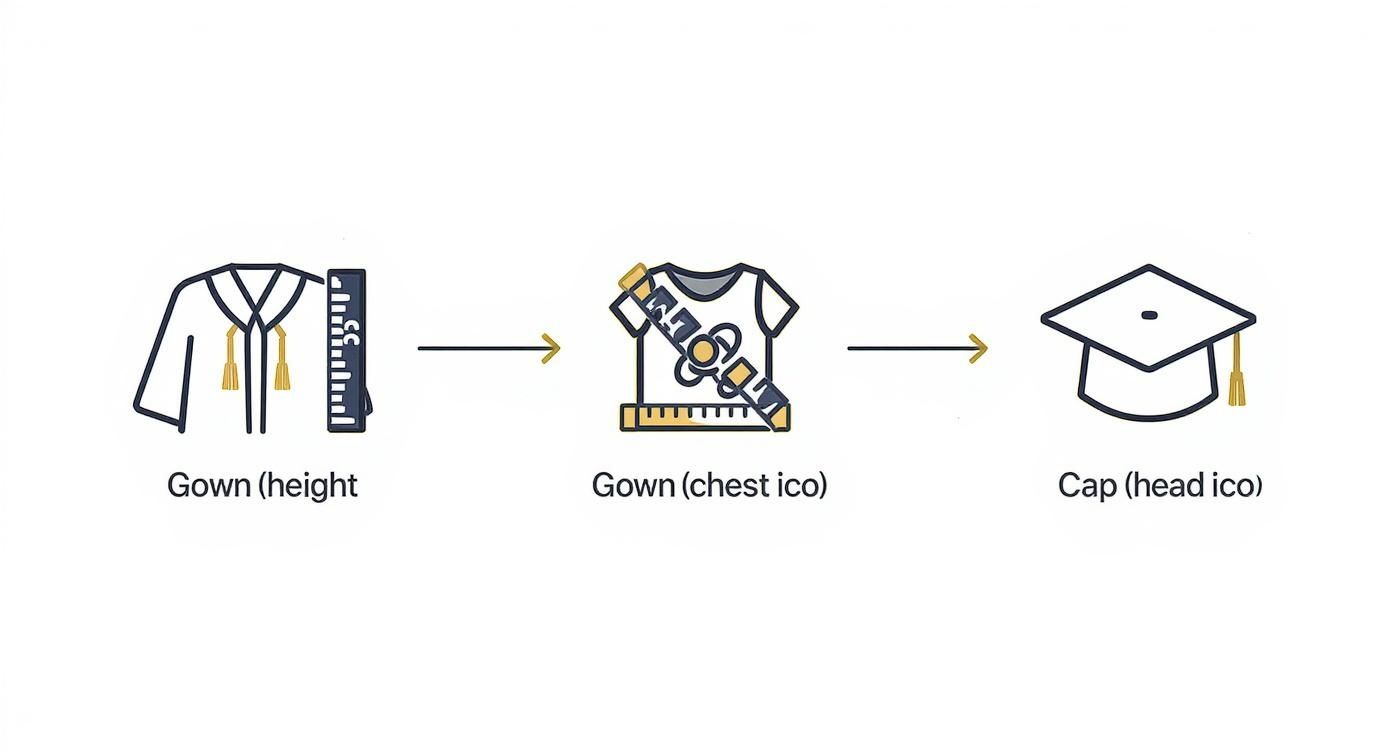
As the infographic shows, it’s a straightforward process: height, then chest, and finally your head for the cap.
Did you know that over 60% of graduates in the U.S. and U.K. order gowns in sizes 45 to 51? These sizes directly correspond to the most common adult height ranges, which just goes to show how critical getting an accurate height measurement really is.
Matching your numbers to the chart is easy. If you're 5'8", for instance, you'll look for the size that covers the 5'7" to 5'9" range. If your chest measurement puts you in the full-fit category, you’ll simply select that option within your correct height bracket.
For a complete breakdown, take a look at our comprehensive graduation cap and gown size chart.
Finding the Right Fit for Your Graduation Cap
Nothing ruins a photo op faster than a graduation cap that’s constantly slipping off or squeezing your head. On a day this important, the last thing you want to worry about is your regalia. Thankfully, getting a comfortable, secure fit is easy, and it all boils down to one simple measurement.
First, grab a soft, flexible measuring tape—the kind a tailor or seamstress would use. A stiff metal tape measure from a toolbox just won't work here, as it can't curve properly around your head. Wrap the tape around the widest part of your head, which is usually about one inch above your eyebrows and ears. This is right where the cap is designed to sit.
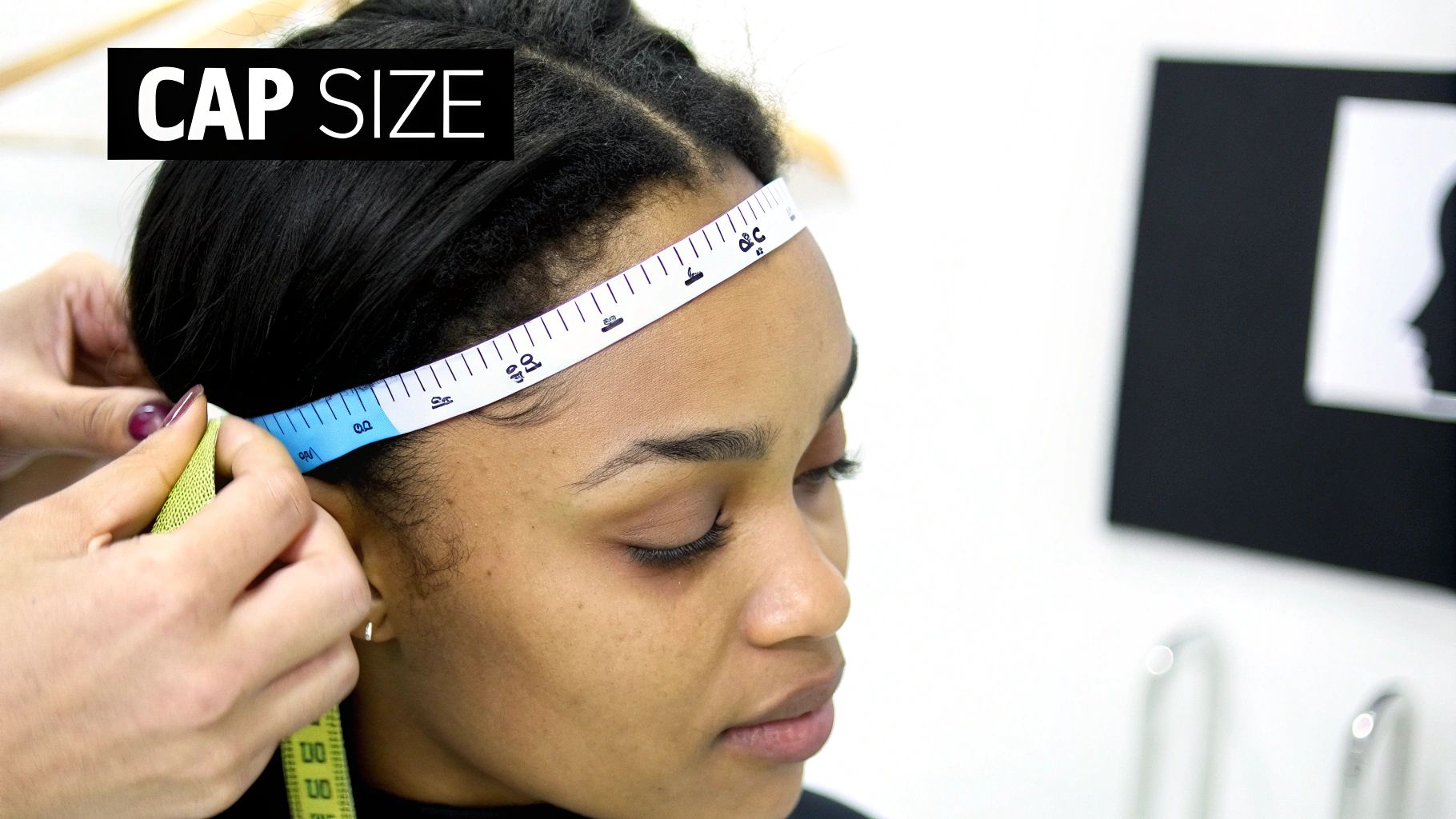
From Measurement to Perfect Fit
Once you have that number in inches or centimeters, you have everything you need. This single measurement corresponds directly to a sizing chart to find your perfect match. Make sure the tape is snug but not uncomfortably tight—you should be able to slide a finger underneath it.
Real-World Tip: Your hairstyle can make a huge difference. If you’re planning on an elaborate updo, braids, or anything that adds volume, measure your head with your hair styled that way. I've seen students need to go up a full size because of their hairstyle, and it's much better to know that in advance!
This focus on a precise fit isn't new; it's part of a tradition that goes back centuries. Academic dress began to take shape in the 13th century, and by the 16th century, specific sizing was already being used to signify academic status. The Congressional Research Service notes that the modern mortarboard is a direct descendant of this tradition, a universal symbol whose proper fit is still determined by head circumference. You can read more about the long history and significance of the mortarboard cap.
Mortarboards vs. Doctoral Tams
It's also worth noting that not all caps are created equal, and the style affects the fit.
- Standard Mortarboard Caps: These are what most high school and undergraduate students wear. They typically have an elastic band built into the back, which provides a bit of wiggle room and makes the fit more forgiving.
- Doctoral Tams: Often made of plush velvet, these are more structured and precisely fitted, usually without any elastic. For a tam, an accurate head measurement is absolutely critical to ensure it’s comfortable enough to wear all day.
Taking a minute to get this measurement right ensures your cap stays put from the moment you march in until you toss it in the air. It’s a small detail that makes a big impact on your comfort and confidence.
Sizing Hoods, Stoles, and Doctoral Regalia
Once you move into master's and doctoral degrees, the regalia gets a bit more complex than the standard cap and gown. Accessories like hoods, stoles, and tams are powerful symbols of higher academic achievement, so understanding how they work is key to wearing them with the distinction they deserve.
Unlike a gown, an academic hood isn't something you need to measure for. Their sizes are standardized based on the degree you've earned. By tradition, the length and shape are predetermined—a master's hood is always shorter than a doctoral hood, for instance. They're designed to hang perfectly against your back without any personal adjustments. The important part isn't the fit, but making sure it displays the correct colors for your university and field of study.
Choosing Stoles and Cords
Stoles and honor cords are a different story. While you don't need a tape measure, you do have a choice to make, and it’s mostly about aesthetics. Most stoles are made in standard lengths that look great with the average gown. The idea is for the stole to hang down and end somewhere between your waist and the gown's hem, giving you a balanced, sharp look.
- Too short: A stole that sits too high up on your chest just looks a bit off.
- Too long: If it hangs almost to the bottom of the gown, it becomes a distraction.
Think of it like picking the right length for a tie—it needs to be proportionate to your torso. When you're looking at Gradshop stoles, just keep your height in mind. For most graduates, the standard size is perfect. Only if you're exceptionally tall or short would you even need to think about a custom length.
A great rule of thumb for stoles is that the ends should fall just below your fingertips when your arms are resting naturally at your sides. This ensures a classic, well-proportioned appearance in photos and on stage.
Understanding Doctoral Regalia
Doctoral regalia is the most elaborate of all, with unique details that demand a proper fit. The gown itself is more ornate, with velvet chevrons on the sleeves and a matching velvet panel down the front. The biggest difference, though, is often the headwear. Most doctors trade the traditional mortarboard for a tam, which is a soft, multi-sided cap.
Because a tam is meant to be more fitted than a standard cap, getting an accurate head circumference is absolutely essential for comfort. You can't rely on a stretchy elastic band here, so a precise measurement is non-negotiable.
To really appreciate these distinctions, it helps to learn more about the traditions behind them. You can dive deeper by reading about what you should know about doctoral graduation regalia. Taking a few minutes to understand these details ensures your incredible academic achievement is represented perfectly on the big day.
Common Measurement Mistakes to Avoid
Even a tiny error when you measure for a cap and gown can create a surprisingly big problem on graduation day. Trust me, you don't want to be distracted by a gown that's dragging on the floor or a cap that's pinching your forehead during the ceremony. Let’s walk through the most common pitfalls I've seen over the years and how to sidestep them for a perfect fit.
The absolute number one mistake is measuring your height while wearing shoes. It seems obvious, but it happens all the time. Sneakers, heels, or boots can easily add one to three inches, which is more than enough to get you a gown that’s way too long. Always kick off your shoes and stand flat on the floor to get a true head-to-toe measurement.
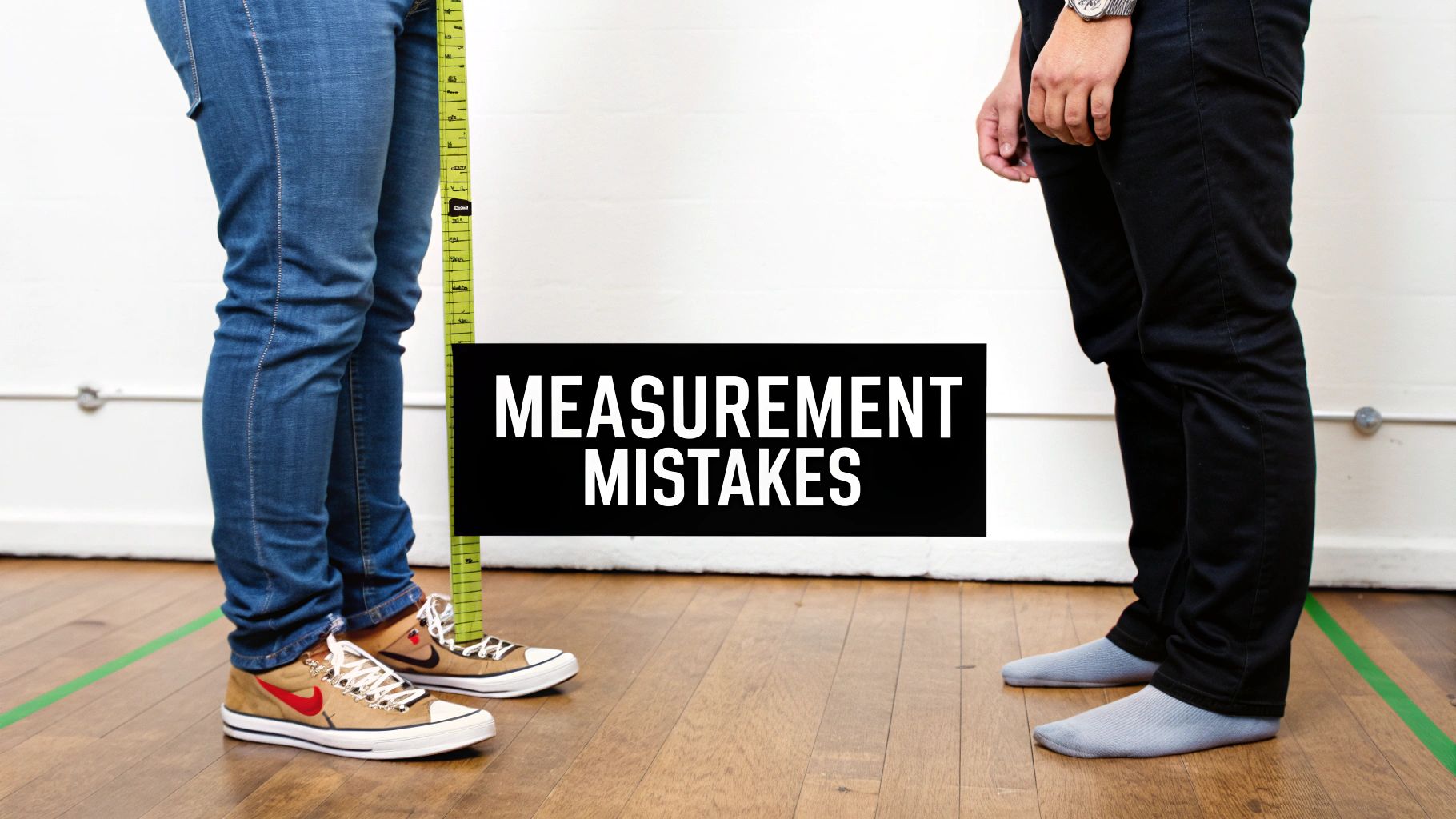
Overlooking Tape Tension and Old Numbers
Another frequent issue is pulling the measuring tape too tight. When you’re measuring your head or chest, the tape should feel snug, but not like it's squeezing you. A good rule of thumb is that you should be able to slide one finger comfortably underneath it. If you yank it tight, you'll end up with a cap that causes a headache or a gown that feels restrictive across the shoulders.
It's also tempting to rely on old measurements or just guess your size. Please don't do it! A measurement you took last year for a suit or dress might not be accurate today. Taking five minutes to get fresh numbers is the single best thing you can do to ensure your regalia fits correctly.
Our Pro Tip: Grab a friend or family member to help. It's incredibly difficult to get an accurate height measurement by yourself, and a second pair of eyes can make sure the measuring tape is straight and level when checking your chest and head. It’s a simple way to prevent common mistakes.
Common Pitfalls and Simple Solutions
Thinking ahead about these potential slip-ups makes the whole process so much smoother. Here are a few other errors we see all the time, along with some easy fixes:
- Using the Wrong Tool: A rigid, metal tape measure from the garage won’t work here. It can't curve properly around your head or chest. Always use a soft, flexible sewing tape measure to get accurate numbers.
- Forgetting Your Hairstyle: This is a big one! If you're planning a voluminous hairstyle, braids, or an updo, measure your head with your hair styled similarly. This can easily add an inch or more to your head circumference and might just bump you up a full cap size.
- Ignoring Full Fit Options: If you have broader shoulders or a larger chest, don't just order a longer gown. Instead, look for the "Full Fit" option that corresponds to your height on the size chart. This gives you extra room through the body of the gown without adding unnecessary length—a common issue we cover in our guide to proper graduation gown length.
Finally, just double-check your numbers before you place your order with Gradshop. It’s the last step to ordering with total confidence. Taking these simple precautions ensures your regalia looks and feels fantastic, so all you have to worry about is celebrating your big achievement.
A Sizing Guide for Schools and Bulk Orders
Getting an entire graduating class fitted for caps and gowns can feel like a monumental task. When you're dealing with hundreds of students, the last thing you want is a logistical nightmare on your hands. The secret isn't just measuring correctly—it's creating a simple, repeatable system from the start.
Your first move should be to give every student a crystal-clear instruction sheet. Don't just tell them what to do; show them. Include simple diagrams for measuring their height (always without shoes!) and their head circumference. And, most importantly, set a hard deadline for them to turn in their numbers. This single step will save you from a world of last-minute stress.
Managing a Bulk Order System
As the measurements start rolling in, your best friend will be a single, master spreadsheet. Get everything consolidated in one place. This gives you a bird's-eye view of your entire order and makes spotting potential issues a breeze before you place your order with a supplier like Gradshop, who often provides discounts for schools buying in bulk.
One of the biggest hurdles is accommodating the wide range of student body types. Your spreadsheet will immediately show you how many students need a "Full Fit" gown or fall outside the most common size ranges. Having this data up front is crucial for making sure every single student feels confident and comfortable.
An Administrator's Tip: I always recommend ordering a few extra gowns in the most common sizes—think for heights between 5'6" and 5'10". These spares are an absolute lifesaver for those inevitable surprises, like a student who forgot to order, a last-minute transfer, or a gown that gets damaged on graduation day.
This kind of proactive planning does more than just simplify logistics; it takes a huge amount of pressure off your shoulders. By setting up a clear process and thinking ahead, you can guarantee every graduate has regalia that fits perfectly, making the ceremony smoother for everyone involved.
Common Sizing Questions Answered
Even after taking careful measurements, a few questions always seem to come up. It's completely normal. Getting these last few details ironed out will give you the peace of mind that everything will look perfect on the big day. Let's walk through the sizing questions we get asked most often.
What if My Measurements Fall Between Two Sizes?
This happens all the time. When it comes to your gown, our advice is almost always the same: size up. Trust us on this. A gown that’s a little bit looser will drape much more gracefully and look far more dignified than one that’s pulling at the shoulders or looks too short. The extra fabric is minimal, but it makes a huge difference in comfort and appearance.
Your cap, on the other hand, is a slightly different story. It really depends on the style.
- Caps with elastic bands are pretty forgiving. You can usually get away with either size, so it just comes down to personal comfort.
- Fitted caps or tams have zero stretch. If you’re right on the edge between sizes, think about how you'll wear your hair that day and go with the larger size for a more comfortable, less restrictive fit.
Here’s a piece of advice we always give: Don't try to outsmart the size chart. It's so much better to have a little extra room in the gown than to have a hem that hits at an awkward length or feel a pinch in your shoulders as you reach for your diploma.
Should I Measure Over My Graduation Outfit?
Excellent question. This is a detail that can really throw off your final fit if you get it wrong. For your height, always measure with your shoes off. Gown sizing is based on your natural height, and even a small heel can add an inch or two, resulting in a gown that’s frustratingly long.
For the chest measurement, just wear a regular t-shirt or something similar. You don't need to wear anything bulky. Graduation gowns are intentionally cut with extra room to easily accommodate the dress shirt, blouse, or dress you'll have on underneath. So unless you plan on wearing a very heavy sweater, your everyday clothes won't affect the fit.
How Far Ahead Should I Measure and Order?
To save yourself from any last-minute panic, the best thing you can do is give yourself a good buffer. We can't stress this enough: try to get your measurements done and place your order at least 4-6 weeks before the ceremony. That window gives us plenty of time for production and shipping, and it also leaves a cushion for any exchanges if the fit isn’t quite right.
At Gradshop, we've fine-tuned our sizing charts to make finding your perfect fit as simple as possible. You can find everything you need for your ceremony by exploring our collections at https://www.gradshop.com.