

Getting your graduation gown length right is a bigger deal than most people think. It’s not just about following a dress code. The ideal gown should hang somewhere between your knee and mid-calf, striking that perfect balance between looking sharp for your big day and not creating a tripping hazard as you walk across the stage. A gown that fits poorly can be a real distraction, and you don't want anything to take away from this once-in-a-lifetime moment.
Why Your Graduation Gown Length Matters

The way your academic regalia drapes is a huge part of your overall look. It’s meant to symbolize your achievement while honoring a tradition that’s been around for centuries. If your gown is too short, it can look a bit awkward and unfinished. On the other hand, one that’s dragging on the floor just looks sloppy. The goal is to project confidence and dignity, reflecting the importance of the occasion.
This tradition of academic dress has some seriously deep roots, dating back over 900 years to the medieval universities of Europe. Originally, these robes were just practical—they kept scholars warm in drafty, unheated halls. But they quickly became symbols of academic rank. Early records from places like Oxford and Cambridge show how gown length was used to differentiate between students and masters, a practice that has stuck around. You can explore the rich history of graduation regalia to see how it evolved around the world.
Honoring Tradition Through Proper Fit
When you wear a gown with the correct length, you're connecting with that long history. Each academic level—from high school to doctoral—has its own standards, and following them helps create a uniform, dignified look for the entire graduating class. Think of it as part of the ceremony itself, a visual cue that you’ve completed your hard work and are ready for what's next.
A well-fitted gown does more than just look good in photos. It conveys respect for the institution, the ceremony, and the academic achievement being celebrated. It's the final piece of a puzzle you've spent years putting together.
Practical Reasons for the Right Length
Beyond tradition, there are some very real, practical reasons to get the fit right. The proper length gives you room to move comfortably, which is key when you're climbing stairs to the stage in front of everyone. A good fit also ensures your clothing underneath is covered just right, pulling your entire look together from head to toe.
Ultimately, choosing the correct gown is a simple but critical step. It shows you've paid attention to the details and are ready for the formality of commencement. This way, you can just relax and soak in the experience without a second thought about your appearance.
How to Measure for Your Gown Accurately
The secret to getting that perfect graduation gown length isn't a secret at all—it's just about accurate measurements. Forget the guesswork that leads to last-minute sizing panics. All you really need is a standard measuring tape and a few minutes to guarantee your regalia fits just right.
Honestly, taking the time to measure properly is the single most important part of ordering your gown. You only need two key measurements: your height and your chest circumference. With those two numbers, you can confidently find your size on any chart.
Getting Your Height Measurement Right
For a truly precise height reading, stand up straight with your back flat against a wall. The most critical part? Take this measurement without shoes on. Even a small heel can throw off the number, which directly impacts how the gown hangs.
Ask a friend or family member to help. Have them place a flat, rigid object (a hardcover book works perfectly) on top of your head, keeping it parallel to the floor. They can then mark where the bottom of the book touches the wall. From there, just measure from the floor up to that mark. This simple trick eliminates the inaccuracies that happen when you try to measure yourself.
Measuring Your Chest for a Comfortable Fit
Next up is your chest measurement. Wrap a flexible measuring tape around the fullest part of your chest, which is usually right under your armpits.
Make sure the tape is level all the way around your back and isn't pulled too tight. A good rule of thumb is that you should be able to slip one finger comfortably underneath it. This measurement is what ensures the gown closes properly without feeling tight or restrictive across your shoulders—a very common fit issue.
While a gown has its own fit considerations, the basic principles of measuring for formalwear are pretty universal. If you want a more detailed walkthrough, this guide on how to measure yourself for a suit is incredibly helpful.
Once you have both your height and chest measurements, you're ready to find your perfect match on the sizing chart.
As you can see in the size chart, your height is the main factor that determines the gown's size code. The chest measurement comes into play when deciding if you need a "Full Fit" or plus-size option, which gives you more room through the body without adding unnecessary length.
Pro Tip: If your measurements put you right between two sizes, always go with the larger one. A gown that’s a little too long will still drape elegantly, but one that’s too short just looks awkward.
It's really that simple. With accurate numbers in hand, you can decode any sizing chart and choose a gown that looks distinguished and feels comfortable on your big day. For even more detailed instructions, you can also check out our comprehensive guide on measuring for the right graduate cap and gown. This helps make sure you get it right the first time, avoiding any pre-commencement stress.
Gown Differences From High School To Doctorate
https://www.youtube.com/embed/PJeta8-PaTI
You might think a graduation gown is just a gown, but that couldn't be further from the truth. The simple robe you wore for high school is a world away from the elaborate regalia required for a doctoral ceremony. Knowing the differences is key to making sure your attire properly reflects your hard-earned academic achievement.
It all starts with the high school gown, designed for simplicity and a clean, uniform look. These are typically straight-cut with basic sleeves. For graduation gown length, the standard for high schoolers is mid-calf, ensuring everyone looks consistent on the big day. You can see this classic style across our collection of high school caps & gowns.
Advancing to Higher Education Regalia
Once you hit college, the regalia starts to get more specific and symbolic. A Bachelor's gown introduces a subtle but important change: the sleeves are designed with a distinct point at the end. It's a small detail, but it’s the first step up in the academic world. The length stays around mid-calf for a look that's dignified yet easy to walk in.
Then comes the Master’s degree, where the gown’s design evolves again. The most tell-tale feature is the unique oblong sleeve, which is open at the wrist. This peculiar, historically rooted design is an immediate marker of a graduate-level achievement. These gowns also tend to be a bit longer than their Bachelor's counterparts, hinting at a higher academic rank.
No matter the level, getting the size right comes down to two key measurements.
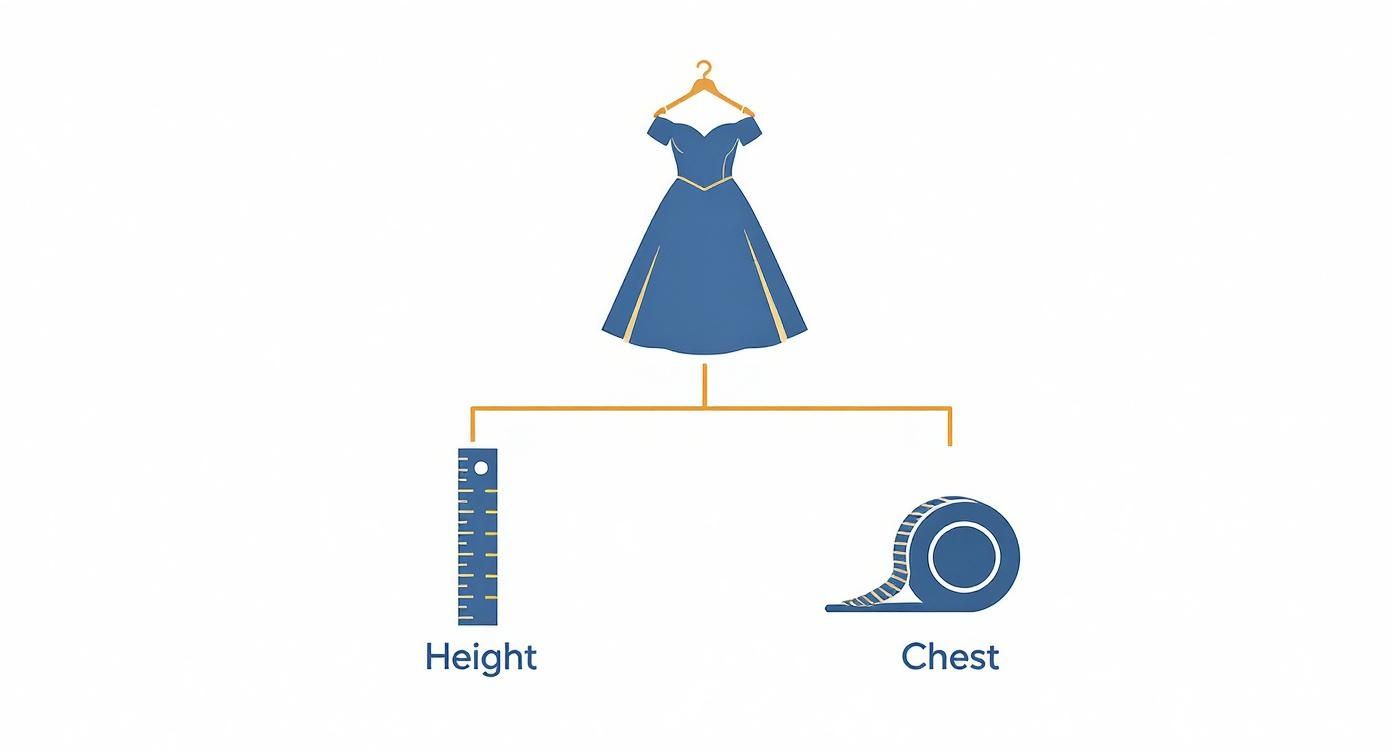
As you can see, your height is the main guide for length, but a chest measurement is essential for ensuring the gown closes comfortably without being too tight or baggy.
The Distinctive Doctoral Gown
The Doctoral gown is the pinnacle of academic regalia, designed to signify the highest level of scholarly accomplishment. You'll immediately notice the full, bell-shaped sleeves adorned with three velvet chevrons each. They also feature wide velvet panels, called facings, that run down the front of the gown.
The hoods are just as important for showing rank. The Intercollegiate Code of Academic Costume dictates specific lengths that increase with each degree—from 3 feet for a Bachelor's hood to 4 feet for a Doctoral hood—creating a clear visual hierarchy during the ceremony.
Doctoral gowns are often fuller and longer, sometimes reaching the ankle for a truly stately appearance. While the velvet trim is traditionally black, it can also be a specific color representing the graduate’s field of study, adding another layer of personal distinction.
There's a rich history behind these traditions. For a closer look, you can explore our guide on how doctoral hoods and apparel differ from other degrees. Whether you're looking for Master's and Doctoral gowns or the perfect finishing touch with custom stoles, understanding these details makes all the difference.
Pairing Shoes with Your Gown Hemline
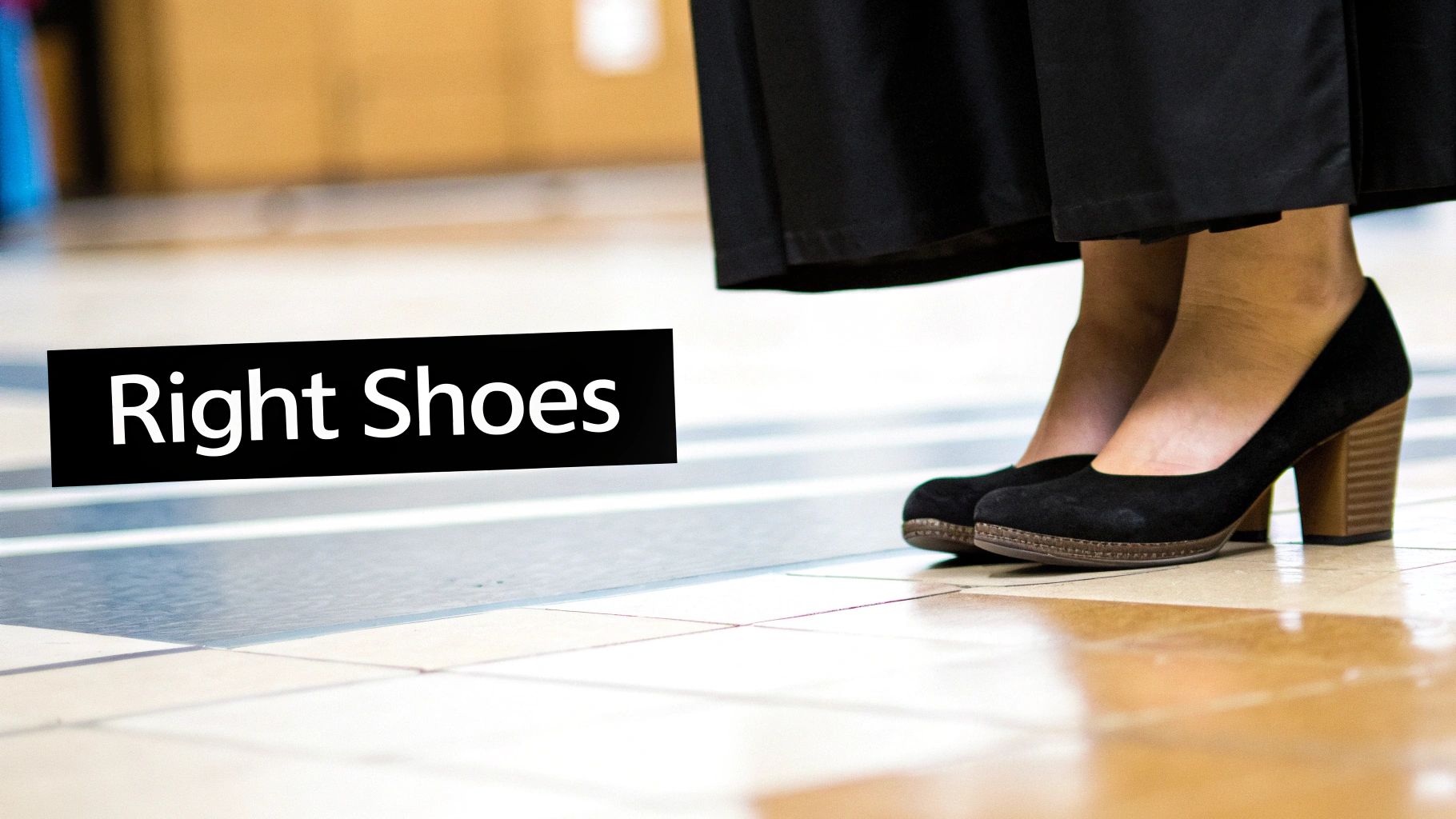
The last piece of the puzzle for your graduation outfit is, of course, the shoes. Choosing the right pair does more than just complete your look—it has a direct impact on the graduation gown length and your ability to walk across that stage with confidence. The wrong shoes can instantly turn a perfectly measured gown into a tripping hazard or make it look oddly short.
Heel height is the biggest variable here. A two-inch block heel, for instance, will lift the hemline nicely, which might be exactly what you need if your gown is a touch too long. On the flip side, if you're wearing flats, you have to be absolutely sure the gown won't drag on the ground, a common issue at outdoor ceremonies on uneven grass.
Matching Heel Height to Gown Drape
Think of your shoes and gown as a partnership. A mid-calf gown, which is standard for high school and Bachelor’s degrees, is pretty forgiving and works well with everything from stylish wedges to smart dress shoes. For the longer, more formal Master’s and Doctoral gowns, a little bit of a heel can be a game-changer. It helps prevent the hem from bunching up around your ankles and creates a much more elegant, flowing silhouette.
Choosing footwear for graduation isn't all that different from picking shoes for another major life event. In fact, this expert guide on how to choose wedding shoes offers some surprisingly relevant advice. The core principles—comfort, style, and thinking about the venue—apply just as much to your commencement day.
Graduate Tip: Before the big day, do a full dress rehearsal. Put on your gown with the exact shoes you plan to wear. Walk around, practice going up and down a few stairs, and just see how it all feels. This is the best way to spot any length issues before they become a problem on stage.
Prioritizing Comfort Without Sacrificing Style
Let's be real: graduation day involves a lot of standing around and walking. The last thing you want is for painful shoes to overshadow your achievement. Blisters and aching feet have no place in your graduation memories.
Here are a few practical tips I always share for picking the right shoes:
- Break Them In: This is non-negotiable. Never, ever wear brand-new shoes on graduation day. Spend the week before the ceremony wearing them around the house for a couple of hours at a time.
- Consider the Venue: Where is the ceremony? An auditorium with a smooth stage is one thing, but a football field is another. Stilettos will sink right into the grass, so wedges or block heels are a much safer bet for outdoor events.
- Pack a Backup Pair: If you’ve got your heart set on towering heels for photos, go for it! But be smart and stash a comfortable pair of flats in a bag to change into for the reception or post-ceremony celebrations. Your feet will thank you.
At the end of the day, the best shoes are the ones that make you feel both comfortable and confident. If you're looking for more inspiration, be sure to read our detailed guide on shoes to wear with your graduation gown. It’s packed with ideas to help you find the perfect pair to complete your look.
Common Gown Fit Problems and How to Fix Them
So you've measured carefully, but when your gown arrives, something feels... off. Don't panic. Most fit issues are surprisingly common and, thankfully, easy to troubleshoot. Getting that fit right is the final touch that ensures you look polished and feel comfortable for every photo op and handshake.
The whole point of academic regalia is to create a dignified, uniform look, a tradition that’s been around for centuries. Proper graduation gown length isn't just about aesthetics; it’s a standardized signal of your academic status. For instance, some universities are incredibly specific, mandating that bachelor's gowns fall just below the knee while master's gowns hang lower. These rules are part of the enduring cultural significance of academic regalia.
Think of this as your final pre-ceremony check-up to tackle any last-minute fit problems and ensure you look flawless.
Fixing the Dreaded High-Water Hem
A gown that's too short is probably the most obvious and jarring fit mistake. It creates an awkward, unfinished look that can really stand out in a crowd of properly fitted graduates. We call it the "high-water" effect, and it usually happens when someone forgets to take their shoes off for the measurement or simply clicks the wrong size during checkout.
If your hem is floating somewhere around your knees instead of hitting that sweet spot at your mid-calf, the solution is simple: you need a larger size. It’s always safer to size up if you're on the fence. A slightly longer gown still drapes elegantly, but there's just no way to fix a short one without it looking wrong.
Tackling the Tent Effect
On the other side of the coin is the "tent effect"—when your gown is so wide and billowy that it completely swallows you. Gowns are designed to be loose, of course, but there's a fine line between a graceful drape and just looking sloppy. This usually comes down to an incorrect chest measurement or opting for a "Full Fit" size when you didn't need it.
Before you immediately start an exchange, take a look at the shoulder seams.
- A good fit? The seams should sit right at the edge of your natural shoulder.
- Too wide? If those seams are drooping halfway down your arms, the gown is definitely too big in the body.
In this case, sizing down is the right move. You want enough room for your outfit underneath without looking like you're lost in a sea of polyester.
A quick pro tip: A hand steamer can work wonders on a gown that’s just a little too puffy. The gentle heat helps the polyester fibers relax, letting the fabric hang closer to your body and taming some of that extra volume.
When to Exchange Your Gown
Knowing when to live with it and when to exchange is crucial. A little extra room in the body is often manageable, but major issues with length or width almost always require a new size. Whatever you do, don't try to hem or alter the gown yourself. This can violate your school's dress code and rarely looks professional.
If the fit is truly off, contact your supplier right away to get an exchange started. A perfectly fitting gown is that final piece of the puzzle, making sure you walk across that stage feeling nothing but confidence.
Your Graduation Gown Questions Answered
Still have a few last-minute questions about getting the gown length and fit just right? You're definitely not alone. We've pulled together the most common questions we hear from graduates to clear up any lingering confusion and help you feel totally confident for the big day.
Think of this as your final checklist. After all the years of hard work, the last thing you want to stress about is your regalia. Nailing these small details ensures you look and feel fantastic when your name is finally called.
How Far Off the Ground Should My Gown Be?
For most high school and bachelor's gowns, the sweet spot is somewhere between your knee and mid-calf. This has been the standard for years because it's both practical and looks sharp, letting you walk easily while still showing off your shoes. It's that classic look you picture in graduation photos.
Master's and doctoral gowns are a different story. They're meant to be longer, often hitting the lower calf or even the ankle. This adds a more formal, distinguished feel that’s fitting for an advanced degree.
The number one rule for any gown? Make sure you won't trip on it. A mid-calf length is a safe, timeless standard for the vast majority of graduates. It guarantees you can handle stairs and the stage without any mishaps.
What if My Height Is Between Two Gown Sizes?
This is probably the most common dilemma out there, and my advice is almost always the same: when in doubt, size up. A gown that's a touch too long will still hang nicely and create a graceful, flowing look.
On the other hand, a gown that’s too short can just look awkward and ill-fitting. The extra room in a slightly larger size also gives you more breathing room over your graduation outfit, which you'll appreciate during a long ceremony. Always double-check the specific sizing chart before you buy, though—sometimes manufacturers will offer their own guidance for in-between heights.
Can I Alter or Hem a Graduation Gown?
Honestly, I wouldn't recommend it. Graduation gowns are designed to be a specific length to create a consistent, uniform look across the entire graduating class. Hemming yours could make you stick out for the wrong reasons and might even go against your school's dress code.
Besides that, the polyester fabric most gowns are made from can be a real pain to alter cleanly. It's tough to get a professional-looking hem without leaving puckers or marks. If your gown's length is way off, your best bet is to contact the supplier for an exchange. It's much better to get the right fit from the get-go.
Do High Heels Change My Gown Length?
They absolutely do! Your shoe choice makes a huge difference in how your gown hangs. That's why you should always measure your height without shoes when you're placing your order. But when your gown arrives, the first thing you should do is try it on with the exact shoes you plan to wear for graduation.
A pair of heels can lift the hem a few inches, which might be exactly what you need if the gown feels a little long. If you're going with flats, just make sure the hem doesn't dip low enough to become a tripping hazard. You're aiming for that perfect mid-calf look with your actual shoes on to pull everything together.
At Gradshop, we've made finding the perfect fit our mission. Explore our collections to find the right regalia for your milestone.
- Shop for distinguished Masters and Doctoral Gowns
- Browse our classic High School Caps & Gowns
- Personalize your look with custom Stoles