

You’ve probably seen them at graduation ceremonies—the plush, multi-sided caps that stand out from the sea of flat mortarboards. That distinctive headwear is a graduation tam, and it's reserved for graduates who have achieved a master's or doctoral degree.
Think of it this way: while the classic flat mortarboard is the universal symbol of completing an undergraduate degree, the tam signifies the next level of academic accomplishment. It's a special honor, setting advanced degree holders apart during the commencement procession.
Understanding The Graduation Tam

The tam is much more than just a different style of hat; it’s a piece of academic tradition with deep roots. Its history traces back to historic university customs, and over time, it evolved into the respected symbol we see at upcoming commencement ceremonies today.
Every part of the tam—from its shape and fabric to the tassel that adorns it—tells a piece of the graduate's story, communicating their dedication and specialized study within the traditions of academic regalia.
A graduation tam is more than just a hat—it’s a public declaration of advanced scholarship and intellectual dedication, instantly recognizable in any academic procession.
So, what makes a tam a tam? It comes down to a few key features:
- Material: Tams are almost always made from high-quality velvet, which gives them a richer, more formal appearance.
- Shape: Instead of a flat, square top, the tam has a soft, rounded crown that can have four, six, or eight sides.
- Tassel: A tassel is attached to the top, often directly in the center or fastened with a decorative button.
Getting a handle on the differences between a tam and a mortarboard is the first step to understanding the nuances of academic dress. For a deeper dive, check out our guide on the academic regalia mortarboard cap and tam.
Graduation Tam vs Mortarboard at a Glance
For a quick overview, this table breaks down the main distinctions between the two most common types of graduation headwear.
| Feature | Graduation Tam | Mortarboard |
|---|---|---|
| Degree Level | Master's, Doctoral, and Faculty | High School, Associate's, and Bachelor's |
| Material | Typically high-quality velvet | Often polyester, cotton, or felt |
| Shape | Soft, multi-sided crown (4, 6, or 8 points) | Stiff, flat square top |
| Associated Feel | Distinguished, scholarly, and prestigious | Traditional, classic, and universal |
While both are symbols of achievement, the tam clearly represents a specialized, higher-level academic journey.
The History and Symbolism of Academic Tams

The graduation tam isn't some new trend. Its story is deeply embedded in the history of higher education, with origins that trace all the way back to medieval European universities. Early academic wear was purely practical—it was designed to keep scholars warm in drafty, unheated halls and to set them apart from the rest of the town. Over hundreds of years, these functional outfits slowly transformed into the ceremonial regalia we recognize today.
The tam we know is a direct descendant of the biretta, a square cap worn by clergy and scholars as early as the 13th century. As academic traditions evolved, the flat mortarboard became the go-to for bachelor's degrees, but a softer, more prestigious style was needed for those who had reached a higher level of mastery. This is where the plush, multi-sided tam came in, establishing itself as a mark of true distinction.
Adopting a Symbol of Excellence
In the United States, universities began to standardize their academic dress, and the tam found its official place. The Intercollegiate Code of Academic Costume, first put into place in 1895, created formal guidelines for caps, gowns, and hoods. It was this code that officially designated the tam for advanced degrees, cementing its status as the clear visual sign of a master’s or doctoral graduate. You can dive deeper into the meaning behind the cap and gown to explore these rich traditions.
But a tam is so much more than just a hat. It carries a heavy dose of symbolism, representing years of intense study, intellectual challenges, and the development of specialized expertise.
Wearing a graduation tam is a profound acknowledgment of a scholar's journey. It symbolizes not just the completion of a degree, but the attainment of a high level of academic authority and intellectual perseverance.
Every single detail of the tam adds to its story:
- The Velvet Fabric: Velvet has long been considered a luxurious material. Its use in a tam signifies the honor and prestige that come with earning an advanced degree.
- The Multi-Sided Shape: The corners—whether you see four, six, or eight—are thought to represent the different faculties or pillars of knowledge, showcasing a graduate's well-rounded, comprehensive understanding of their field.
- The Elevated Status: When a graduate puts on a tam, they're joining a long, unbroken line of scholars. It connects them to a centuries-old tradition of academic excellence and intellectual curiosity—a powerful, unspoken statement of their hard-won achievement.
Who Gets to Wear a Graduation Tam?
You won't see everyone at a commencement ceremony wearing a graduation tam. Its use is actually quite specific and steeped in academic tradition, acting as a visual shorthand for rank and scholarly achievement. While high school and undergraduate students stick with the classic mortarboard, the tam is reserved for those who have climbed higher up the academic ladder.
Put simply, this distinctive headwear is for graduates who have earned a master's or doctoral degree. When you spot someone in a tam, you're looking at a person who has dedicated years to advanced, specialized study well beyond their bachelor's. It’s an immediate signal of their graduate-level accomplishment.
Tams aren't just for the new graduates, though. You'll also see them worn by university faculty and other high-ranking officials during commencement. Presidents, deans, and professors don tams as part of their formal regalia, a nod to their own advanced degrees and their leadership roles within the academic community.
Reading the Regalia: Different Tams for Different Ranks
Even among tam-wearers, there are subtle but important distinctions that tell you more about their academic standing. The design of the tam itself offers clues about whether the person holds a master's or a doctorate.
- For Master's Degrees: Graduates receiving a master's degree typically wear a six-sided black velvet tam. It’s a clear step up from the undergraduate mortarboard but is visually distinct from the doctoral version.
- For Doctoral Degrees: The most prestigious style is the eight-sided velvet tam. This is reserved for those who have earned a doctorate—like a Ph.D., Ed.D., or M.D.
The number of points on a graduation tam is a key indicator of academic standing. An eight-sided tam is the highest honor in academic headwear, representing the pinnacle of scholarly achievement.
These visual rules are part of what keeps the traditions of academic dress so meaningful. Learning the details of a doctoral graduation tam with its gold button and tassel shows you just how much symbolism is woven into every stitch.
Taking a Closer Look at Graduation Tam Styles
While any graduation tam is a clear sign of serious academic accomplishment, the specific style tells a deeper story about the graduate's journey. The design isn't just about looks; the number of corners on the tam is a crucial part of the academic dress code, instantly communicating the degree level.
Think of it as a quick visual summary of years of hard work. The most obvious difference between tams is the number of points they have.
- Four-Sided Tams: Often seen as a more modern take, the four-sided tam is sometimes used for master's programs, offering a distinct look.
- Six-Sided Tams: This is the go-to style for most graduates earning a master’s degree. It's the classic choice you'll see at many ceremonies.
- Eight-Sided Tams: Reserved for the highest level of academic achievement, the eight-sided tam is the traditional headwear for those with doctoral degrees like a Ph.D., Ed.D., or J.D.
This system creates a clear and immediate visual hierarchy during the commencement procession, making it easy to spot who’s who.
Materials and Colors Tell a Story, Too
Beyond its shape, a tam's material and color also carry meaning. The traditional standard is a high-quality black velvet, a fabric that has long been associated with honor and prestige. The deep, rich texture of the velvet immediately sets the tam apart from the simple felt or polyester of a standard mortarboard.
Of course, tradition isn't everything. Some institutions love to put their own spin on their regalia, opting for tams in school colors like a deep crimson or a brilliant royal blue. This helps create a powerful sense of university pride and identity. Custom options like these allow schools to blend centuries of academic tradition with their own unique brand, creating a truly memorable look for their most distinguished graduates. For a closer look at the options, you can explore the details of the classic tam graduation cap.
The difference between a six-sided and an eight-sided tam isn't just a style choice—it's a direct reflection of the academic hierarchy, marking the important distinction between master’s and doctoral-level scholarship.
The preference for these styles is pretty clear across the board. A 2020 survey of U.S. universities found that 65% of doctoral programs use the eight-sided tam, while 45% of master's programs lean towards a four-sided version. These numbers show just how established the tam’s role has become as a symbol of scholarly excellence in graduation ceremonies everywhere.
How to Properly Wear Your Graduation Tam
Getting your academic regalia right is a key part of the ceremony—it's about showing respect for the tradition you're now a part of. And when it comes to the graduation tam, a proper fit is everything. You want it sitting comfortably level on your head, not tipped forward or pushed too far back, so you can focus on your big moment.
Think of it like a hat: it should feel secure but definitely not tight. Most tams are designed to be worn squarely on the head, which gives you that classic, dignified look. The front is usually marked by the shorter side of the headband or a small point.
This diagram shows the main styles you'll see.
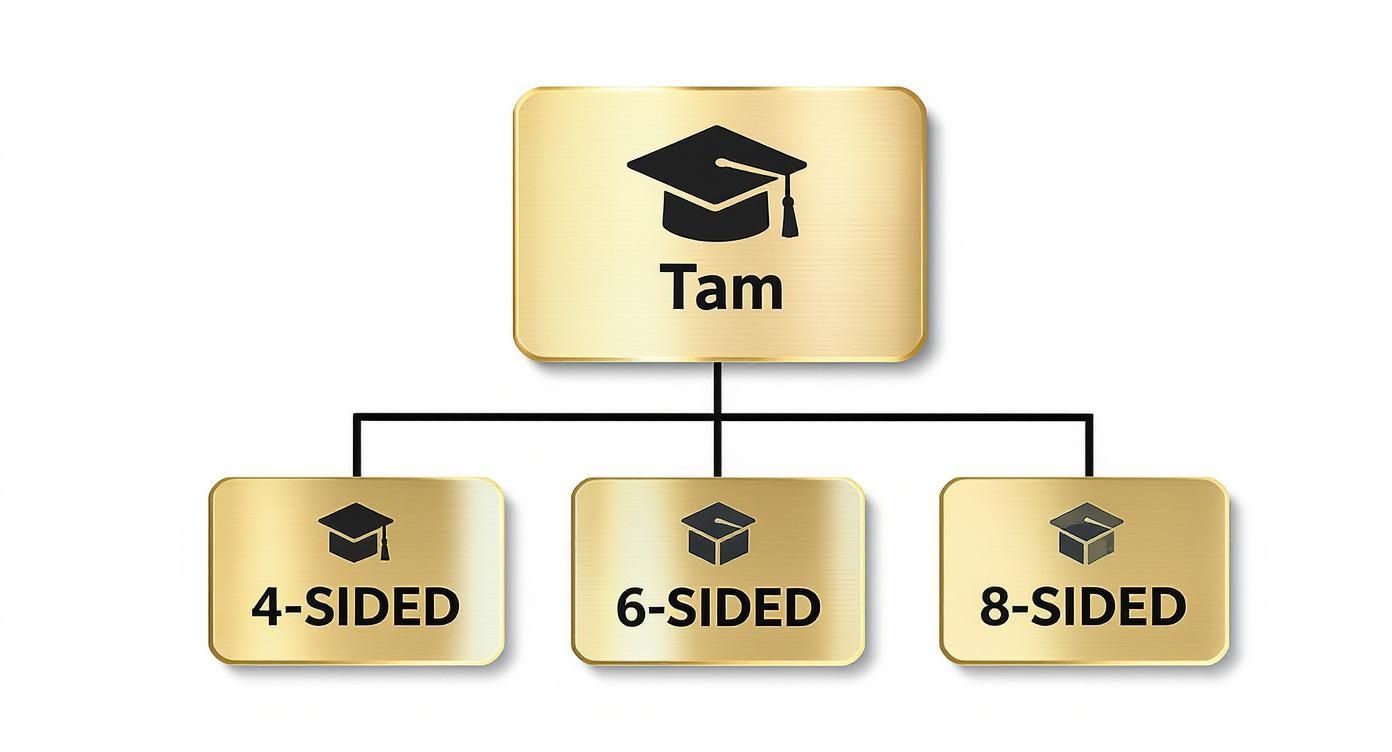
As you can see, the number of corners isn't just for show; it's a visual cue that signals the degree you've earned, with more sides often indicating a higher level of academic achievement.
Tassel Placement and Protocol
Here’s where things get interesting, especially for advanced degrees. You’ve probably seen undergraduates do the big "turning the tassel" moment. For master's and doctoral candidates wearing a tam, the rules are different.
For graduates wearing a graduation tam, the tassel typically starts and remains on the left side throughout the entire ceremony. This signifies you have already earned a previous degree.
It’s a subtle but important distinction that recognizes your existing academic accomplishments. To make sure you've got it all right on the day, just follow these simple steps:
- Position the Tam: Place it flat on your head so the front point is centered on your forehead.
- Adjust for Comfort: The tam should feel snug but not constricting. If it feels wobbly, you might need to check your sizing.
- Confirm Tassel Side: Before things get started, just give it a quick check—make sure your tassel is hanging neatly over your left side.
Nailing these details means you'll wear your regalia with the confidence and pride it deserves, letting you fully soak in the celebration of all your hard work.
Your Top Questions About Graduation Tams Answered
Even after getting the basics down, a few questions always seem to pop up as graduation day gets closer. Here are some quick, clear answers to the most common queries we hear, making sure you’re all set for the big ceremony.
Can I Wear a Tam for My Bachelor's Degree?
That's a common question, but the short answer is no. Graduation tams are a special part of academic dress reserved for those who have earned a master’s or doctoral degree.
If you're graduating with a bachelor's or associate's degree, you'll be wearing the traditional mortarboard cap. Think of it as a rite of passage—the tam is something you earn the right to wear by moving on to postgraduate studies, and this distinction helps everyone visually recognize the different levels of academic achievement.
What Color Tassel Goes with My Tam?
This is where it gets personal! Your tassel color isn't determined by the tam itself, but by your specific field of study. It’s a fantastic tradition that adds a splash of color and meaning to your regalia.
For instance, someone with a Doctor of Education (Ed.D.) would sport a light blue tassel, while a Doctor of Philosophy (Ph.D.) in humanities would wear a crisp white one. Your university has a specific academic dress code that spells all this out, so be sure to check your commencement guide to get the right color for your discipline.
Key Takeaway: The tassel on your graduation tam is a proud symbol of your academic field, adding a unique and personal layer of meaning to your commencement outfit.
Do I Have to Buy My Own Tam?
That really depends on your university. Some schools include the full academic outfit—gown, hood, and tam—as a rental covered by your graduation fees. Others expect graduates to buy their own regalia.
If you’re a faculty member who'll be part of academic ceremonies for years to come, investing in your own high-quality tam is a smart move. For graduates, buying your own tam turns it into a wonderful keepsake to remember all your hard work.
Is a Tam More Expensive Than a Mortarboard?
Yes, you'll find that a graduation tam costs more than a standard mortarboard. The price difference comes down to the quality of materials and the craftsmanship involved.
Tams are typically made from rich velvet and have a more complex, multi-sided construction. A mortarboard is a classic, but it's a more universally produced item. The tam, on the other hand, is a specialized piece that signifies a higher and more distinct academic honor.
Ready to find the perfect regalia for your commencement? At Gradshop, we offer a complete selection of high-quality master's and doctoral tams, gowns, hoods, and accessories to ensure you look your best. Explore our collection and celebrate your achievement in style. Find your perfect graduation tam at Gradshop.com.