

Your doctoral regalia is more than just an outfit. It's a powerful symbol of your highest academic achievement, a visual story of years of hard work. The full PhD gown and cap ensemble is made up of three distinct parts: the doctoral gown, the academic hood, and a unique tam. Each piece tells a part of your story, from the university that supported you to the specific field you've now mastered.
Understanding Your Doctoral Regalia
Earning a doctorate is a huge accomplishment, and the regalia you wear on graduation day is designed to reflect that prestige. Don't think of your gown, hood, and cap as just a uniform. It's more like a visual language that has been spoken in academia for centuries, with every detail holding specific meaning.
The tradition of the academic PhD gown and cap actually goes all the way back to medieval Europe in the 12th and 13th centuries. The first universities required scholars to wear gowns, partly for warmth in unheated buildings and partly to show their connection to the church. Over hundreds of years, this practical tradition evolved into the detailed system we recognize today. When you put on your regalia, you're stepping into a long and fascinating legacy.

The Three Core Components
Your doctoral attire isn't just one piece, but a coordinated set where each part has a job to do. Getting to know these components is the first step to wearing your regalia with the pride and confidence you've earned.
- The Doctoral Gown: This is the foundation of your look. You'll immediately notice its distinguished features, like the full, bell-shaped sleeves and the rich velvet panels running down the front.
- The Academic Hood: Draped over your shoulders, the hood is where the color comes in. It's a vibrant display of your university's official colors and the specific color representing your field of study.
- The Doctoral Tam: Most doctoral graduates don't wear the familiar square mortarboard. Instead, they wear a soft, multi-sided tam, usually made of velvet, which is a clear marker of an advanced degree.
This specific combination—the elaborate gown, colorful hood, and plush tam—is what makes doctoral graduates stand out. If you're curious about a deeper dive into these differences, check out our detailed guide on what comprises academic regalia for a PhD.
Let's break down the role of each piece with a quick summary.
Components of Doctoral Academic Regalia at a Glance
This table offers a snapshot of the three main parts of your graduation attire, highlighting what makes each one special.
| Component | Primary Feature | Symbolism |
|---|---|---|
| Doctoral Gown | Full bell sleeves and three velvet chevrons on each sleeve. | Represents the highest level of academic degree earned. The velvet trim signifies the doctorate. |
| Academic Hood | Lined with satin in the university's colors; trimmed with velvet in the color of the academic discipline. | Connects the graduate to their institution and their specific field of knowledge. |
| Doctoral Tam | A soft, velvet cap, often with four, six, or eight sides, and a gold tassel. | Distinguishes a doctoral recipient from bachelor's and master's graduates. |
Each element works together to create a look steeped in academic tradition and personal achievement.
Think of your regalia as the culmination of everything it took to get here: years of intense research, countless late nights, and true intellectual dedication. It’s a wearable diploma celebrating your official transition from candidate to doctor.
To see how these elements create a distinguished look, explore our complete doctoral regalia collection at Gradshop, where tradition meets quality craftsmanship.
Understanding Your PhD Gown: The Anatomy of Achievement
When you see a group of graduates, the doctoral gown always stands out. It's built differently, and for good reason. Its features are designed to signal the highest level of academic accomplishment, setting it apart from the gowns worn by those earning bachelor's and master's degrees. Knowing these details helps you really appreciate the symbolism stitched right into your PhD gown cap and regalia.
Think of academic gowns as a visual hierarchy. The bachelor's gown is the starting point—simple, with pointed sleeves. The master's gown levels up, introducing unique oblong sleeves. But the doctoral gown is in a league of its own. It's fuller, often made of more luxurious fabric, and features specific embellishments that are steeped in tradition. These aren’t just design flourishes; they’re markers of rank, much like the stripes on a military uniform tell you who’s in charge.
The Signature Bell Sleeves
The first thing you’ll probably notice is the doctoral gown's grand, flowing sleeves. Known as bell sleeves, they’re designed to be full and open, creating a silhouette that feels both commanding and dignified. This is a deliberate contrast to the sleeker, more restrictive sleeves on other gowns, symbolizing the intellectual freedom and breadth of knowledge you’ve earned.
These sleeves aren't just for show; they are a fundamental part of the official academic dress code. When you put on your gown, the bell sleeves give it that regal look reserved exclusively for those who have completed the ultimate academic marathon.
Velvet Chevrons: A Mark of Distinction
Adorning those bell sleeves are the most iconic feature of any doctoral gown: three velvet bars, often called chevrons. A set of these bars is stitched onto each sleeve, and they are the clearest visual sign that someone holds a doctorate. While a master’s gown is unadorned, the three chevrons on a doctoral gown are a non-negotiable standard.
These velvet bars tell a story. You can think of each one as representing a critical stage of your journey—the advanced coursework, the comprehensive exams, and finally, the successful defense of your dissertation. The rich texture of the velvet itself adds a touch of prestige that the accomplishment deserves.
You can see this defining feature up close in our collection of premium doctoral gowns, which are all crafted to meet these exacting academic standards.
The Prominent Velvet Panels
Working in tandem with the sleeve chevrons are two wide velvet panels that run all the way down the front of the gown. These panels, or facings, create a strong vertical line that gives the gown a formal, stately appearance. This is another key element you won’t find on bachelor's or master's gowns.
The combination of the velvet panels and the sleeve chevrons is the official uniform of a doctor. It's an unambiguous signal to the entire academic community that the wearer has reached the pinnacle of their field of study.
The color of the velvet often has its own meaning, too. Many gowns use black velvet for a classic, timeless look. However, the velvet can also be colored to represent your specific field of study. For example, the traditional dark blue associated with the Doctor of Philosophy (PhD) degree is a widely recognized and respected choice.
Comparing Gown Features Across Degrees
To really appreciate what makes your PhD gown special, it helps to see how it compares to the others. Here’s a quick side-by-side breakdown.
| Feature | Doctoral Gown | Master's Gown | Bachelor's Gown |
|---|---|---|---|
| Sleeves | Full, open bell-shaped sleeves for a grand look. | Oblong sleeves with a distinctive arc cut at the bottom. | Simple, unadorned pointed sleeves. |
| Velvet Trim | Three velvet chevrons on each sleeve and two wide velvet panels down the front. | No velvet trim on sleeves or panels. | No velvet trim whatsoever. |
| Overall Cut | A fuller, more generous cut for a formal appearance. | More moderately cut than the doctoral gown. | The simplest, most basic cut of the three. |
These clear distinctions ensure your achievement gets the instant recognition it deserves. For a direct visual comparison, take a look at our Master's Gowns collection and you'll immediately see the elegant simplicity of their design next to the more elaborate doctoral attire. Wearing your doctoral gown is a profound moment, and its unique anatomy is a testament to the years of dedication it represents.
The Academic Hood: Your Career in Color
If the doctoral gown signifies your academic rank, the hood is where your story truly comes to life. It’s easily the most vibrant and personal piece of your entire PhD gown and cap set. This isn’t just a colorful accessory; think of it as your academic coat of arms, telling a detailed story of your scholarly journey for all to see.
With a glance, the hood communicates your field of expertise and the institution that granted your degree. It's a wearable resume where colors do all the talking. Learning to "read" an academic hood means understanding a graduate's entire academic background in an instant. Every hood is built from three key parts, each with a specific meaning.
The Three Parts of an Academic Hood
To understand the story your hood tells, you first need to know its anatomy. Each element works together to create a rich tapestry of academic symbolism.
- The Shell: The foundation of the hood is its black shell, almost always made from the same fabric as your doctoral gown. This creates a cohesive, formal look and serves as the backdrop for the more vibrant colors.
- The Satin Lining: This is where you show your school pride. The hood's interior is lined with satin in the official colors of your university. You'll often see them arranged in patterns like chevrons or side-by-side splits to represent multiple school colors.
- The Velvet Trim: The outer edge of the hood features a band of velvet, and its color is the most important part. This color represents your specific academic discipline or field of study.
This three-part structure is a standardized system, which means anyone familiar with academic regalia can immediately recognize your credentials. The diagram below shows the key features of the doctoral gown that the hood is worn over.
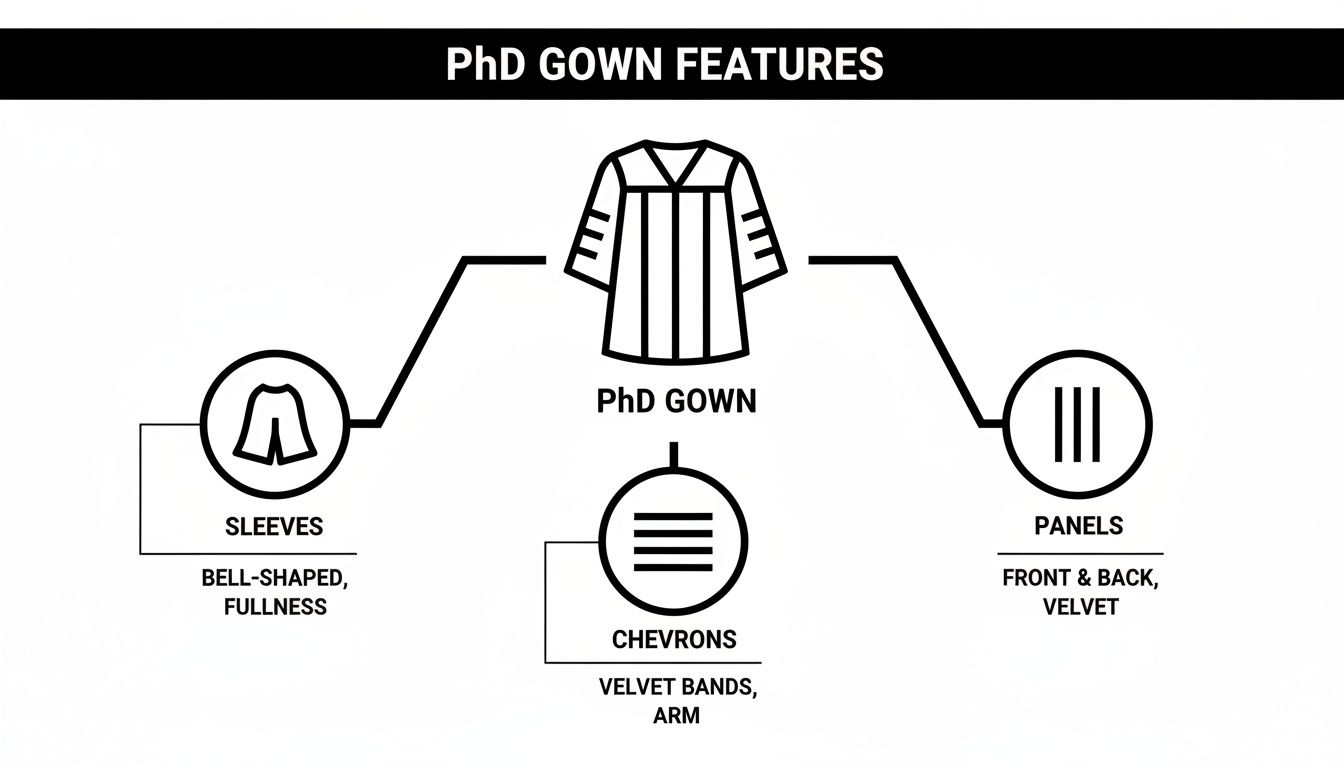
This visual guide highlights the key identifiers of a doctoral gown—the full bell sleeves, plush velvet front panels, and three velvet chevrons on each sleeve—that create the distinguished foundation for your academic hood.
The Language of Velvet Colors
The velvet trim is probably the most significant part of the hood because it speaks to your life's work. The American Council on Education (ACE) maintains a code that assigns specific colors to different fields of study—a tradition that’s been around for over a century. That familiar dark blue velvet, for instance, is reserved for the Doctor of Philosophy (PhD) and represents a mastery of scholarship across countless disciplines.
The color of your velvet trim is a public declaration of your expertise. It connects you to a global community of scholars in your field and visually celebrates the discipline you have dedicated years to mastering.
Whether you've earned a doctorate in Education (Light Blue), Engineering (Orange), or Fine Arts (Brown), your hood color proudly puts that specialization on display. To get the full picture, you can explore our in-depth article on doctoral hood colors and their meanings.
Common PhD Fields of Study and Their Velvet Hood Colors
To help you identify your discipline's color, we've put together a reference guide for some of the most common fields and their designated velvet trims, all based on the official Academic Costume Code.
| Field of Study | Velvet Color | Example Degrees |
|---|---|---|
| Philosophy | Dark Blue | PhD (Doctor of Philosophy) |
| Arts, Letters, Humanities | White | DA, DHL, DLitt |
| Education | Light Blue | EdD (Doctor of Education) |
| Law | Purple | JD, JSD, LLD |
| Medicine | Green | MD, DPH, DS |
| Theology | Scarlet | DD, DMin, ThD |
| Science | Golden Yellow | ScD, DS |
| Engineering | Orange | DEng, DESc |
| Fine Arts | Brown | DFA, MFA |
| Music | Pink | DMus, DMA |
This table covers many of the common disciplines, but the list is far more extensive. No matter your field, we can help you find the right regalia.
Choosing Your Headwear: The Tam and Mortarboard
One of the unique privileges that comes with earning a doctorate is the choice of headwear. It's a detail often overlooked but one that sets doctoral regalia apart. While the classic square mortarboard is the symbol of graduation everyone knows, the soft, multi-sided tam is an honor reserved almost exclusively for doctoral scholars.
This isn't just a style choice; it's a decision that connects you to different traditions. The mortarboard is timeless, linking you to generations of graduates from every field. The tam, on the other hand, is a clear visual marker of your new status, a comfortable and distinguished option that says "doctor" at a glance.
Tam vs. Mortarboard: A Comparison
So, how do you choose? Most people make the decision based on three things: comfort, appearance, and tradition. There's no wrong answer, but it's worth thinking about what matters most to you on a day you'll remember forever.
- Comfort: Let's be honest, commencement ceremonies can be long. The tam is almost universally considered the more comfortable option. Made of soft velvet, it sits gently on your head, whereas the rigid mortarboard can feel a bit tight or precarious after a couple of hours.
- Appearance: A doctoral tam just looks different. Its plush velvet and distinct shape—usually with four, six, or eight corners—create a more stately and mature look, especially when paired with a gold bullion tassel. The mortarboard offers that classic, uniform profile we all associate with graduation.
- Tradition: While the mortarboard is the old-school standard for all graduates, the tam has really become the modern symbol of doctoral achievement. Many universities now consider it the official headwear for their PhD and other doctoral recipients, marking a clear distinction in the academic hierarchy.
If you want to dive deeper into the history behind these two styles, our guide on the difference between the academic mortarboard and tam is a great read.
Choosing a tam is more than a style preference; it's an embrace of a tradition specific to doctoral scholars. It’s a subtle yet powerful statement about the unique nature of your academic accomplishment.
Whether you're leaning toward the distinguished comfort of a velvet tam or the classic look of a traditional mortarboard, Gradshop has high-quality options to complete your PhD gown cap ensemble.
The Significance of the Tassel
No matter which headwear you choose, the tassel is the final, crucial piece of the puzzle. For doctoral graduates, the tassel itself is often more ornate—shorter, bulkier, and sometimes made from a beautiful gold bullion thread instead of simple rayon.
Of course, its real power lies in the ceremony. Before your degree is conferred, your tassel should be on the right side of your cap or tam. This position signifies that you are still a candidate, on the cusp of completion.
Then comes the moment you've been working toward for years. After the university president or dean officially confers the degrees, you’ll be instructed to move your tassel to the left side. It’s a simple, unified motion, but it's loaded with meaning. That small flip of the wrist is a rite of passage, marking your official transition from a doctoral candidate to a doctor.
How to Wear Your Doctoral Regalia Correctly
Graduation day is a huge milestone, and the last thing you want to worry about is a wardrobe malfunction. Getting your doctoral regalia on correctly means you'll look sharp and feel confident when you finally walk across that stage. This quick guide will walk you through putting on every piece of your PhD gown and cap, from the gown itself to the final placement of your tam.
Think of it as a sign of respect for the academic tradition you’re now a part of. Every piece has a specific place and purpose, and getting it right is a lot simpler than you might think. With just a few key steps, your attire will look perfect for the ceremony and all the photos that come with it.

Step 1: Start with the Doctoral Gown
The gown is the foundation of your whole look. Before you even think about putting it on, make sure it’s free of wrinkles—a quick steam or a careful iron (check the care instructions!) does wonders. It’s best to wear business casual attire underneath, like a collared shirt, dress, or slacks.
When you're ready, just put the gown on like you would a jacket and zip it all the way up. The full bell sleeves and velvet panels should hang neatly, giving you that distinguished, formal silhouette.
Step 2: Draping the Academic Hood
The academic hood can look intimidating, but it's really straightforward once you get the hang of it. This is the most colorful and meaningful part of your regalia, so you want to make sure it's displayed properly.
Just follow these simple steps to get it right:
- Unfold the Hood: Start by laying out your hood so it's completely unfolded. You’ll see the black shell, the satin lining with your university’s colors, and the velvet trim that signifies your degree.
- Drape Over Your Head: Place the hood over your head so it hangs down your back. The velvet trim should be on the outside, closest to your neck and shoulders. The V-shaped end with the velvet should sit at the base of your throat.
- Adjust the Back: Let the long part of the hood hang down your back. At this point, the black shell will be the most visible part.
- Turn Out the Colors: This is the magic touch. Reach behind you and flip the satin lining outward at the base of the hood. This move reveals your university’s colors, creating that vibrant chevron or split-color look against the black fabric.
Here's a pro tip: Find the small cord on the front of the hood. You can loop this around a shirt button or use a small safety pin to attach it to your clothes. This one little trick will keep the hood from sliding back and feeling like it's choking you during the ceremony.
Step 3: Positioning Your Tam and Tassel
The final piece is your headwear—for most doctoral grads, this is a soft velvet tam. Place the tam squarely on your head so it feels both comfortable and secure. Usually, one of the points of the tam is worn facing forward, but it's always a good idea to check your university’s guidelines just in case.
The tassel placement is symbolic. Before your degree is officially conferred, your tassel belongs on the right side of your tam. After the degrees are awarded, you’ll be told to move the tassel to the left side—a small but powerful gesture that marks your new status.
By following these steps, you’ll wear your regalia with all the dignity and pride your achievement deserves. And to keep your attire in pristine condition before and after the big day, consider one of our high-quality garment bags, designed to protect your investment for years to come.
Personalizing Your Look with Accessories
While your PhD gown and cap are steeped in centuries of academic tradition, your graduation day look doesn't have to be strictly uniform. This is your moment, after all—a celebration of a long and personal journey. Accessories are the perfect way to share a piece of that story.
Think of your doctoral gown as the distinguished foundation. The accessories you add—like honor cords for special achievements or a stole representing your heritage—are the flourishes that make it uniquely yours. They’re a way to weave in the memberships, honors, and affiliations that defined your academic experience, adding layers of meaning to an already momentous occasion.
Showcasing Your Identity with Stoles
A graduation stole, or sash, is a long cloth worn over your shoulders, and it’s one of the most powerful ways to personalize your regalia. Stoles can represent a huge range of affiliations and identities, turning your gown into a canvas for your personal narrative.
Many graduates use stoles to honor their cultural background. A vibrant Kente stole, for instance, is a beautiful and powerful way to celebrate African heritage. Others might wear a stole with their home country's flag to proudly represent their international roots.
You’ll also see stoles that signify:
- Military Service: A way to recognize a commitment to your country.
- Fraternity or Sorority Membership: Greek letters connect you to your chapter’s legacy.
- First-Generation Status: A special point of pride for being the first in your family to reach this academic peak.
The Meaning Behind Honor Cords
Honor cords are another common sight at commencement. These are twisted cords with tassels on each end, draped around the neck. Their colors aren't just for show; each one signifies a specific academic honor, a high GPA, or membership in a prestigious honor society.
A gold cord, for example, almost universally represents high academic honors like summa cum laude. Other colors might correspond to specific societies, like the red and sapphire of Phi Kappa Phi. These cords are tangible symbols of the dedication and excellence you poured into your doctoral work. Gradshop has a wide selection of honor cords so you can display every single achievement you’ve earned.
Adding a stole or honor cord is about more than just decoration. It’s a way to publicly acknowledge the communities, identities, and accomplishments that shaped your path to earning a doctorate.
Custom Embroidery and Souvenir Tassels
If you’re looking for a more subtle but equally meaningful touch, consider custom embroidery. Many graduates choose to have their initials, graduation year, or even the university seal embroidered onto their gown or stole. It’s a permanent, elegant detail that turns your regalia into a true keepsake.
And finally, let's not forget the tassel. Your doctoral tam will come with a gold tassel as standard, but adding a souvenir tassel to your collection is a wonderful tradition. These often feature a metallic charm of your graduation year and are perfect for hanging from a rearview mirror or displaying at home. By choosing your accessories thoughtfully, you make sure your graduation attire celebrates not just the degree, but the individual who earned it.
Your Doctoral Regalia Questions, Answered
Getting ready for commencement can bring up a lot of little questions. To make sure you feel completely confident on your big day, we've put together some straightforward answers to the questions we hear most often about the PhD gown cap and full regalia.
Should I Rent or Buy My Doctoral Regalia?
This really comes down to your budget and what you see yourself doing after graduation. Renting is definitely the more budget-friendly option if you only plan to wear it once.
However, if you're heading into an academic career, buying is a smart move. You'll need your own regalia for future convocations, processions, and other formal university events. Plus, owning your gown, hood, and tam transforms them from a one-day outfit into a lasting memento of all your hard work.
How Far in Advance Should I Order?
Give yourself a good cushion here—plan to order your regalia at least 6-8 weeks before your ceremony. This window is especially important if you need a custom hood with your university's specific colors or any personalized embroidery. Leaving it to the last minute can mean rush fees or, even worse, not getting what you need in time. A little planning goes a long way.
While renting seems convenient, purchasing your doctoral regalia ensures a perfect fit and turns a ceremony uniform into a lasting symbol of your hard work. Consider it the final investment in your doctoral journey.
Can I Wear My Master's Hood for My Doctoral Ceremony?
You’ll definitely want to leave the master’s hood at home. Each piece of academic regalia is tied to the specific degree you're receiving. The doctoral hood is noticeably different—it's longer and has wider velvet trim, signifying a higher academic achievement. Wearing the correct hood is an important part of honoring the tradition and the degree you've earned.
How Do I Care for My Gown After Graduation?
To keep your regalia in great shape for years to come, a little care is all it takes. After the ceremony, it's a good idea to have the gown and hood professionally dry-cleaned to handle any wrinkles or smudges.
For storage, hang them in a breathable garment bag (plastic bags can trap moisture and cause damage) and find a cool, dry closet. This will protect the fabric and keep the velvet looking rich and new.
You can also find more specific care instructions on our doctoral regalia package product pages, which are tailored to the high-quality materials we use. Following these tips will ensure your academic attire remains a proud keepsake.
At Gradshop, we're committed to helping you mark this incredible milestone with regalia that truly reflects your success. Whether you need a full doctoral set, a custom hood, or an individual tam, we have the high-quality attire to make sure you look and feel your best. Explore everything we offer at https://www.gradshop.com.