

Putting together your graduation outfit is a bit like piecing together a cherished puzzle. Each element—from the mortarboard cap to the festive cords—tells part of your story. Let’s break down every component so you’re ready for the big day.
Overview Of Graduation Gown Parts
Below is a quick snapshot of each regalia piece, its purpose, and what to look for visually.
Key Components of a Graduation Gown
| Component | Role | Visual Cue |
|---|---|---|
| Mortarboard Cap | Headpiece marking academic status | Flat square with tassel |
| Gown Body | Signature robe reflecting degree level | Length based on level |
| Hood | Color-coded identifier of discipline | Velvet trim and lining |
| Stoles | Decorative sash signifying honors | Embroidered fabric bands |
| Cords | Thin ropes indicating achievements | Twisted strands with tassels |
| Tassel | Symbol of ceremony transition | Hanging cord attached to cap |
This table helps you tick off every item before ordering on Gradshop.
- Explore High School Caps & Gowns to find your perfect fit.
- Shop Stoles Collection for honoring distinctions.
- Browse Masters & Doctoral Products for advanced regalia.
Key Takeaways
- The mortarboard cap and tassel mark the moment you move from candidate to graduate.
- Gown styles shift subtly: high school gowns are simpler, bachelor’s gowns add sleeves, master’s gowns have oblong sleeves, and doctoral gowns feature velvet panels.
- Hoods, stoles, and cords use color and trim to display your field of study and special honors.
Other Ceremony Essentials
- Diploma Cover: A sleek holder to keep your diploma pristine.
- Garment Bag: Protects regalia from wrinkles and dust.
- Medals and Pins: Showcase extra honors or departmental awards.
- Academic Tam: A soft, round alternative headpiece for doctoral graduates.
- Diploma Frame: Keeps your achievement on display for years to come.
Academic regalia truly unites tradition into one ceremony.
With this overview, you can match colors, check sizing, and shop with confidence at Gradshop.
Understanding The Key Components
Graduation regalia isn’t just fabric and trim—it’s a living chronicle of your academic journey. The gown drapes like a scholar’s cloak of achievement, while the hood evolved from medieval headgear into a badge of your discipline. And that crisp mortarboard? It’s a modern crown for your moment center stage.
Core Gown Elements
Every piece of your regalia plays a part in the story:
- Gown Body: Generous pleats and varying sleeve cuts instantly signal your degree level.
- Hood: Satin linings flash school colors, and velvet trim identifies your field of study.
- Mortarboard Cap: That flat, square top anchors the look—and your tassel sways with anticipation.
Material choices matter. Lightweight polyester keeps you cool under bright lights, while heavier blends maintain a crisp silhouette all ceremony long.
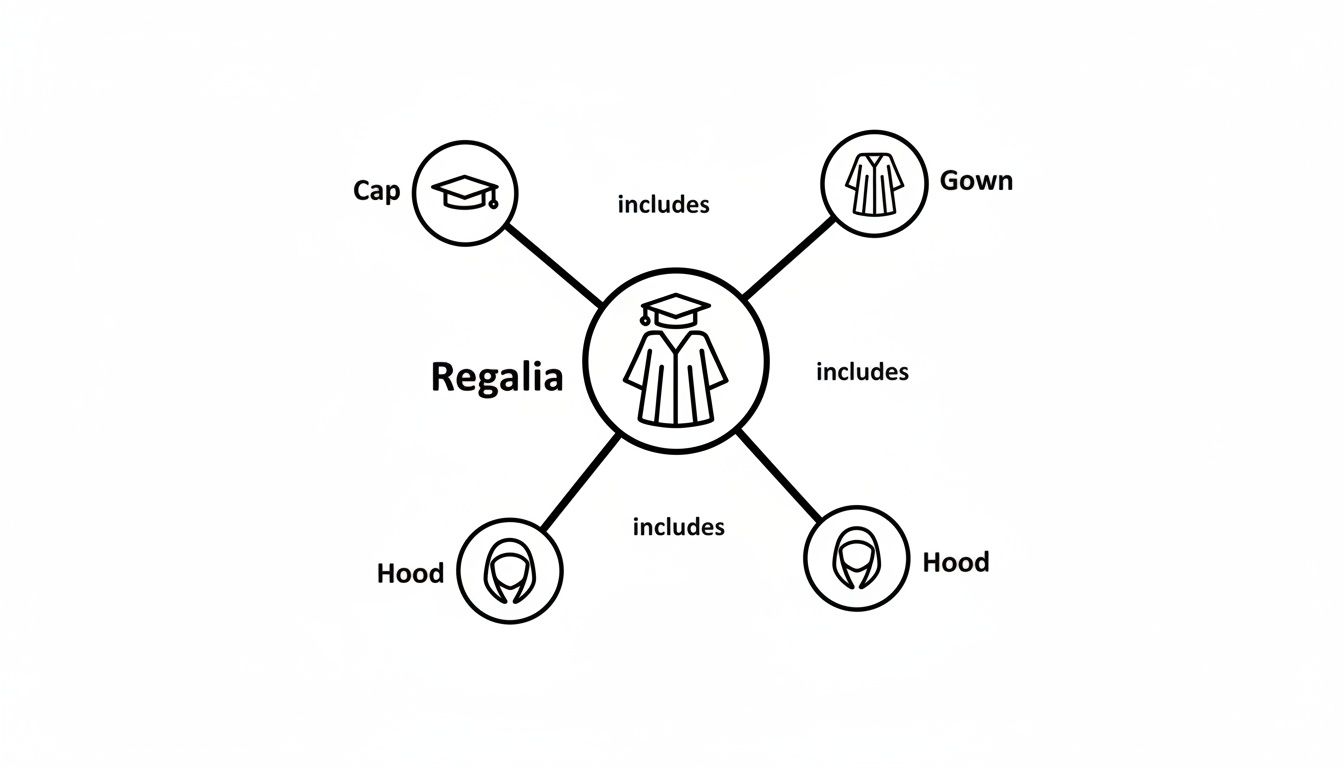
This diagram lays out how each element connects back to the central cap-and-gown theme, from trims and seams to that all-important tassel knot.
Mortarboard Cap Origins
The mortarboard’s roots reach into the 15th century, but it wasn’t until the late 1800s that undergraduates in the U.S. adopted it almost universally. By then, more than 90% of institutions had embraced that distinctive square shape. Wearing it level—about an inch above your eyebrows—has become the hallmark of a polished, confident graduate.
Hood And Color Codes
The graduation hood is your personal academic banner. Its satin lining showcases school colors, while the velvet edging follows the Intercollegiate Code’s discipline hues. The way you drape it over your shoulders can elevate your look—and your understanding of tradition.
Learn How to Wear a Graduation Hood in Our Complete Guide.
Stoles And Cords
These accessories add depth and meaning:
- A Gold Cord often signals graduation with honors.
- Red, white, and blue cords can represent military service.
- Green or blue cords may highlight academic or community achievements.
Stoles wrap like ceremonial sashes, often customized with embroidery or cultural motifs. Together, they layer personal stories atop your gown.
Keep a mental checklist for every accessory so nothing is forgotten on the big day.
Final Assembly Tips
Before you step on stage, follow these steps:
- Gown Fitting: Ensure length is even and sleeves hang correctly.
- Hood Draping: Adjust ties so velvet trim remains visible.
- Cap Alignment: Level the mortarboard with the front edge about 1 inch above your eyebrows.
- Tassel Check: Position it on the right side until conferral.
- Accessories: Lay stoles and cords flat and untangled.
A little prep goes a long way toward a seamless celebration.
Degree Level Variations
| Degree Level | Gown Feature |
|---|---|
| High School | Simple cut, no adornments |
| Bachelor’s | Pointed sleeves |
| Master’s | Crescent sleeves |
| Doctoral | Velvet panels and sleeve bars |
This quick comparison helps you pick the style that matches your milestone.
Spotting Quality Fabrics
A few simple tests reveal a gown’s craftsmanship:
- Check for double-stitched seams along sleeves and hems—no fraying allowed.
- Inspect velvet trims on hoods to ensure they’re even and free of loose fibers.
- Gently tug on tassels to confirm a tight knot and full, dense threads.
Whether you choose a budget-friendly blend or a luxe rayon, these checks guarantee your regalia looks sharp and lasts as a keepsake long after graduation day.
Exploring History And Symbolism
Slip on your cap and gown, and you’re instantly tied to centuries of scholarly tradition. What feels like a simple robe carries stories of medieval lecture halls and Ivy League ceremonies alike.
Over time, each fold and color picked up a meaning, connecting present-day graduates to the scholars who walked cloistered corridors long ago.
Medieval Roots Of Academic Dress
Back in the 12th century, friars and scholars roamed drafty stone buildings, clutching manuscripts in one hand and pulling heavy robes around their shoulders with the other.
These early gowns and hoods were pure practicality—think of wrapping yourself in a blanket to fend off the chill.
By the 14th century, those same hoods evolved into clear markers of rank. Suddenly, you could glance at a professor’s robe and know their standing in the academic world.
- A simple cap or hood for head warmth
- A full-length gown providing extra coverage
- Finer fabrics signaling social status
That unassuming setup laid the groundwork for today’s graduation regalia.
Intercollegiate Code And Color Indicators
Fast forward to the 19th century, when American institutions realized that every university doing its own thing made ceremonies confusing.
Enter the Intercollegiate Code of Academic Costume, which locked down hood lengths and velvet trim colors so you could read a scholar’s degree level and field at a glance.
The gown’s hood, in particular, stands out as both a nod to medieval practicality and a modern billboard for academic achievement.
Read more about hood history on Graduate-Pro.
This snapshot underscores how function blended with form to become formal ritual. Notice how each trim and lining update reflects a new chapter in academic dress.
Standardization And Velvet Trim
Color became language itself. As the 19th century rolled on, universities assigned velvet hues to disciplines:
- Gold for science
- Pink for music
- Layered linings for school identity
These hues act like instant badges—spot a coral pink velvet trim within a crowd, and you know there’s a music graduate in the mix.
Table 1 captures the key moments when academic dress stepped out of local custom and onto a global stage:
| Milestone | Year | Impact |
|---|---|---|
| Hood Rules Formalized | 14th century | Uniform Academic Ranks |
| Intercollegiate Code Adopted | 1895 | Defined Velvet Colors |
| Modern Cap Tradition Established | Early 20th c. | Tassel Movement Norm |
“Academic dress preserves centuries of scholarship in every fold.”
Each cut, each color, tells a story. And that story starts with medieval prototypes and carries right through to your ceremonial stage walk.
Next, we’ll dive into color and degree distinctions, sizing tips, and fit tricks so your regalia looks and feels just right. When you’re ready to shop, browse High School Caps & Gowns or explore Masters & Doctoral Products on Gradshop.
• Embrace tradition with every tassel move.
• Honor your field with velvet trim.
• Connect past and present regalia.
Elevate your ceremony by starting at Gradshop.
Color And Degree Distinctions
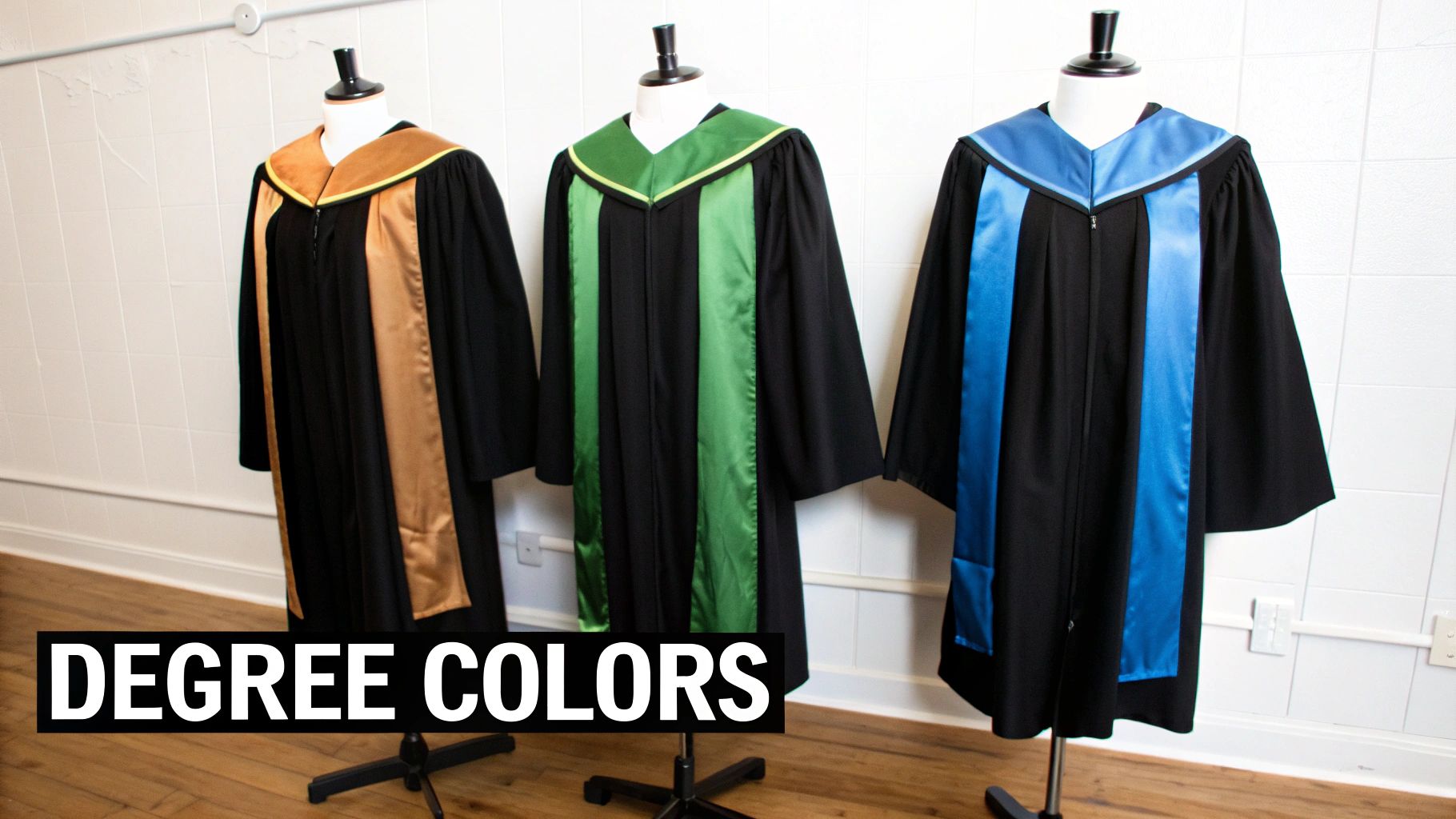
Stepping into your ceremony, you’ll notice gowns aren’t just black cloth—they’re coded stories. Each trim and velvet band highlights an academic milestone, from those fresh high school caps to the ceremonial drape of a doctoral hood.
Let’s unpack these colors and textures so your graduation attire reflects exactly how hard you’ve worked.
Degree Levels And Gown Colors
Below is a straightforward guide to the standard gown shades and hood velvet widths you’ll encounter at each degree level. Use this as your reference when choosing regalia.
| Degree Level | Gown Color | Hood Velvet Color |
|---|---|---|
| High School | Black | N/A |
| Bachelor’s | Black | 3-inch velvet |
| Master’s | Black | 3-inch velvet |
| Doctoral | Black | 5-inch velvet |
Even though the base remains black, you’ll see how gowns grow more elaborate as you climb the academic ladder. High school stays simple, bachelor’s and master’s add modest velvet borders, and doctoral robes feature dramatic panels.
Field Color Meanings
When gown trims meet satin linings, your academic discipline comes alive. Velvet and satin hues follow the Intercollegiate Code, but here are some common pairings:
- Gold for Science and Engineering
- Pink for Music
- Light Blue for Education
- Brown for Fine Arts
By combining a black gown with a gold-trimmed hood, a science graduate instantly signals their field. Individual institutions sometimes tweak these palettes to match their own identity.
Learn more about academic hood color meanings in our guide to hood hues.
“The right color trim transforms your gown into a personal banner of study.”
Institutional Customizations
Many colleges weave in a splash of school spirit without losing the degree code:
- Maroon velvet trim for universities using maroon as a signature color
- Double-lined satin hoods to showcase joint degree programs
- Embroidered crests on hood linings to highlight your alma mater
These tweaks keep your regalia rooted in tradition while celebrating campus pride.
Matching Stoles And Cords
To round out your look, pick stoles and cords that complement both gown and hood:
- Confirm your school’s primary and secondary colors.
- Select a stole whose satin matches one of those colors.
- Layer honor cords by achievement level or society affiliation.
Quick Tips:
- Two-tone stoles work beautifully for dual majors or special awards
- Metallic cords (gold, silver) offer a crisp honors distinction
- Organize multiple cords from lightest to darkest for a balanced effect
Practical Examples
Imagine a Master of Arts in Music:
- A black gown trimmed in pink velvet
- A hood lined in white and pink satin
- A coordinating pink stole with your school logo
- A gold cord for summa cum laude
Or picture a PhD in Chemistry:
- A black doctoral robe with gold velvet panels
- A 5-inch hood edging in science gold
- A navy-and-green stole reflecting department colors
- Dual cords honoring departmental and national society achievements
These choices let your personality shine through while keeping ceremony traditions intact.
For a seamless shopping experience, explore Gradshop’s collections:
- High School Caps & Gowns
- Stoles Collection
- Masters & Doctoral Products
School Palette Tips
Tie every detail back to your school’s brand. Match stole satin to your primary hue, add a slim border in the secondary shade, and pick cord metals that echo the velvet trim. These small yet thoughtful touches bring your graduation ensemble together—from head to hem.
How To Wear Each Component

Stepping into your graduation attire is more than just a wardrobe choice—it’s a moment you’ll remember forever. Each piece needs a little attention to ensure you look polished under those bright stage lights.
Before anything else, locate the label or manufacturer tag. It tells you front, back, and size, so you avoid any surprises when you walk across the stage.
- 1. Hold the gown open at the shoulders and slide your arms into the sleeves.
- 2. Zip or button the front, making sure it lies flat against your torso.
- 3. Check that the hem grazes just above the floor—no tripping hazards here.
Adjust Your Gown Properly
A gown that’s too long or too short can steal the show for all the wrong reasons. Here’s a quick hack: loop a thin belt or piece of tape inside the gown at your waist. It lifts any extra fabric off the ground.
“A well-fitted gown boosts confidence and keeps the wing-like drape intact,” says a seasoned regalia specialist.
Gradshop’s sizing chart pairs each gown with a height range. Double-check your measurements in the High School Caps & Gowns collection before finalizing your order.
Once the length is spot-on, smooth out the pleats from the shoulders down. A gentle shake and a couple of smooth strokes will keep everything crisp.
Drape And Secure The Hood
Your hood represents discipline and achievement—treat it like the crown jewel of your ensemble.
First, find the neckband and wrap it around your collar bones so the velvet trim faces outward. Let the rest of the hood hang down your back.
- Tuck the hood’s point into the gown’s neckline.
- Fasten it with a safety pin or the attached tie to a button inside the gown.
- Smooth the satin lining so your school colors pop evenly.
| Step | Action |
|---|---|
| Neckband | Center on collar bones |
| Point Folding | Lay flat between shoulder blades |
| Fastening | Secure with pin or tie |
After you’ve pinned it, give a gentle tug. The last thing you want is a slipping hood when you bend to receive your diploma.
Position Your Mortarboard
Think of your mortarboard as a personal crown—it belongs level and snug.
Place it about 1 inch above your eyebrows. Adjust the inner band until it feels secure without pinching.
Even a slight tilt can throw off your look in photos. When the moment arrives, shift the tassel from right to left once your degree is official—that simple gesture seals the deal.
Fasten Stoles And Cords
Stoles and cords add flair and honor to your gown. It’s all in the details.
- Lay the stole evenly across your shoulders so both ends hang at the same height.
- Use lightweight clothespins or garment clips inside the gown to keep it from slipping.
- Drape cords so the knot sits just below your collarbone and the tails reach mid-chest.
Tips:
- Pick a stole color that complements your hood lining.
- Browse honor cords in Gradshop’s Stoles Collection.
- If you have multiple cords, arrange them from lightest to darkest for a balanced look.
Run Pre-Ceremony Checks
Before you head out, run through this quick checklist:
- Gown zipped and smooth
- Hood centered and secure
- Mortarboard level, tassel ready
- Stoles and cords untangled
Following these steps turns putting on your regalia from a chore into a time-honored ritual. You’ll step on stage looking confident and composed.
Explore advanced styling in Gradshop’s Masters & Doctoral Regalia Collection. Discover dual honor cords for extra distinction. Shop doctoral robes and hoods at Gradshop today.
Sizing and Fit Tips
When you step onto the stage, you want every eye on you—not on a gown dragging across the floor. Nail your measurements, and the fabric will drape just right, sleeves will hang neatly, and the hood will sit exactly where it should. A precise fit is the secret behind that polished, confident look.
Measuring for Your Gown
Start with no shoes and stand tall. Have someone measure from the crown of your head down to the point where you want the hem to fall—this ensures the gown won’t pool or ride up.
Next, wrap the tape measure around the fullest part of your chest just under the arms. That number determines your chest size and keeps the gown snug without restricting movement.
- Height: Measure from top of head to ankle for ideal length.
- Chest Circumference: Ensures sleeves and body drape comfortably.
- Layer Allowance: Add 1–2 inches if you’ll wear a jacket or hoodie underneath.
Most retailers convert these figures into size codes on their charts. Double-check early to avoid a last-minute scramble. For a step-by-step walkthrough, see the graduation cap and gown size chart.
Tailoring Off The Rack
Even off-the-rack gowns sometimes need a tweak. A quick hem trims excess length while keeping the pleats intact. And if the sleeves feel a bit roomy, a tailor can bring them in for a sharper silhouette.
If you’re pressed for time, lightweight binder clips inside the shoulder seams work wonders. They discreetly lift extra fabric and keep the gown fitting like it was made for you.
- Fold the hem under and secure with binder clips.
- Pin the shoulder seams to narrow the width.
- Tuck loose hems with a small safety pin.
Hood Fit Essentials
The hood does more than complete your regalia—it’s the banner of your discipline colors. Measuring shoulder tip to tip gives you the perfect neckband length and stops the hood from sliding or bunching.
A properly sized hood frames your gown and highlights discipline colors without slipping or bunching.
If you notice any slippage, adjust the internal tie or add a tiny stitch at the neckline seam. That simple tweak keeps the hood anchored all day.
Before the ceremony, try on the full ensemble—gown, hood, and cap—in front of a mirror. This final fitting confirms everything works in harmony and looks intentional.
With these sizing and fit tips, you’ll walk across that stage knowing your gown, hood, and cap all fit as if they were custom-made.
- Double-check measurements 24 hours before ordering.
- Store your gown on a wide hanger to preserve its shape.
- Wear your graduation cap indoors first to prevent wind mishaps.
Frequently Asked Questions
This section walks you through every piece of your graduation outfit. Tick off each item with confidence before you walk across that stage.
Essential Graduation Gown Parts
Your full regalia includes a cap with tassel, the gown body, a hood, plus any stoles or cords you’ve earned.
Each element has its own story and signals your academic level.
- Cap and Tassel: Marks your status as a graduate and hosts the tassel move at the moment of conferral.
- Gown Body: Sleeve shape and length vary from high school to bachelor’s, master’s, and doctoral gowns.
- Hood: The velvet edging and colorful lining shout out your field of study and alma mater.
Confirm with your registrar if your school requires any special regalia pieces.
Finding The Right Hood Size
A properly sized hood should sit flat on your shoulders without bunching up.
Measure from one shoulder tip to the other, then down to the center of your back to find the correct fit.
| Shoulder Width | Torso Length | Hood Size |
|---|---|---|
| Under 36 in | Up to 18 in | Small |
| 36–42 in | 18–22 in | Medium |
| Over 42 in | Over 22 in | Large |
Align the hood’s internal ties to your gown’s neck button and try it on well before graduation day.
Customization Of Stoles And Cords
Adding personal touches to your stoles and cords highlights honors societies, cultural roots, or special awards.
Most schools allow extra embroidery, unique color combos, or insignias.
- Double-check your registrar’s rules on custom text.
- Choose stole satin that matches your school colors for a polished ensemble.
- Layer cords by level of achievement to keep them tangle-free.
“Custom details make your academic journey visible in every thread,” says a university ceremony coordinator.
Caring For Your Graduation Regalia
Treat your gown and accessories like keepsakes—proper storage and cleaning pay off in the long run.
Opt for gentle hand-washing or a trusted dry-cleaner, then smooth wrinkles with a cool iron.
- Hang your gown on a broad hanger inside a breathable garment bag.
- Lay hoods flat or drape over a padded bar to keep the lining crisp.
- Place mortarboards on a flat surface and drape cords neatly or hang them individually.
Avoid sealed plastic bins that trap moisture. Store everything in a cool, dry spot away from sunlight.
Common Assembly Mistakes To Avoid
Little slip-ups can throw off your photos and comfort on the big day. Watch for these common issues:
- Sleeves hidden or bunched under cords and stoles.
- Hood edges uneven on either side.
- Mortarboard tilted or shoved too far back on the head.
Stand in front of a mirror or ask a friend to do a final check before you head to the ceremony. You’ll step on stage looking sharp and feeling calm.
Ready to complete your ceremony wardrobe? Discover High School Caps & Gowns at Gradshop High School Collection, choose your Stoles Collection at Gradshop Stoles, and elevate your advanced degree attire with Masters & Doctoral Products at Gradshop Doctoral Collection. For all your graduation essentials, trust Gradshop at https://www.gradshop.com