

Your master's hood is the centerpiece of your regalia, but getting it to sit right can feel a bit tricky at first. The basic idea is simple: drape it over your shoulders, velvet-side-up, and then fasten it so it doesn't slide off.
The real magic, though, is in the final touch. You need to turn out the satin lining at the back. This single flip is what reveals your university’s colors and gives the hood that classic, elegant look everyone recognizes.
Decoding Your Master's Graduation Regalia
Before you step into that processional line, let's break down what you're actually wearing. Your academic regalia isn't just a rental costume; it's a symbolic outfit that tells a story of your achievement, with a history stretching back centuries. Each piece has a purpose.
For master's graduates, the regalia is a step up from the undergraduate level, with distinct features that set you apart. The whole ensemble—the gown, the cap, and that all-important hood—is designed to visually broadcast your academic rank and field of study.
- The Master's Gown: The first thing you'll probably notice is the sleeves. They’re not pointed like a bachelor’s gown. Instead, master's gowns have unique oblong sleeves, closed at the wrist, with a slit for your arms to pass through.
- The Cap and Tassel: You'll wear the classic mortarboard, which should sit flat on your head, almost like a tabletop. The tassel's color usually signifies your specific discipline, and which side it's on is a crucial part of the ceremony.
- The Master's Hood: This is the star of the show. It’s the most colorful and complex piece of your attire, acting as a visual code that tells everyone your degree, your field, and the institution that granted it.
Understanding the Hood's Symbolism
The hood is where your academic story really comes to life. A master's hood is typically 3 feet 6 inches long—a noticeable step up from a bachelor's hood (which many institutions don't even use) but shorter than the grand four-foot doctoral hood.
The colors aren't just for show; they follow a strict academic code. The color of the velvet trim indicates your field of study. You'll see specific colors for different disciplines, like a bright golden yellow for Science or a dignified drab for Business. The satin lining inside is where your university gets to shine, displaying its official school colors for all to see.
A common point of confusion is how the hood compares across degree levels. Think of the master's hood as the "in-between" size. It's a clear, visual marker of advanced study that stops just short of the doctorate. It’s a distinction you’ve earned.
Here’s a quick breakdown of the main components you’ll be wearing:
Quick Guide to Master's Regalia Components
| Regalia Component | Master's Degree Feature | Purpose & Symbolism |
|---|---|---|
| Gown | Oblong sleeves, closed at the wrist | Denotes an advanced degree beyond the bachelor's level. |
| Hood | 3.5 feet long; velvet trim and satin lining | The velvet color signifies the field of study; the satin shows university colors. |
| Cap | Standard mortarboard | Worn flat on the head; a traditional symbol of academia. |
| Tassel | Color often matches the discipline | Its placement and movement are a key part of the graduation ceremony. |
Understanding what each piece represents adds so much more meaning to the day. For a complete look at what to expect, take a look at our comprehensive guide on master's degree graduation regalia. Having this background will help you wear your entire ensemble with the pride and confidence it deserves.
Getting Your Master's Hood On Correctly
Alright, let's get to the part everyone seems a bit nervous about: putting on the actual hood. It can feel a little awkward at first, but once you get the hang of it, you'll look and feel like you've earned that degree. Trust me, a few simple tricks are all it takes.
First things first, your regalia probably showed up folded and a bit creased. You'll want to take care of those wrinkles. A light steaming is the absolute best way to go—it helps the fabric hang properly and gives your hood that sharp, distinguished look. Whatever you do, don't take a hot iron directly to that velvet or satin. It's a quick way to ruin it.
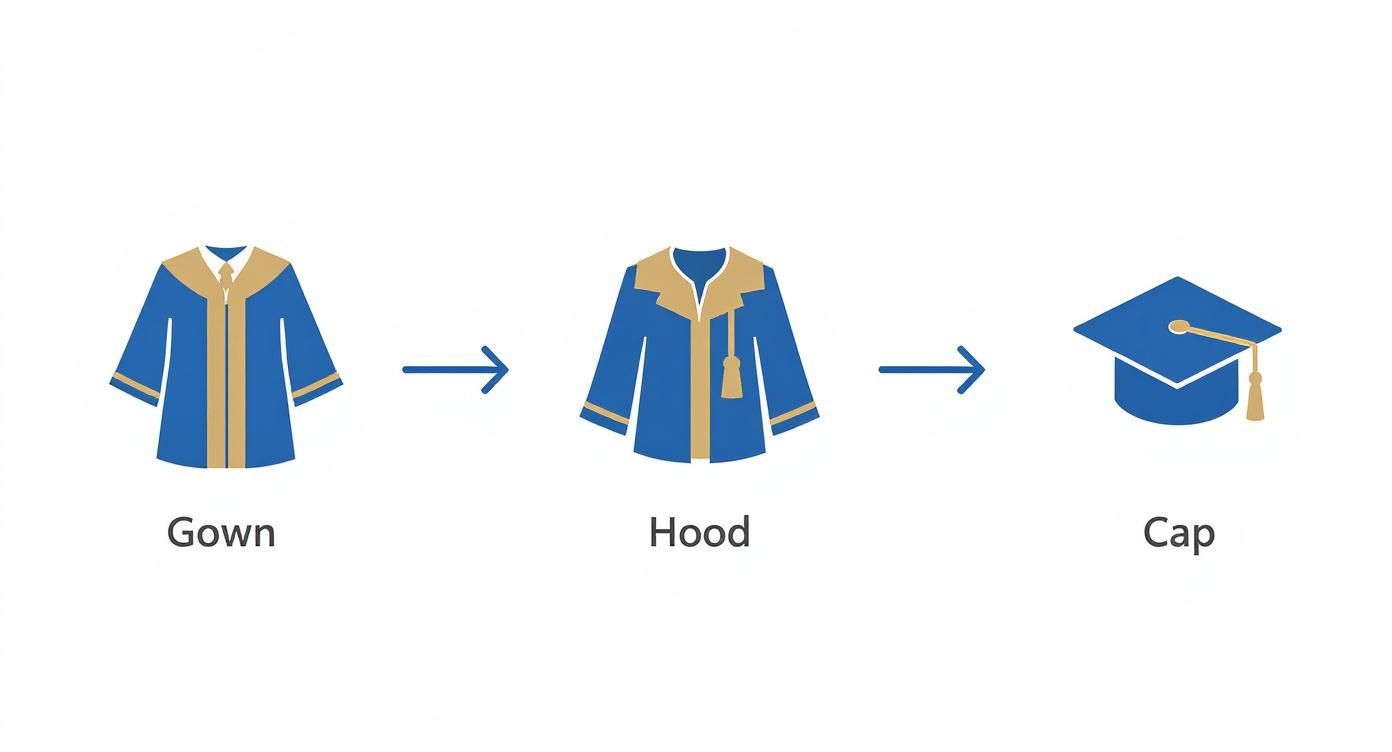
This little visual is a great cheat sheet. It lays out the order of operations: gown first, then the hood, and top it all off with the cap. The main thing to remember is that the hood goes over your gown, ensuring every piece sits just right.
Draping and Securing Your Hood
To start, you might want to undo the top button or two of your gown to give yourself some room to work. Hold the master's hood out in front of you, making sure the velvet side is facing up. The "V" shape should be pointing away from your body. That velvet trim is key—it signifies your field of study and is meant to be seen from the front.
Now, just drape the hood over your head and let it settle on your shoulders. The "V" part should sit at the front of your neck, much like a stole would. The rest of it—the long part with the satin lining—will naturally hang down your back.
Pro Tip: Make sure the hood isn't riding up and choking you. It should rest comfortably just below your collarbone. A little adjustment here saves you from fidgeting with it all through the ceremony.
To keep the hood from shifting, look for a small cord loop on the inside front of the "V". This clever little loop is made to be fastened to a shirt button. If your gown has its own built-in cord near the zipper, that works too. No button? No problem. A small safety pin discreetly attached to your gown does the job perfectly.
The Final Flip to Reveal Your Colors
This next bit is what really makes it look right. The tradition of wearing a master's hood is all about that elegant drape down the back, showcasing your school's colors.
With the front secured, reach back to the long part of the hood hanging down. You'll feel the velvet trim that runs down the middle. Your mission is to "turn out" the satin lining on either side of that trim so your university colors pop.
- Find the Center: First, locate that velvet trim at the back of the hood.
- Fold it Out: Gently flip the colorful satin lining over the velvet edge on both sides.
- Get it Symmetrical: Try to make sure an equal amount of color is showing on each side. The goal is to create a beautiful, even teardrop shape of color.
This flip is what turns a plain black drape into a vibrant statement of your accomplishment. Don't hesitate to grab a friend or family member for this part; it's almost impossible to get the back perfect on your own. For a more in-depth look with pictures, our guide on putting on graduation hoods will walk you through it so you can be confident you’ve nailed it before heading out the door.
Navigating Your Hooding Ceremony
The hooding ceremony is the symbolic peak of your master's degree journey. Knowing what to expect ahead of time can help settle any last-minute nerves, letting you truly be present for this once-in-a-lifetime moment.
Generally, graduation ceremonies handle this in one of two ways. You’ll either be hooded on stage by a faculty member, or you’ll be asked to arrive at the venue already wearing your full regalia. Your university's instructions are the final word, so make sure to read them carefully. If your school holds a formal hooding ceremony, you'll likely carry your hood during the processional, making the act of placing it on you a centerpiece of the event.

If You Are Hooded On Stage
This is a powerful moment, often performed by a thesis advisor, department head, or dean who played a role in your academic path. To make sure it goes off without a hitch, you'll need to carry your hood correctly as you walk to the stage.
Drape your master’s hood neatly over your left arm. Make sure the velvet trim faces outward. This little detail not only looks sharp but also keeps your right hand free for shaking hands and accepting your diploma cover. Keeping it on your left arm also sets you up for a smooth, single-motion handoff to the hooder.
When your name is called, you'll walk toward the faculty member who will be hooding you.
- Approach with Confidence: Walk to the center of the stage and turn to face the audience. This gives your family and friends the best possible view (and the best photo op!).
- Lower Your Head Slightly: A gentle bow gives the hooder plenty of room to place the hood over your head without it snagging on your cap.
- Stand Still: It can be tempting to try and "help" or immediately adjust the hood, but resist the urge. The faculty members have done this countless times and will handle the placement and any final tweaks.
The act of a mentor placing the hood over a graduate's shoulders symbolizes the transition from student to peer. It’s a formal welcome into the community of scholars in your field, representing a transfer of knowledge and responsibility.
Who Performs the Hooding
The person placing the hood on your shoulders is rarely random; they are chosen for their significance to your academic experience. It's almost always a senior academic figure who represents the institution's scholarly authority.
This could be:
- Your thesis or capstone advisor
- The head of your academic department
- The dean of your college or school
This personal connection is what makes the ceremony so meaningful. After you've been hooded, you'll typically shake hands with the hooder and any other dignitaries on stage before walking back to your seat.
Knowing these steps will help you feel prepared and present. To get a better sense of the entire event, take a look at our guide on what to do during a master's degree graduation ceremony. It covers everything from the processional to the recessional, ensuring you can enjoy every moment of your celebration.
Completing Your Graduation Day Look
With your master's hood perfectly draped, you're on the home stretch. But the details are what pull the entire look together, turning a simple gown into a symbol of academic achievement. Getting the cap, tassel, and underlying outfit right ensures you look sharp and feel confident from the processional to the post-ceremony photos.

First things first: the mortarboard. It's designed to sit flat on your head, almost like a tabletop parallel to the floor. It can be tempting to tilt it back or wear it at a jaunty angle, but the traditional, dignified look is perfectly level. Make sure one of the points of the square top is facing directly forward, centered neatly on your forehead.
Mastering Your Mortarboard and Tassel
Tassel placement is a surprisingly big deal—it's a core part of the ceremony's symbolism. Before your name is called and your degree is conferred, your tassel belongs on the right side of your cap. This signifies that you're still a candidate.
The big moment comes when a university official instructs your class to "turn the tassel." In unison, you and your fellow graduates will move it from the right over to the left side. It’s a small gesture, but it’s the symbolic act that officially marks your new status as a graduate.
Ceremony Tip: Don't jump the gun on the tassel turn! It's a collective, shared moment of celebration. Moving it early is a common faux pas and can look a little awkward. Wait for the official cue to do it with everyone else.
What to Wear Under Your Gown
Your gown is the main event, but what you wear underneath is critical for your comfort and overall appearance. Think of graduation as a formal event; business casual is the standard and always a safe choice. A collared dress shirt, a nice blouse, dress slacks, or a skirt will look polished if your gown opens up.
And let's talk about shoes. You'll be on your feet a lot—walking, standing in line, crossing the stage, and celebrating afterward. Comfortable, professional shoes are a must. This is not the day to break in a brand-new pair of stilettos.
- Under the Gown: Stick to lightweight, breathable fabrics. Those academic gowns can get surprisingly warm, especially if you're in a crowded hall or sitting under the sun for an outdoor ceremony.
- For Footwear: Sensible choices like low heels, wedges, or polished dress shoes are your best friend. They offer the right blend of formal style and practical comfort for a long day.
To help you nail every detail, here’s a quick checklist of what to do—and what to avoid.
Regalia Do's and Don'ts Checklist
| Do | Don't |
|---|---|
| Wear your cap flat and parallel to the ground. | Tilt your cap back or to the side. |
| Start with your tassel on the right side (before the degree is conferred). | Move your tassel to the left before you're officially told to. |
| Choose comfortable, professional shoes you can stand and walk in for hours. | Wear brand-new, unbroken-in shoes or overly casual footwear. |
| Dress in lightweight, business-casual attire under your gown. | Wear bulky or heavy clothing that can cause you to overheat. |
| Steam your gown and hood the day before to remove wrinkles. | Show up with a creased, wrinkled gown straight from the package. |
| Check that your hood's colors are fully visible from the back. | Let your hood get twisted or bunched up under your gown's collar. |
Remember, your outfit should make you feel confident and comfortable, allowing you to focus on the significance of the day. While most of us rely on a mirror, some people are even exploring virtual dressing room technology to get a full picture of their ensemble ahead of time. The goal is to step into that processional line feeling proud and ready to celebrate your hard-earned degree.
Caring for Your Hood After the Ceremony
Your master's hood isn't just another piece of your graduation outfit; it's a symbol of all the late nights, hard work, and dedication that went into earning your degree. Once the photos are snapped and the celebration winds down, you'll want to take care of it so it remains a pristine memento of your achievement for years to come.
The first order of business is cleaning. Between the ceremony, parties, and photos, your hood might have picked up a small smudge or two. Never, ever put your academic hood in a washing machine. The velvet and satin are far too delicate.
For any minor spots, you can gently blot the area with a damp cloth and a tiny bit of mild soap. But if you’re dealing with anything more serious, your best bet is to trust a professional dry cleaner who knows how to handle delicate formalwear. It's worth the small investment.
Proper Storage for Long-Term Preservation
How you store your hood is just as important as how you clean it. Tossing it into a drawer is a surefire way to create permanent, deep-set wrinkles in the velvet and satin lining. Don't do it!
Treat it like you would a fine suit or an elegant gown. The ideal way to store it is on a wide, padded hanger that can support its weight and shape without creating sharp creases. This lets the hood hang naturally and keeps the velvet from getting crushed.
After hanging it, slip it into a breathable garment bag. This will shield it from dust and sunlight but still allow air to circulate, preventing any musty smells or mildew from developing.
Key Takeaway: A padded hanger and a breathable garment bag are your two best friends for preserving your regalia. Steer clear of the plastic bags from the dry cleaner for long-term storage—they can trap moisture and cause the fabric to yellow over time.
Displaying Your Academic Achievement
For many graduates, hiding such a meaningful item away in a closet just doesn't feel right. Displaying your hood is a fantastic way to honor your hard work and keep the memory of graduation day front and center.
One of the most popular options is a custom shadow box. You can have your hood beautifully arranged alongside your tassel and diploma, creating a stunning display for your home or office. It’s a great conversation starter and turns your regalia into a piece of personal art.
This method not only looks great but also protects everything from dust and damaging UV light. To complete the look, you can find a matching diploma frame to create a cohesive tribute to your academic journey.
Common Questions About Master's Hoods
Even after you've got the basics down, a few questions always seem to pop up on graduation day. Let's run through some of the most common ones so you can feel completely confident when it's time to line up.
Think of this as your cheat sheet for those last-minute "wait, what do I do if..." moments. We want you to be able to soak in the experience, not worry about your regalia.
What Do the Colors on My Master's Hood Represent?
Those colors aren't just for show; they tell a story. Your academic hood is like a code that instantly communicates your academic achievements.
- The Velvet Trim: This is the colored band running along the edge. The color here represents your specific field of study. For instance, business grads will have a drab (tan) color, education is light blue, and science is a brilliant golden yellow.
- The Satin Lining: This is the colorful interior section that you flip out. These are the official colors of your university—the institution that's granting your degree.
So, at a glance, anyone familiar with academic regalia can see both what you studied and where you earned your degree.
My Hood Keeps Slipping Forward. How Do I Fix It?
This is, without a doubt, the number one complaint we hear. A hood that constantly rides up your neck is just plain annoying. Thankfully, there's a built-in solution.
If you look inside the front "V" of your hood, you'll find a small fabric loop or cord. This little piece is your best friend. It’s designed to be secured to a button on your shirt or blouse, anchoring the hood right where it belongs. Some gowns even have a small cord near the zipper for this exact purpose.
Pro Tip: If you don't have a button in the right spot, a single safety pin is a lifesaver. Just discreetly pin the loop to your gown from the underside at the front of your shoulders. It'll stay put all day, and no one will ever see it.
This one simple step makes all the difference in keeping your regalia looking sharp and feeling comfortable.
Who Is Supposed to Put the Hood On Me?
Great question. The answer really depends on your university's specific traditions for commencement. There’s no single right way, so you'll want to double-check the instructions your school sent out.
Generally, it plays out in one of two ways:
- On-Stage Hooding: This is a very common and symbolic part of master's degree ceremonies. A faculty member—maybe your thesis advisor or department head—will formally place the hood over your shoulders as you cross the stage.
- Arrive Pre-Hooded: Some universities streamline the process and ask graduates to show up already wearing their full regalia, hood included. In this case, you'll want to get a friend or family member to help you put it on correctly before the ceremony starts.
Knowing which style your school uses ahead of time will prevent any day-of confusion.
Can I Wear My Master's Hood for a Future Doctoral Graduation?
The short answer here is a firm no. Academic tradition is quite strict on this: you wear the regalia for the degree you are actively receiving. A doctoral hood is a distinct piece of regalia, noticeably different from a master's hood. It’s longer (about four feet compared to three-and-a-half) and has wider velvet panels.
Each level of academic achievement comes with its own specific regalia. When you earn that doctorate, you'll get a brand new doctoral hood to celebrate that unique accomplishment. Always wear the hood that matches the degree being conferred at the ceremony you're attending.
At Gradshop, we believe every detail of your big day should be perfect. From master's hoods that proudly display your field of study to distinguished doctoral regalia and classic caps & gowns, we supply high-quality attire for every academic milestone. Ensure your look is complete by exploring our entire collection at https://www.gradshop.com.