

It’s surprisingly easy to get the fit of your graduation cap right. The mortarboard—that flat, square top—should sit level with the ground. Make sure one of the points is facing directly forward, creating a diamond shape right in the center of your forehead.
For high school, associate's, and bachelor's degrees, your tassel hangs on the right side to start. It only makes its big move to the left after your degree has officially been conferred.
More Than Just a Hat
That square on your head is so much more than a piece of formalwear; it’s a powerful symbol of every late-night study session and every exam you aced. Getting the placement right isn't just about looking sharp in photos—it’s about showing respect for a deeply rooted academic tradition.
We’ll walk through all the must-know details, from getting that perfect, secure fit to mastering the all-important tassel turn. By the end, you'll feel completely confident and ready for your big day.
The modern mortarboard cap actually has a fascinating history. It evolved from the biretta, a cap worn way back in the 15th century by clerics and university professors. Its design was eventually standardized in the U.S. in 1895 to clearly signify academic accomplishment.
Of course, once you’ve got the cap figured out, you’ll want to capture the moment perfectly. For some fantastic inspiration, check out this guide to graduation photoshoot poses.
Key Takeaway: Wearing your cap correctly is a sign of respect for your academic journey and the institution you're graduating from. Proper placement ensures you look polished while honoring a tradition that spans centuries.
Here’s a quick look at everything we’ll cover to get you ready:
- How to achieve a secure and comfortable fit that lasts all ceremony long.
- The official tassel rules for different degree levels.
- Hairstyle tips and tricks that work with your cap, not against it.
Finding the Perfect Fit and Placement
Getting your graduation cap to sit just right is the first step to feeling confident and comfortable on your big day. The last thing you want is to be constantly adjusting it during the ceremony.
First things first, find the front. Look inside the cap—most have a slightly tapered headband or even a small printed arrow to show you which point goes forward. This is your guide.
The ideal placement has the flat mortarboard top sitting perfectly level, parallel to the ground. You're not going for a halo effect by tilting it back, nor do you want it pulled down over your eyes. Position the front point so it’s centered on your forehead, about one inch above your eyebrows. This classic placement looks sharp and keeps the cap stable.
Securing Your Cap for All-Day Wear
Now, let's make sure it stays put. If you have particularly fine, silky, or curly hair, you know the struggle—that cap might feel like it has a mind of its own. A few simple tricks can make all the difference.
- Bobby Pins are Your Best Friend: Don't just slide them in. For a truly secure hold, crisscross at least two bobby pins over the headband and into your hair.
- Clips for Extra Grip: If you have thicker hair, a couple of small clips can offer an even stronger anchor without messing up your style.
- Let Your Hairstyle Help: Creating a bit of texture with hairspray can give the cap’s fabric something to grab onto. Even a simple low ponytail can create a stable base.
This simple infographic gives you a great visual breakdown of how it all comes together.
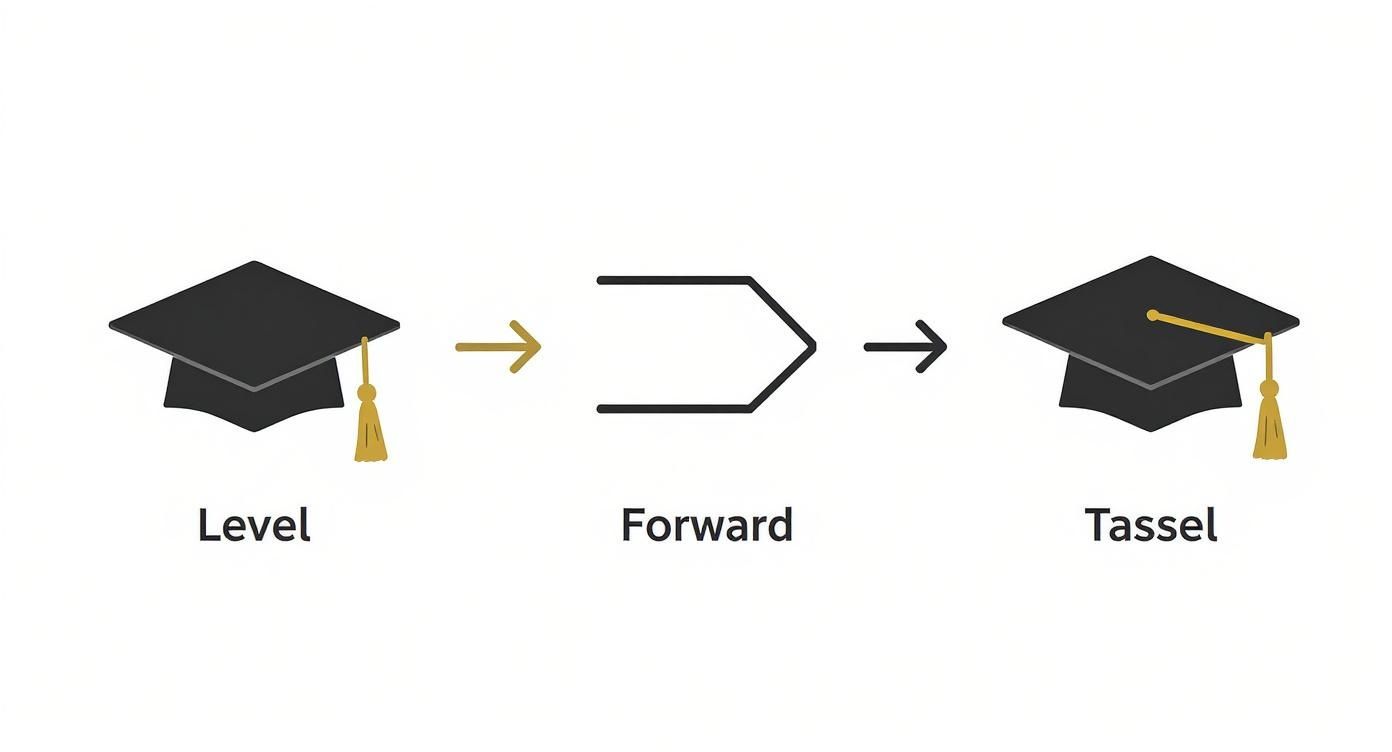
As you can see, keeping that mortarboard level, pointing it straight ahead, and getting the tassel in the right spot are the three keys to a polished look.
Of course, all these tips work best when you start with the right size. If your cap feels painfully tight or is so loose it's wobbling, you'll want to revisit the measurements. We cover everything you need to know in our guide on measuring for the right graduate cap and gown.
Pro Tip: Give your cap a test run before the ceremony. Seriously. Put it on, walk around the house, turn your head, look up, look down. A quick five-minute trial can prevent any surprise slips or awkward mid-procession adjustments.
Mastering Tassel Rules and Traditions
That tassel hanging from your graduation cap is much more than a simple accessory. It's a key part of the ceremony, representing your entire academic journey and the big step you're about to take from candidate to graduate. Getting the placement right is essential for a smooth and meaningful ceremony.
For anyone earning an undergraduate degree, like an associate's or a bachelor's, the rule is straightforward: start with your tassel on the right side of your cap. This position shows everyone that you're a candidate, ready and waiting to have your degree conferred.
The real highlight, of course, is the "turning of the tassel," a symbolic moment you won't want to miss.

The Tassel Turn Ceremony
This tradition is the grand finale of your student career. It's a simple physical act that carries a ton of meaning. Usually, after the last name is read and all degrees are officially conferred, a university leader will prompt the entire class to move their tassels from the right to the left.
It’s a powerful, collective gesture that signifies your official transition from student to graduate. Be ready for it—it’s a fantastic photo opportunity and a memory you'll cherish.
Rules for Advanced Degrees
Now, if you're earning a postgraduate degree, the rules change a bit. Master's and doctoral candidates often follow a different protocol.
Most universities will have master's and doctoral candidates wear their tassels on the left side for the entire ceremony. Why? Because it signifies that you've already earned a degree before. You're not a first-time graduate.
Still, traditions can differ from one school to another, so it never hurts to double-check your institution’s specific instructions ahead of time. For a complete breakdown of the tassel tradition, check out our guide on what side the tassel goes on for more details. Knowing these small but important rules makes all the difference on the big day.
Choosing a Hairstyle for Your Graduation Cap
Let's be honest, your hairstyle is the foundation for getting that graduation cap to sit just right. The perfect style means your cap stays put from the processional to the after-party. The wrong one? You'll be fighting a wobbly, slipping cap all day. The trick is to pick a hairstyle that works with the cap, not against it.

If you have long hair, think low and sleek. A high ponytail or a top knot is the fastest way to create a balancing act you don't want to be part of—it creates a bump that makes the cap totally unstable. Instead, stick with styles that gather at the nape of your neck.
- Loose Waves: This is a classic for a reason. It’s elegant, soft, and doesn't create any extra bulk under the cap.
- Low Ponytail: You can't go wrong with this simple, clean look. It keeps your hair controlled and out of your face for photos.
- Side Braid: Both practical and pretty. A side braid keeps your hair from getting tangled in your gown's collar or any honor cords you might be wearing.
For a look that’s both polished and secure, learning how to braid hair for beginners can give you some fantastic, long-lasting options.
Styles for Short and Curly Hair
With short hair, it's all about framing your face. A sharp bob, a textured pixie cut, or even just some simple styling can look incredible. A little light-hold hairspray will keep the dreaded "cap-flat" look at bay. You can discreetly use a few bobby pins to lock that cap in place.
For those with beautiful natural curls, the last thing you want is for the cap to crush your volume. The best approach is often to place the cap a bit further back on your head. This lets your curls frame your face perfectly without being flattened. A few well-placed pins will give you all the security you need.
Pro Tip: Steer clear of heavy styling products. Gels, pomades, and heavy serums can make your hair slippery, giving the cap nothing to hold onto. A texturizing spray or a light mist of hairspray is your best friend—it adds just enough grip to keep everything in place.
It's amazing to think that this simple piece of regalia is part of a huge industry. The global market for graduation caps was valued at around $1.2 billion in 2024, and it's projected to nearly double by 2033. This isn't just because of more graduates; it's also driven by fun traditions like cap decorating. If you're curious, you can find market intelligence reports on the graduation cap market that dive into these trends.
Understanding Different Caps for Academic Levels
Not all graduation headwear is created equal. The cap you wear is a powerful symbol of your academic journey, and it often changes as you climb the educational ladder. It's a small detail, but getting it right shows respect for the tradition and your specific achievement.
The one everyone recognizes is the mortarboard. It's that classic flat, square cap you see at high school graduations and ceremonies for associate's and bachelor's degrees. That sturdy, flat top isn't just for looks; it's the perfect platform for the tassel and has become a universal icon of academic success. For these levels, the mortarboard is the standard.

Headwear for Advanced Degrees
But once you move into postgraduate work, your headwear gets an upgrade. Instead of a mortarboard, you'll often see master's and doctoral graduates sporting a tam. This soft, plush cap, usually made of velvet, is a clear marker of advanced scholarship.
Tams look and feel different. They aren't always square; you'll find them with four, six, or even eight sides. The number of sides can be tied to a specific university's tradition or even the degree being awarded. The tassels on tams are frequently more elaborate, too—sometimes featuring silky or metallic threads that signify a particular field of study.
Expert Tip: Think of the switch from a mortarboard to a tam as a visual promotion. It's a long-held tradition that honors the incredible effort and dedication poured into earning a master's or doctoral degree.
It's also fun to see how these traditions vary around the world. In the UK, for instance, over 64% of universities use caps, but head to Scotland, and you'll find that about 87% of schools skip them entirely. Even more unique is Iceland's 'stúdentshúfa,' which has a white crown that comes off after one year to reveal a black one underneath.
Getting these details right is part of what makes graduation so special. For a more detailed look at the specifics, you can read our guide on the difference between the academic regalia mortarboard cap and tam.
Whether you’re outfitting a doctoral candidate or an entire high school class, Gradshop has the right regalia. We offer everything from the appropriate master's and doctoral products to classic high school caps and gowns to make sure every milestone is celebrated perfectly.
Your Graduation Cap Questions, Answered
Even after you've got the fit and hairstyle figured out, a few last-minute questions always seem to pop up on the big day. Let's walk through the most common ones so you can feel cool, calm, and collected for the ceremony.
Can I Actually Decorate My Graduation Cap?
More often than not, yes! Many high schools and universities now see cap decorating as a fantastic way for graduates to show some personality. It’s your moment to give a shout-out to your family, represent your major, or display a quote that got you through those late-night study sessions.
But before you break out the glitter glue, always check your school's official policy. Some institutions are very traditional and have strict rules against altering your regalia in any way. If you do get the go-ahead, think light. Cardstock, paint, and vinyl stickers are your best friends here, as heavy decorations can throw the cap off balance and make it a pain to wear.
What if My Cap Just Doesn’t Fit Right?
Nothing is more distracting than a wobbly or painfully tight cap. The good news is, this is usually a simple problem to solve—as long as you don't wait until you're lining up for the procession.
- If your cap is too big: A few bobby pins can be a lifesaver. Try crisscrossing two pins over the headband in the back to really anchor it to your hair. For some extra security, you can even stick a thin strip of weather-stripping foam or fabric inside the band for a much snugger fit.
- If your cap is too small: First, try to get your hair as flat as possible right where the cap sits. If it’s still squeezing your head, don't suffer in silence. Find the person in charge of regalia at your school right away and ask if they have a larger size available.
Expert Tip: Deal with any fit problems the moment you notice them. A simple adjustment or a quick size swap can make the difference between a comfortable celebration and a day spent fiddling with your cap.
Do I Have to Wear My Cap for the Whole Ceremony?
Pretty much. Think of your cap as part of the official uniform for the day; it signals that you're a candidate for graduation. It should stay on your head for the majority of the event.
Of course, there are exceptions. You'll likely be cued to remove it for the national anthem or a prayer. Your best bet is to just watch the faculty on stage and do what they do. Once the ceremony is over and the recessional begins, feel free to toss it in the air (if that's the tradition!) and take it off for all the photos that follow.
At Gradshop, we have everything you need to mark this incredible milestone. Why not add a personal touch to your look? Check out our huge collection of stoles and sashes to stand out from the crowd.