

It’s finally here—graduation day. You've got the gown, you've practiced the walk, but one small detail can throw everything off: the cap. It seems straightforward, but getting that mortarboard to sit just right is a common source of last-minute stress.
Don't worry, I've seen it all, and getting it right is easier than you think. The key is to have the mortarboard sit flat and level, like a tabletop on your head, with the front point centered neatly on your forehead. Before the ceremony starts, your tassel belongs on the right side. Then, during the big moment when your degree is conferred, you'll join your classmates in the tradition of moving it over to the left.
Your Quick Guide to Wearing a Graduation cap

Graduation day is a whirlwind of emotion, photos, and tradition. Amidst all the excitement, the last thing you want to be fiddling with is your cap. Getting it on correctly from the start means you'll look sharp, feel comfortable, and be ready to focus on what matters. It's a small detail that honors the academic tradition you're celebrating.
This guide will walk you through the essentials, starting with the basics and then diving into the little tips and tricks that make all the difference. We’ll cover everything from finding the "front" of your cap to mastering the all-important tassel turn.
Understanding the Parts of Your Cap
First things first, let's get familiar with your cap. Knowing the different parts helps make sense of how it's supposed to sit. What you're wearing is officially called a mortarboard, and it has a few key components you'll want to identify.
- Mortarboard: This is the stiff, flat square part on top. Your main goal is to keep this parallel to the floor.
- Skullcap: This is the soft, fitted part that actually sits on your head. Look inside—there's usually a tag or a slightly pointed elastic section that marks the back.
- Tassel: The decorative cluster of cords that hangs from the very top.
- Button: The small fastener right in the center of the mortarboard that holds your tassel loop in place.
The Core Principles of Placement
The goal is a look that's both secure and dignified. You want the cap to sit squarely on your head—not tilted back like a halo or pulled down over your eyebrows. A good rule of thumb is to place the front point of the mortarboard about one to two inches above your eyebrows.
This centered position isn't just for looks; it's also for balance. It helps keep the cap from sliding around while you're walking or turning your head for photos. Think of an imaginary line running from the tip of your nose straight up your forehead—the point of the cap should be right on that line.
Key Takeaway: If you remember one thing, make it this: keep the mortarboard flat. Resisting the urge to tilt it back is the number one rule for a classic, polished look that respects the long-standing academic tradition.
For a quick reference, here's a simple breakdown of the essential steps.
Graduation Cap Essentials at a Glance
| Element | Correct Placement and Action | Why It Matters |
|---|---|---|
| The Cap | Place on head with the mortarboard flat and parallel to the ground. The front point should be centered on your forehead. | Ensures a traditional, dignified appearance and helps prevent the cap from slipping. |
| The Tassel | Hang it on the right side of the cap before the ceremony begins. | This is the standard starting position for undergraduates, signifying you are a candidate for graduation. |
| The Tassel Turn | After your degree is officially conferred, move the tassel to the left side. | This symbolic action signifies your transition from a candidate to a graduate. |
Following these simple rules will have you looking and feeling like a confident graduate, ready for the ceremony.
Of course, finding the right regalia is the first step. For graduates looking to complete their ensemble, Gradshop offers a huge selection of high school caps and gowns and specialized academic wear for higher degrees. Whether you need a complete Master's package or a classic Doctoral tam, securing the perfect fit will set you up for a picture-perfect commencement day.
Finding the Perfect Graduation Cap Fit
Let's be honest, nobody wants to be that person fidgeting with their cap all through the ceremony. A comfortable, secure fit is the secret to a stress-free graduation day, letting you focus on your big moment instead of a wobbly mortarboard.
A cap that’s too loose will slide around every time you turn your head for a photo. On the other hand, one that’s too tight will give you a headache before the first speaker even takes the stage.
Getting the Basics Right
First things first, you need to figure out which side is the front. Your cap is made of two main parts: the flat, square top called the mortarboard and the part that actually sits on your head, the skullcap.
Just look inside the skullcap. You'll almost always find a little tag or a slightly pointed, elastic section. That's the back. The front is the smooth, un-gathered side that goes on your forehead. Simple as that.
How to Measure for Your Cap
Getting the right size from the start saves a world of trouble later. You don't need any fancy equipment—just a soft measuring tape and a minute of your time.
- Wrap the tape around the widest part of your head.
- A good rule of thumb is to place it about one inch above your eyebrows and ears.
- Pull it snug, but not so tight that it's uncomfortable. You want a true, comfortable measurement.
- Jot down the number in inches or centimeters and compare it to your school's or retailer's sizing chart.
No soft tape measure? No problem. Just use a piece of string, mark where it overlaps, and then measure that length with a regular ruler. For a more detailed walkthrough, our guide on how to measure for your cap and gown has you covered.
Material and Sizing Considerations
Not all caps are created equal. The material can really change the fit and feel. Most graduation caps these days are made from a lightweight polyester and have some elastic in the band for a bit of give. These are often sold as "one-size-fits-all" or in general sizes like Small, Medium, and Large.
However, if you're getting a higher-quality cap, especially for a master's or doctoral degree, it might come in specific, fitted hat sizes for a more precise fit.
Pro Tip: If you're stuck between two sizes, always go for the slightly larger one. A loose cap is incredibly easy to secure with a couple of bobby pins, but there's not much you can do about a cap that's painfully tight.
This attention to detail is part of a time-honored tradition celebrated by millions. In fact, the graduation cap market was valued at around $1.2 billion in 2024 and is expected to grow to $2.1 billion by 2033. It just goes to show how much this moment—and getting the look just right—matters to graduates everywhere. Taking a moment to find the right fit ensures you’re a comfortable part of this amazing academic milestone.
Getting the Perfect Fit: How to Wear Your Graduation Cap
You’ve got the right size, now it’s time to nail the placement. Getting your graduation cap to sit just right is the key to looking sharp and feeling confident as you walk across that stage. Your goal is simple: the flat top of the mortarboard should be parallel to the ground. No tilting!
You'll want to position it so the front point is centered squarely on your forehead. Think about placing the headband part roughly one to two inches above your eyebrows. This isn't just about looking the part; it's about stability. A common mistake is to wear the cap too far back on the head, almost like a halo. It might feel more comfortable for a second, but it’s a surefire way to have it slip off the moment you turn to wave to your family.
Creating a Solid Foundation
Before reaching for any pins or clips, let's talk hair. Believe it or not, your hairstyle can make or break how well your cap stays put. If your hair is particularly smooth and straight, the cap's fabric has nothing to grip onto, which can cause it to slide around. A quick spritz of texturizing spray at the crown can work wonders.
For those with gorgeous, voluminous curls or very thick hair, the trick is to create a slightly compressed, stable spot for the cap to rest. You don't want it just perched on top of a mountain of hair; that's a recipe for a wobbly disaster. Gently pat down the area where the cap will sit so it can make better contact with your head.
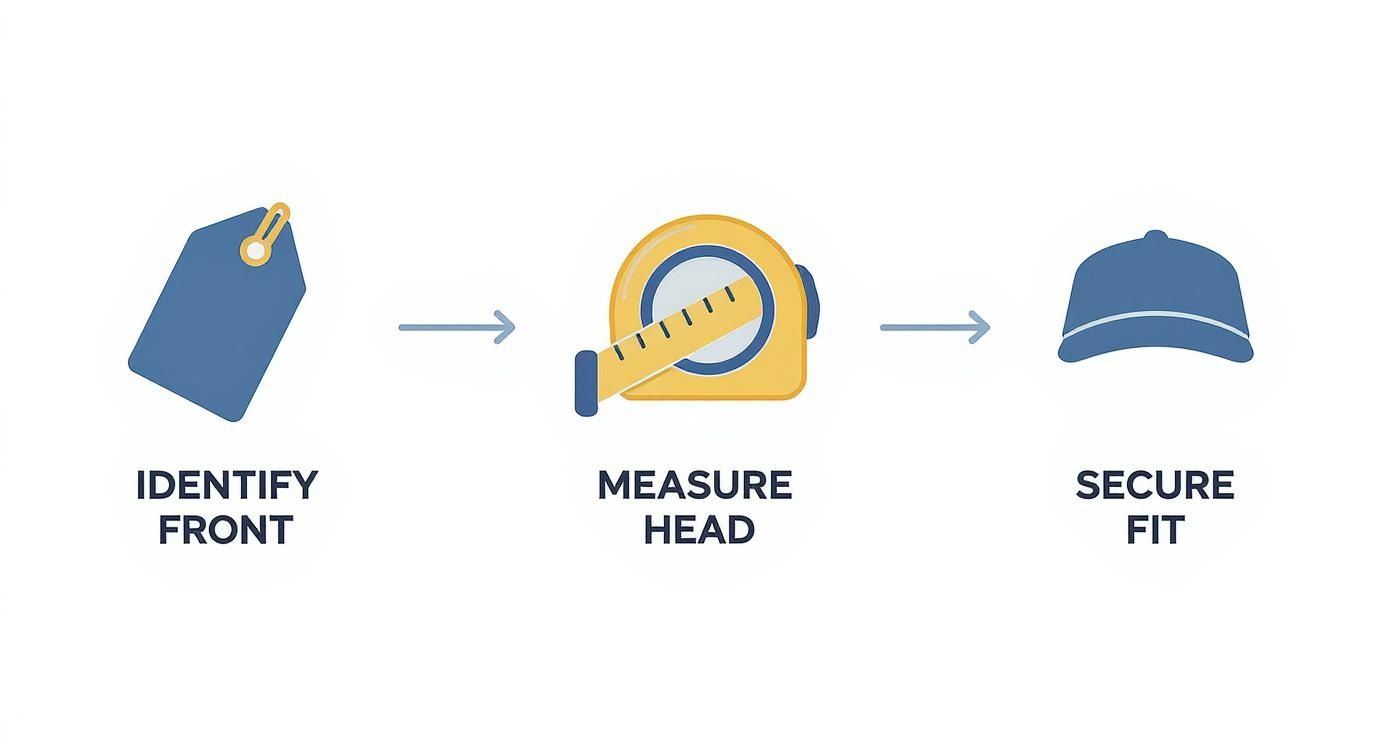
Starting with these fundamentals—knowing which side is the front and ensuring it’s snug—is what will make the difference between a cap that stays put and one you’re constantly adjusting.
The Secret Weapon: Bobby Pins
On graduation day, bobby pins are your absolute best friend. They're the invisible scaffolding that will hold your cap in place through every handshake, hug, and photo op. Don't just slide one or two in and hope for the best; you need a strategy.
- Try the "X" Method: This is the most secure technique I've seen. On each side of the cap, slide one bobby pin through the fabric edge and into your hair. Then, take a second pin and slide it over the first in the opposite direction, creating a locked-in "X."
- Add Front and Back Support: If you have an especially long ceremony or are planning an enthusiastic cap toss, add an extra pin at the front and back for total security.
Pro Tip: Always use bobby pins that match your hair color to keep them hidden. And remember, the wavy side goes against your scalp! That's the side designed for maximum grip.
Adapting to Your Hairstyle
Not all hair is created equal, and your 'do of choice will impact your cap strategy. If you're planning an updo, try to keep it low on your head to leave a flat, stable surface for the cap.
For those with very fine or slick hair where even bobby pins struggle, a thin velvet headband worn underneath the cap is a game-changer. The texture of the velvet gives the cap something to cling to, preventing any and all slippage. It's a simple fix that works incredibly well.
Getting the cap right is just one piece of the puzzle. For a complete guide on how everything fits together, from the gown to the hood, check out our tips on the proper way of wearing academic regalia.
Mastering Tassel Traditions and Rules
More than just a decorative flair, the tassel on your graduation cap is steeped in tradition and symbolizes your entire academic journey. Understanding the rules behind it adds real meaning to the ceremony. Luckily, the most important tradition is elegantly simple but powerfully significant.
https://www.youtube.com/embed/v9_ufAx-LN4
Before your name is called and your degree is officially in hand, your tassel belongs on the right side of your cap. Think of this as the "candidate" side. You're on the very edge of accomplishment, but you haven't quite crossed the finish line.
This practice is pretty standard across the board for high school and undergraduate ceremonies. It creates a powerful, unified look across the entire graduating class, showing everyone is on the same path together.
The Big Moment: The Tassel Turn
The "turning of the tassel" is the main event—the physical act that marks the end of one chapter and the beginning of another. When the dean, principal, or president gives the signal, you’ll move your tassel from the right side over to the left side. In that one synchronized motion, you officially transition from a candidate to a graduate.
It’s a small gesture that carries a ton of weight. Sharing that moment with hundreds of your peers is a memory that will stick with you forever. It's a key part of the ceremony, and if you want to get the mechanics just right, check out our guide on how to put the tassel on your graduation cap.
Tassel Rules for Advanced Degrees
While the right-to-left switch is the norm for bachelor's degrees, the game changes once you get to the postgraduate level.
If you’re earning a Master's or Doctoral degree, you'll likely follow a different custom.
- Master's and Doctoral Students: Many universities have these graduates start the ceremony with their tassel already on the left side.
- The Reasoning: The thinking here is that since they've already earned a bachelor's degree, their tassel stays on the "graduated" side from the get-go.
For these advanced degrees, the symbolic moment isn't the tassel turn but the hooding ceremony. This is where a faculty member drapes the academic hood over your shoulders, formally welcoming you into the community of scholars in your field. It's a truly meaningful part of the doctoral and master's experience.
A Note on Colors: Tassel color is another layer of symbolism. High schools often stick to school colors, but universities use specific colors to denote your field of study. You might see light blue for Education, gold for Science, or drab for Business.
As college completion rates hit an all-time high of 61.1% in the U.S., more graduates than ever are taking part in these time-honored traditions. For public four-year colleges, that number is even higher at 70.7%, showcasing just how many students are proudly turning their tassels each year.
Solving Common Graduation Cap Problems
Let’s be honest, graduation day can throw a few curveballs. After all that work, the last thing you want is a rogue mortarboard trying to steal the show. A sudden gust of wind or a cap that just won't stay put can add a layer of stress you just don't need. Knowing a few quick fixes for these common wardrobe malfunctions will help you stay focused on your big moment, from the processional march to that final, triumphant cap toss.
By far, the most common headache is a slipping cap. It's incredibly distracting and can mess up what should be a perfect photo. If your cap feels wobbly, the problem is almost always a lack of grip—especially if you have really smooth or fine hair. Thankfully, a simple fix can make all the difference.
The Slipping Cap Solution
Bobby pins are your best friend here. But don't just slide one in and hope for the best. To create a solid anchor, cross two pins over each other in an "X" shape on each side of the cap. Make sure you catch both the inner band of the cap and a decent amount of your hair. For even more security, pop another pin or two in at the back.

If bobby pins just aren't cutting it, it's time to bring in the heavy hitters:
- Fashion Tape: This double-sided tape is a genuine lifesaver. Stick a few small strips to the inside front of the cap’s band for a strong, invisible hold directly against your forehead.
- Non-Slip Headband: A thin headband lined with velvet, worn right under your cap, creates amazing friction. The fabric of the cap will grip onto the velvet, stopping any slide before it starts.
- A Spritz of Hairspray: A little bit of strong-hold hairspray or even a texturizing spray applied right where the cap will sit can create just enough texture for it to grab onto.
Handling Tassel Troubles and Fit Issues
What if your tassel breaks free from the button on your mortarboard? Don’t panic. It happens. Most tassels are just attached with a simple loop, so you can usually hook it back on in a few seconds. If the button itself is wobbly, a small safety pin pushed through from the underside of the cap can hold the tassel loop securely in place.
A cap that’s way too loose or painfully tight is another all-too-common issue. If it feels like it's swimming on your head, you can easily pad the inside for a much snugger fit.
Quick Fix for a Loose Cap: Just fold up a small piece of paper towel or a bit of fabric and tuck it into the back of the cap's band. This simple trick instantly closes the gap and makes the fit feel much more secure—and no one will ever see it.
For a cap that feels like it’s in a vise grip, first try gently stretching the elastic band at the back a few times. If that doesn't give you enough relief, you can make a tiny, strategic snip into the elastic to release the pressure. Just be careful, and use this as a last resort.
In the end, a little prep work makes all the difference. Tucking a few bobby pins, a strip of fashion tape, and a safety pin into a pocket or purse can solve nearly any cap-related drama that pops up, ensuring you look and feel your absolute best.
For graduates who want to ensure a perfect fit from the get-go, Gradshop has everything from classic high school caps and gowns to the more distinguished Doctoral tams for your special day.
A Few Common Questions About Graduation Caps
Even after you’ve got the basics down, a few last-minute questions always seem to pop up on graduation day. Getting these sorted out ahead of time means you can walk into your ceremony feeling cool, calm, and collected. We’ve pulled together the most common ones we hear to give you some quick, clear answers.
Think of this as your final cheat sheet for a flawless look. From how the cap should sit to whether you can add your own flair, these details make a huge difference.
How Is a Graduation Cap Supposed to Sit on Your Head?
Your graduation cap should sit flat, with the mortarboard parallel to the floor. It’s not meant to be tilted back like a halo or worn off to one side. The front point of the cap should be centered on your forehead, usually about an inch or two above your eyebrows.
Why so specific? Well, for two reasons. First, this placement is what creates that classic, dignified academic look. Second, it's the most balanced and stable way to wear it, which is key for keeping it in place while you’re walking across the stage or turning to find your family in the crowd. The goal is a fit that feels just right.
Can You Decorate Your Graduation Cap?
This is a big one, and the answer is: it depends entirely on your school. Many high schools and even some undergraduate programs love seeing students get creative. It’s a fantastic way to celebrate, show off your personality, or give a shout-out to the people who supported you.
But don't break out the glue gun just yet. Many other universities have strict rules about regalia to keep the ceremony looking uniform and formal. Before you do anything, always check the official graduation guidelines from your school. A quick search on their website or an email to the registrar can save you the headache of being asked to remove your masterpiece on commencement day.
What’s the Best Way to Keep My Graduation Cap from Falling Off?
Ah, the classic fear of a rogue cap. A slipping mortarboard is a common worry, but thankfully, it's also one of the easiest problems to solve. The go-to method is using bobby pins that match your hair color, which makes them practically invisible.
Here’s a technique that never fails:
- First, get the cap situated perfectly on your head.
- Slide bobby pins over the edge of the inner cap and anchor them into your hair.
- For an unshakable hold, make an "X" pattern with two pins on each side of your head. That crisscross technique really locks it down.
Expert Tip: If you have very fine or smooth hair, try wearing a thin, non-slip velvet headband underneath. The cap’s fabric will grip the velvet, creating just enough friction to stop any and all sliding. It works like a charm.
What Do I Do with My Cap After Graduation?
Once the ceremony is over and the last photos are snapped, your cap becomes a symbol of everything you've accomplished. It's a keepsake, and honestly, there are no rules for what comes next.
Many graduates love to display it. A shadow box is a popular choice, where you can arrange the cap with your tassel, diploma, and any honor cords you earned. Others simply store it safely as a memento to look back on. It’s your achievement, so how you choose to remember it is completely up to you.
No matter which academic milestone you're celebrating, Gradshop has the perfect regalia to make your day special. Take a look at our huge collection of high school caps and gowns, custom stoles, and distinguished Master's and Doctoral regalia to find exactly what you need for your ceremony.