

When you look out at a sea of graduates, you might just see a lot of caps and gowns. But to the trained eye, that "uniform" is actually a complex language, telling a detailed story of academic achievement. The real differences in graduation gowns by degree level lie in the details: the cut of the sleeve, the choice of fabric, and the presence of an academic hood.
For instance, a bachelor's gown has simple, pointed sleeves. A master's gown gets more intricate with its unique oblong sleeves that have a slit for the arm. Doctoral gowns are the most elaborate of all, boasting plush velvet chevrons on full, bell-shaped sleeves.
Understanding Academic Regalia Across Degree Levels
Graduation regalia is far more than just a ceremonial outfit; it's a visual code that communicates a graduate's journey and accomplishments. Every element, from the style of the gown to the fabric of the cap, signifies a specific qualification and the major milestone being celebrated. These traditions are steeped in centuries of academic history, creating a clear visual hierarchy that distinguishes one level of education from the next.
To decipher this system, you just need to know the core components and what they mean. The four main pieces that define academic dress are:
- The Gown: This is the foundation of the outfit. Its style, sleeve shape, and material are the most obvious indicators of the degree level.
- The Cap: While the classic mortarboard is the most common, higher degrees like doctorates often introduce a soft, velvet tam.
- The Tassel: A small but significant detail, its color often denotes the field of study, and its placement signals whether the degree has been conferred.
- The Hood: This is the most descriptive part of the regalia. Reserved for graduate degrees, its colors and length specify the degree type, field of study, and the graduate's alma mater.
Regalia Features at a Glance
Seeing the key differences side-by-side makes them much easier to spot. This table offers a quick snapshot of the defining features you'll see at commencement ceremonies, from high school all the way through doctoral programs.
Each element is intentionally designed to reflect the graduate's hard work and academic progress. If you're curious about the deep history behind these traditions, you can find a more detailed explanation of what academic regalia truly represents.
| Degree Level | Typical Gown Style | Defining Sleeve Shape | Standard Headwear | Primary Accessory |
|---|---|---|---|---|
| High School | Simple, often shiny fabric with a plain front zipper. | Pointed, open sleeves similar to a bachelor's gown. | Mortarboard Cap | Stole or Honor Cords |
| Bachelor's | Simple matte fabric with a plain front zipper. | Pointed, open bell-shaped sleeves. | Mortarboard Cap | Tassel and Stole |
| Master's | More formal, with a unique sleeve design. | Long, oblong sleeves, closed at the wrist with a front slit. | Mortarboard Cap | Academic Hood |
| Doctoral | Most ornate, often with velvet panels. | Full, bell-shaped sleeves with three velvet chevrons. | Soft Velvet Tam | Ornate Academic Hood |
As you can see, the progression from a simple high school gown to an elaborate doctoral robe is a visual representation of a long and challenging academic journey.
Comparing High School and Bachelor's Degree Gowns

Moving from high school to university is a massive step, and the regalia you wear reflects that journey. While they might look similar from the back of an auditorium, the graduation gown differences by degree level are significant when you get up close. It’s important to know the distinction, because showing up to your college commencement in a high school gown just isn't done.
The first thing you’ll probably notice is the fabric. High school gowns usually have a shiny, lightweight polyester finish. It’s a practical choice that gives a bright, uniform look to a large class and keeps costs down for what is typically a single-use garment.
Bachelor's degree gowns, on the other hand, almost always use a high-quality matte fabric. This simple switch from shiny to matte is a deliberate nod to formality and academic tradition. The flat finish adds a certain weight and dignity to the ceremony, connecting it to the long history of university regalia.
The Defining Feature: The Sleeve Cut
Fabric aside, the single biggest giveaway that separates a bachelor's gown from a high school one is the cut of the sleeves. It's a subtle detail, but one that carries a lot of meaning in the academic world.
- High School Gown Sleeves: These are kept simple, with a straight cut that often comes to a point. They're designed for a clean, uniform look across hundreds of graduates.
- Bachelor's Gown Sleeves: Here, you'll see the traditional bell shape. The sleeves are long, pointed, and open at the wrist, creating a more formal, flowing silhouette that's instantly recognizable in higher education.
That bell sleeve is the classic hallmark of an undergraduate degree. It’s the main reason you can’t just reuse your old high school gown for your university graduation—the incorrect sleeve cut would stick out immediately. For a deeper dive into high school regalia, check out our complete guide on caps and gowns for high school graduation.
Color and Tassel Significance
Color also gets a lot more specific once you reach the university level. Most high school ceremonies stick to one or two school colors for everyone. But at a bachelor's commencement, while the gown might be the university's color, the tassel introduces a whole new layer of symbolism.
A bachelor's degree tassel color is not arbitrary; it represents the graduate's specific field of study. This academic color code allows faculty and guests to identify graduates from different colleges within the university, such as the College of Arts, Sciences, or Engineering.
For example, a nursing graduate might have an apricot tassel, while an education major’s is light blue. This system adds a depth of meaning and tradition that you just don't see in most high school ceremonies.
Market Impact and Construction
Looking at the global graduation gown market, the importance of these differences becomes clear. Gowns for bachelor's degrees make up over 55% of the total market revenue, which is a huge share. This shows just how significant earning an undergraduate degree is on a global scale.
This scale also means construction quality is often a step up. While both high school and bachelor's gowns are made to be affordable, university gowns tend to have more refined details. Think sturdier zippers, reinforced seams, and a better-structured yoke (the part over the shoulders) to ensure the gown drapes properly through a long ceremony.
Ultimately, the shift from a high school to a bachelor's gown is all about marking a new academic chapter. The move from a shiny to a matte fabric, the specific bell-shaped sleeve, and the meaningful tassel colors all work together to signify a graduate's entry into the world of higher learning.
Advancing to Master's Degree Regalia
Earning a master's degree marks a serious commitment to a specialized field, a huge leap beyond the broader studies of an undergraduate program. The graduation regalia at this level reflects that jump, introducing new elements that clearly signify this advanced achievement. The most obvious of the graduation gown differences by degree level you'll notice is the unique sleeve design and the mandatory academic hood.

Right away, the master's gown stands out from a bachelor's gown because of its sleeves. Where an undergrad's gown has simple, open bell sleeves, the master's gown features a very peculiar oblong sleeve. This isn't just a modern design choice; it's a feature steeped in academic tradition, meant to symbolize a higher level of scholarship.
The Unique Oblong Sleeve Design
The sleeve is truly the most defining part of a master's gown. Unlike the open sleeves on gowns for lower degrees, this one is a long, sealed pouch with a slit for your arm to come through.
Here’s a breakdown of how it works:
- The Oblong Shape: The sleeve itself is a long, rectangular pouch that hangs down toward the knee.
- The Closed End: The bottom of this pouch is sewn completely shut.
- The Arm Slit: About halfway up the sleeve, there’s a horizontal slit where you slide your arm through, giving you full mobility.
This design might seem a bit odd today, but it’s a direct holdover from medieval times when scholars used the long pouch of the sleeve to carry books and manuscripts. Now, it's purely symbolic, but it remains the single most important visual cue that someone is a master's graduate.
The oblong, closed-end sleeve isn't just a stylistic flourish—it's an immediate, unmistakable sign of postgraduate accomplishment. It visually separates a master's degree holder from the sea of bachelor's graduates, representing a more advanced and specialized education.
Decoding the Master's Academic Hood
While some undergraduates might wear stoles or cords, the academic hood becomes a mandatory, central piece of regalia at the master's level. It's easily the most colorful and informative part of the entire outfit, telling a rich story about the graduate's academic path. Draped over the shoulders and down the back, the hood uses specific colors to denote the graduate's university and field of study.
To really appreciate its significance, you have to understand the color system.
- Velvet Trim: The color of the velvet border signifies the specific field of study. For instance, Drab (a light brown) represents business, while Light Blue is for education.
- Satin Lining: The colors on the hood's inner lining are the official colors of the university granting the degree.
The master's hood also has a specific length and shape. It's noticeably longer than any accessory an undergraduate would wear but shorter than a doctoral hood, placing it perfectly within the academic hierarchy. For anyone wanting to make sure their regalia is just right for the big day, Gradshop offers a full range of customizable Master's Gowns and Hoods built to meet university specifications.
How to Properly Wear the Academic Hood
Wearing the hood correctly is key to looking polished and feeling confident. Many graduates actually receive their hood during the ceremony in a special "hooding" segment, where a faculty mentor places it over their shoulders.
If you're putting it on yourself, here’s how to get it right:
- Drape the hood over your head, velvet-side-up, so it rests comfortably on your shoulders.
- Make sure the velvet trim is showing nicely along the front and around your neck.
- Fasten the front loop to a shirt button or the gown's internal cord to keep it from sliding back.
- To show off the university colors, have a friend help "turn out" the lining. This is done by flipping the velvet trim outward at the bottom point of the hood on your back, revealing the colorful satin inside.
That last step is what really makes the regalia pop, proudly displaying your university's colors. It's the combination of the distinctive oblong sleeves and the meaningful academic hood that makes master's regalia such a powerful symbol of expertise and dedication.
The Pinnacle of Academia: Doctoral Regalia
Earning a doctorate is the culmination of years of intense research, dedication, and intellectual contribution. It's only fitting that the regalia worn by doctoral candidates reflects this pinnacle of academic achievement. The gowns, hoods, and headwear at this level are the most elaborate and distinguished of all, and the difference is obvious when you see a doctoral robe next to a bachelor's or master's gown.
This regalia isn't just for a ceremony; it's a statement of authority and expertise. Every detail, from the rich materials to the specific symbolic additions, is meant to convey the highest level of scholarship. The gown itself is a significant step up, moving far beyond the simpler robes worn at previous graduations.
The Significance of Velvet Chevrons and Panels
The most striking feature of a doctoral gown is its generous use of velvet. While the master's degree introduces the academic hood, the doctoral degree incorporates velvet directly onto the gown itself, a clear sign of terminal degree status.
You'll see this velvet in two key areas:
- Velvet Panels: Two wide panels of velvet, called "facings," run straight down the front of the gown, from the neckline to the hem. They give the robe a formal, substantial feel.
- Velvet Chevrons: Three distinct bars of velvet, known as chevrons, adorn each of the full, bell-shaped sleeves. This three-bar design is exclusively for those who hold a doctorate.
While the gown itself is traditionally black, many universities now offer custom doctoral gowns in their official school colors. This creates a stunning and unique look for their highest graduates. The velvet trim often matches the color of the graduate's specific field of study, echoing the colors on their academic hood and tying the whole ensemble together.
Distinguishing the Doctoral Tam from the Mortarboard
Another key difference is the headwear. Graduates at the bachelor's and master's levels wear the familiar flat mortarboard cap. Doctoral candidates, however, earn the right to wear a doctoral tam—a soft, plush cap that's both a symbol of prestige and far more comfortable.
The doctoral tam is more than just a different hat; it’s a mark of distinction reserved for those who have earned a terminal degree. Typically made from black velvet, it comes in four, six, or eight-sided versions and is often finished with a gold bullion tassel, a clear upgrade from the standard rayon ones.
Choosing a premium doctoral tam is a perfect way for graduates to honor their hard-won achievement with headwear that is both comfortable and visibly superior. This switch is one of the clearest visual cues separating a PhD, EdD, or other doctorate holder from the rest of the graduating class.
The Ornate and Elongated Doctoral Hood
At the doctoral level, the academic hood reaches its maximum length and ornamentation. It is the longest and most impressive of all academic hoods, distinguished by a wider velvet trim that signifies the highest degree. The colors follow the established system: the velvet trim shows the field of study, while the satin lining displays the official colors of the university granting the degree.
The sheer size and grandeur of the doctoral hood make it a standout piece. Its length and wider trim ensure it's easily noticed, symbolizing the depth and breadth of the graduate's specialized knowledge. For anyone getting ready for their ceremony, it helps to know how all these pieces come together. Our guide on the PhD cap and gown offers a more detailed look into each component.
Around the world, doctoral regalia can take on some fascinating forms. In South Africa, for instance, PhD candidates stand out in vibrant scarlet gowns, while all other degrees, including master's, are conferred in black. Finnish doctoral graduates have an even more unique tradition, where their academic dress includes not only a gown but also a doctoral top hat and a sword. You can read more about the global traditions of academic dress to see how these distinctions are celebrated worldwide.
Ultimately, every piece of doctoral regalia—from the velvet-trimmed gown and distinguished tam to the ornate hood—is meticulously designed. It’s a well-deserved honor for the immense effort and scholarly achievement of those who have reached the highest level of academia.
A Visual Breakdown of Gowns, Sleeves, and Caps
We’ve covered the specifics for each academic level, but seeing the graduation gown differences by degree level right next to each other is where it really clicks. The shift from a simple high school robe to a formal doctoral gown is a visual story, with every change in the sleeves, headwear, and overall cut having a specific meaning. This breakdown puts those distinctions into a simple, side-by-side guide.
The most obvious changes happen with the sleeves. A high school or bachelor's gown has simple, pointed bell sleeves. The look is clean, classic, and uniform—perfect for creating a cohesive visual for the graduating class. As a student moves up the academic ladder, the regalia gets more detailed to show their higher standing.
Gown Cuts and Sleeve Progression
The master's gown is where you see the first big jump in design, thanks to its unique oblong sleeve. This is a long, closed pouch with a slit where the arm goes through. Historically, it was actually used for carrying books or scrolls. Today, it’s the single most recognizable feature of a master's graduate, making them easy to spot in a crowd.
Doctoral gowns go back to a bell-shaped sleeve, but it’s much fuller and grander than the bachelor's version. Most importantly, it's decorated with three plush velvet chevrons—a clear symbol that the wearer has earned a terminal degree. These chevrons, along with matching velvet panels running down the front of the gown, represent the absolute peak of academic achievement.
When you're trying to figure out someone's academic rank at a glance, look at the sleeves. From the open bell sleeve of a bachelor's to the closed oblong pouch of a master's and the velvet-striped bell of a doctorate, each shape tells you exactly where they are in their educational journey.
To make the most distinguished elements crystal clear, this infographic shows the key pieces that are exclusive to doctoral regalia.
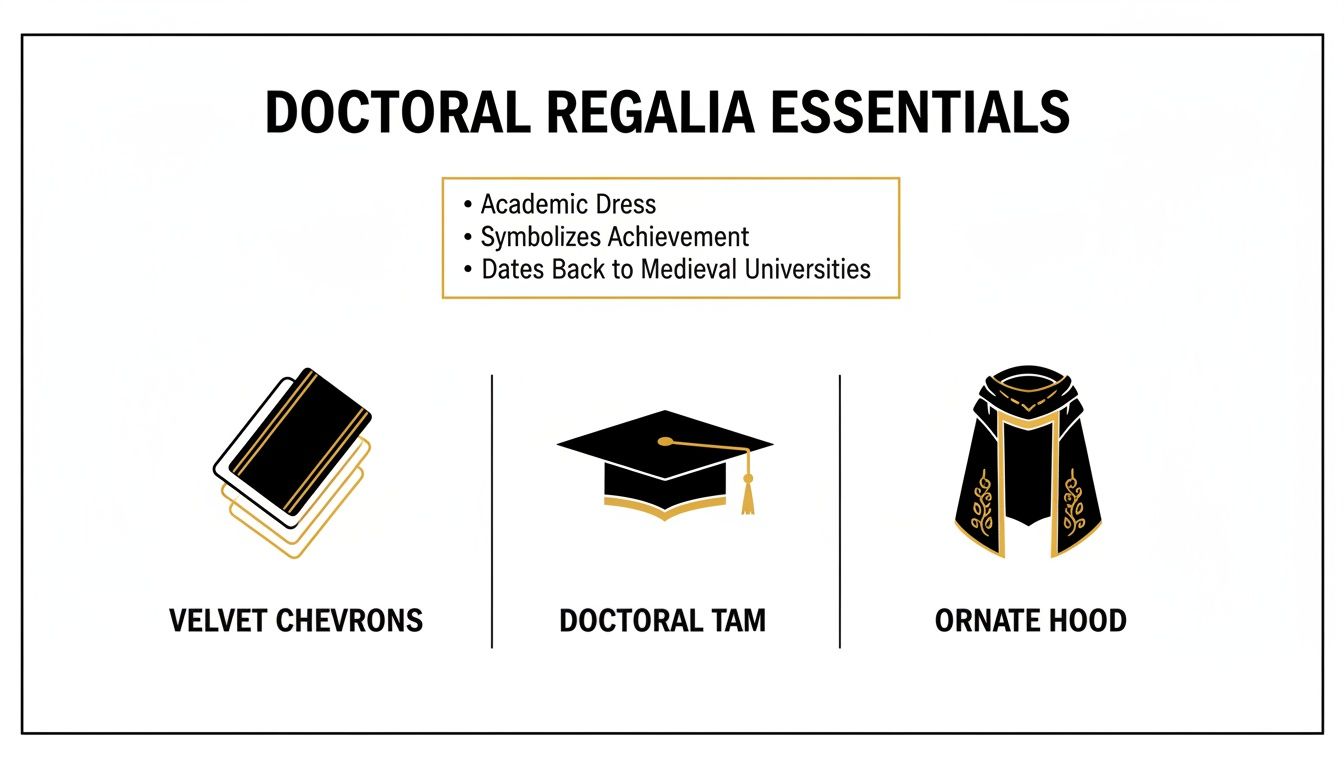
This visual really drives home that the velvet chevrons, soft tam, and elaborate hood are the defining features that show a graduate has reached the pinnacle of their field.
Comparing Headwear: Mortarboard vs. Tam
Just like the sleeves, the headwear changes with academic rank. The classic square mortarboard cap is the go-to for high school, bachelor's, and even master's degrees. It’s a timeless look that works well for the vast majority of graduates.
But when you get to the doctoral level, you earn the right to wear the more comfortable and prestigious doctoral tam. This soft, often velvet, cap is an unmistakable sign of high academic honor.
- Material: Tams are crafted from plush velvet, a serious upgrade from the fabric-covered cardboard of a mortarboard.
- Shape: They come in four, six, or eight-sided versions, giving them a softer, more sophisticated look.
- Tassel: A doctoral tam is typically finished with a heavier, more ornate gold bullion tassel, setting it apart from the standard rayon tassels.
For anyone who has reached this incredible milestone, investing in a high-quality doctoral tam is a perfect way to honor the years of commitment.
Comparative Analysis of Academic Regalia
Let's pull it all together. This table breaks down the core regalia components across each major academic stage, making it easy to see the key differences at a glance.
| Feature | High School | Bachelor's Degree | Master's Degree | Doctoral Degree |
|---|---|---|---|---|
| Gown Fabric | Typically shiny polyester | Matte-finish polyester or cotton blend | Higher-quality matte fabric | Premium fabric, often with velvet panels |
| Sleeve Shape | Pointed, open sleeves | Pointed, open bell-shaped sleeves | Long, oblong sleeves, closed at the wrist with an arm slit | Full bell sleeves with three velvet chevrons |
| Headwear | Mortarboard Cap | Mortarboard Cap | Mortarboard Cap | Soft Velvet Tam (4, 6, or 8-sided) |
| Main Accessory | Stole or Honor Cords | Tassel indicating field of study | Mandatory Academic Hood | Longer, ornate Academic Hood |
As you can see, every piece of the regalia—the gown, sleeve, cap, and accessories—is designed to build upon the last. It creates a clear visual hierarchy that celebrates and honors every single step of a person's academic journey.
Decoding Cords, Stoles, and Accessories
While the cap and gown signal your academic level, it's the accessories that really tell your personal story. Things like honor cords, stoles, and medallions layer on meaning, showcasing specific achievements, affiliations, and passions. This is where the uniform look of graduation day gets a splash of individuality.
Unlike the fairly rigid rules for gowns and hoods, accessories are all about celebrating personal accomplishments. A high school student might wear a gold cord for a high GPA, while a college graduate’s cords could point to membership in a prestigious honor society like Phi Beta Kappa. This is one area where graduation gown differences by degree level become less about institutional tradition and more about an individual's journey.
Stoles: The Storytellers of Your Journey
Stoles, sometimes called sashes, are long pieces of cloth draped over the neck, and they’re probably the most expressive accessory you can wear. They act as a canvas for graduates to represent different parts of their identity and experience.
- Academic Honors: Many colleges and universities award stoles for Latin honors—cum laude, magna cum laude, and summa cum laude.
- Organizational Membership: It's also very common to see stoles identifying members of fraternities, sororities, student government, or other campus clubs.
- Cultural and Personal Identity: Graduates often use stoles to honor their heritage. Gradshop offers a huge variety of customizable options, from vibrant Kente stoles to military and international flag designs, giving every student a way to proudly represent their background.
Think of a stole as more than just an add-on; it’s a public declaration of a graduate’s unique path. Whether it signifies academic excellence, cultural pride, or extracurricular dedication, it turns a standard gown into a personalized tribute.
The Meaning Behind Honor Cords
Honor cords are thin, twisted ropes with tassels at each end, worn looped around the neck. They almost always signify a specific academic achievement or membership in an honor society. The colors are deeply symbolic and are usually standardized by the organization that awards them. For example, a double cord of gold and royal blue might represent membership in the Alpha Kappa Mu honor society.
People often ask what colors mean on honor cords, and the answer usually comes down to the rules of the school or the specific honor society. These simple ropes provide a subtle but powerful way to highlight the hard work that earned a student special recognition, adding a welcome pop of color and meaning to their graduation outfit.
Your Top Questions About Graduation Gowns, Answered
Working your way through academic milestones brings up a lot of questions about regalia, especially as you advance through different degree levels. Let’s clear up some of the most common ones so you can feel confident and prepared for your big day.
These are the practical details that graduates and their families often wonder about.
Can I Wear My Bachelor’s Gown for My Master’s Ceremony?
You really shouldn't. The most immediate giveaway is the sleeve design—it’s a major visual distinction between the two levels of achievement. A bachelor's gown has simple, open, bell-shaped sleeves. In contrast, a master's gown features unique, oblong sleeves that are closed at the end but have a slit for your arms.
Wearing the wrong gown doesn't accurately reflect your new academic standing. To properly honor the hard work you've put in, it’s best to get the right regalia, and our collection of Master's Gowns and Hoods will ensure you have the correct attire.
What’s the Difference Between a Doctoral Tam and a Mortarboard?
The key differences come down to the material, shape, and the level of prestige each one represents. The mortarboard is that classic flat, square cap you see on high school, bachelor's, and even master's graduates.
A doctoral tam, on the other hand, is a soft, plush velvet cap reserved exclusively for those who have earned a doctoral degree.
A doctoral tam is typically offered in a four, six, or eight-sided style and is widely considered more comfortable and distinguished than a mortarboard. It’s often paired with an upgraded gold bullion tassel, making it an unmistakable symbol of the highest academic achievement. You can explore our selection of Doctoral Tams to see the different styles available.
How Do I Pick the Right Hood Colors for My Degree?
Think of an academic hood's colors as a code that tells a story about your specific degree, university, and field of study. The velvet trim color indicates your academic discipline—for instance, Light Blue for Education or Drab for Business. The satin lining inside the hood proudly displays your institution's official colors.
At Gradshop, our Academic Hoods are designed to make it simple for you to select the correct institution and field of study, guaranteeing your regalia is perfectly accurate for your ceremony.