

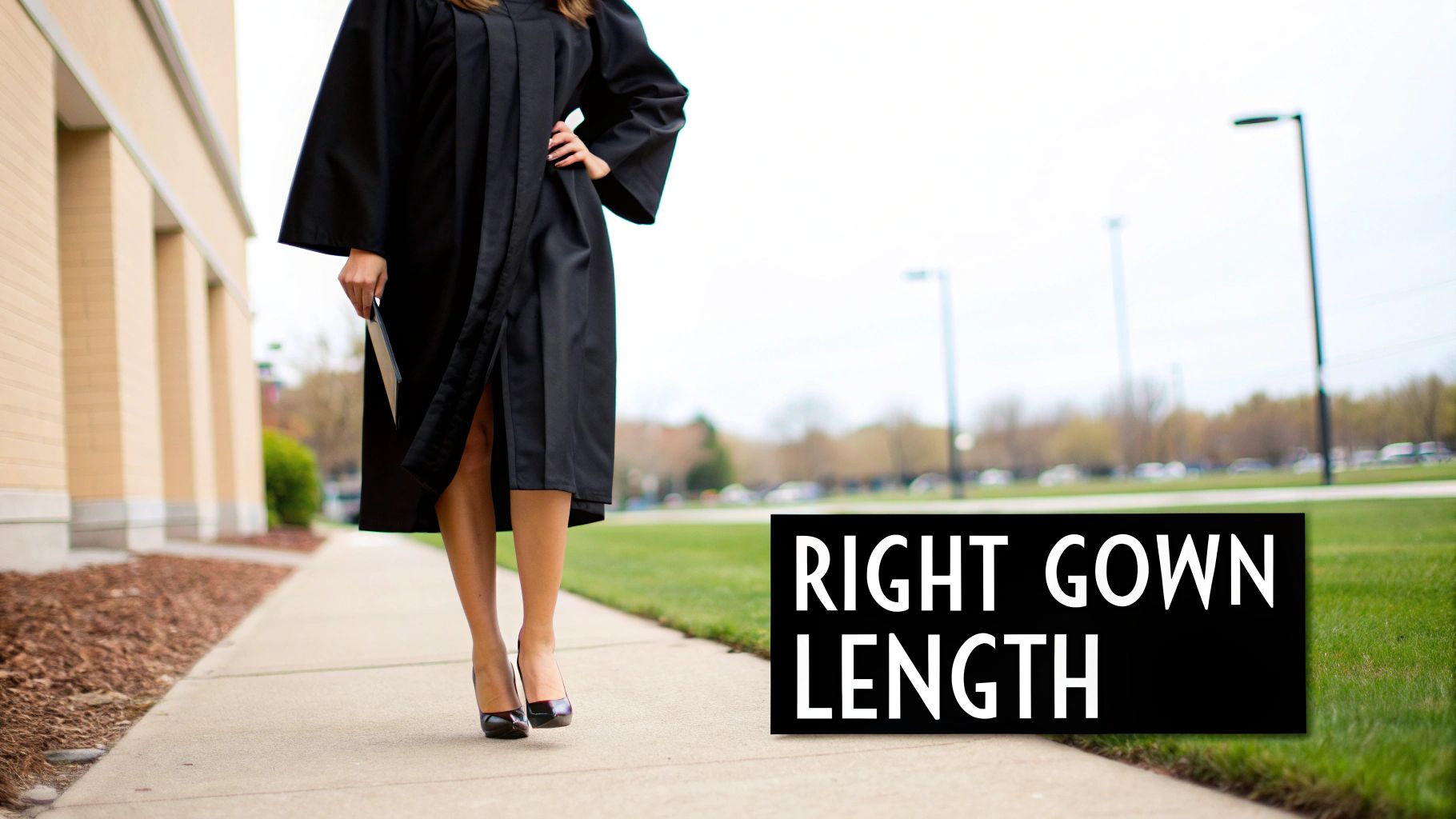
Nailing your graduation gown length is the first, and maybe most important, step to looking sharp on your big day. So, how long should a graduation gown be? The sweet spot is mid-calf, landing somewhere between your knee and your ankle. This length looks dignified, honors academic tradition, and most importantly, keeps you from tripping.
Understanding the Importance of Proper Gown Length
Getting the gown length right is about more than just looking good in photos. It's a nod to academic tradition that goes back centuries, and a properly fitted gown is key to looking confident and put-together as you walk across that stage. An ill-fitting gown can look sloppy or, even worse, become a tripping hazard at the worst possible moment.
This tradition has deep roots. We can trace the evolution of graduation gowns back at least 900 years to medieval European universities. Back then, gowns were practical—designed for warmth in drafty, unheated halls. Today's academic gowns still honor those ancient traditions, with lengths that fall below the knee or to mid-calf, depending on the degree you're earning. If you're curious, you can find more on the history of the graduation gown on trillmag.com.
Why Fit Is Crucial for Your Big Day
The perfect gown length is a careful balance of tradition and practicality. A gown that’s too long is a magnet for dirt and a serious safety risk. On the flip side, one that's too short can look awkward and cheapen the formal, distinguished look academic regalia is supposed to have.
Think of your gown as the centerpiece of your graduation outfit. It should hang gracefully over your clothes, not bunch up at your shoulders or pull tight anywhere. You're aiming for a clean, straight line from your shoulders down to your mid-calf. This not only looks best but lets you move freely—up stairs, across the stage, and through crowds.
Key Takeaway: The perfect graduation gown length strikes a balance between tradition and safety. Aiming for a mid-calf hemline ensures you look distinguished, feel comfortable, and can walk across the stage with confidence.
A Quick Guide to Gown Length by Height
To make things easy, most suppliers, including Gradshop, size gowns based on your height. It's a straightforward system that standardizes the fit and ensures the hemline hits the right spot for most people.
Here's a quick reference chart to help you find your size. Use this table as a starting point to find your fit fast.
Quick Guide to Gown Length by Height
| Height Range (ft' in") | Recommended Gown Size | Approximate Gown Length (inches) |
|---|---|---|
| 4'6" – 4'8" | 39 | 39 |
| 4'9" – 4'11" | 42 | 42 |
| 5'0" – 5'2" | 45 | 45 |
| 5'3" – 5'5" | 48 | 48 |
| 5'6" – 5'8" | 51 | 51 |
| 5'9" – 5'11" | 54 | 54 |
| 6'0" – 6'2" | 57 | 57 |
| 6'3" – 6'5" | 60 | 60 |
| 6'6" – 6'8" | 63 | 63 |
Just find your height in the first column, and you'll see the recommended gown size to look for. It’s a simple way to get a great fit without a lot of guesswork.
How to Measure for Your Gown at Home
Getting your graduation gown to fit perfectly isn't complicated, but it all hinges on one thing: an accurate height measurement. It sounds simple, I know, but a few small details can make a huge difference in how your gown looks and feels on the big day. Let's walk through how to nail this measurement at home, no guesswork required.
The key number you need is your total height, measured from the very top of your head straight down to the floor. For the best results, it’s always easier to grab a friend or family member to help you out. Just stand with your back flat against a wall, keeping your posture straight but natural.
The Right Way to Measure Your Height
Here’s a tip that gets overlooked all the time: your shoes matter. A lot. Before you measure anything, put on the exact shoes you plan to wear for graduation. A 2-inch heel can easily bump you up into a different gown size, so this isn't a step you want to skip.
With your shoes on, have your helper run a soft measuring tape from the floor all the way up to the crown of your head. This single measurement is what ensures the gown’s hemline will hit exactly where it's supposed to—right around your mid-calf for that classic, polished look.
Pro Tip: No soft measuring tape? No problem. Use a piece of string or even a phone charger cord. Hold it from the top of your head to the floor, mark or pinch the spot, and then measure that length with a regular ruler or tape measure.
Considering Your Build for a Flattering Fit
While height determines the length of your gown, your overall build is what ensures it drapes properly. Standard gowns are cut to be quite roomy, but if you have broader shoulders or a fuller build, a standard size might feel a bit tight across the top.
This is exactly why "Full Fit" or "Plus Size" options exist. These gowns give you a few extra inches of room through the chest and shoulders without adding any extra length, so you don't end up with a gown that's dragging on the floor.
- Standard Fit: Works great for most body types and gives you that traditional, straight drape.
- Full Fit (FF): Offers more room in the upper body, which prevents the fabric from pulling or feeling restrictive when you move.
Opting for a Full Fit gown if you need it means the fabric will hang smoothly instead of stretching, creating a much sharper silhouette. You’ll often see these options right on the size chart next to the standard sizes (e.g., 5'6" - 5'8" and 5'6" - 5'8" FF). For a deeper dive into the specifics of measuring for both your cap and gown, our guide offers additional helpful tips.
Taking your build into account is a small step that makes a massive difference in your comfort and confidence. After all, you want to be focused on your accomplishment, not on a gown that feels too snug when you reach for that diploma.
Decoding Gown Styles Across Academic Levels
You might think all graduation gowns are the same, but look a little closer. The differences you see are steeped in tradition, with each style telling a story about the graduate's academic journey. From high school all the way up to a doctorate, the regalia becomes more elaborate to signify a higher level of achievement.
Knowing these visual cues isn't just about appreciating the pomp and circumstance; it's about making sure you're wearing the right attire for your big day.
High School and Bachelor's Gowns
For most of us, our first encounter with academic regalia is the classic high school gown. It's designed for simplicity—usually a straightforward zippered front and a clean, unadorned look that creates a sense of unity among the graduating class. This style is very similar to the bachelor's gown you'll wear when completing an undergraduate degree.
The one thing that sets a bachelor's gown apart is its traditional pointed sleeves. This feature is the foundation for all higher-level academic gowns. Both high school and bachelor's gowns should follow the same length rule, hitting you somewhere around mid-calf. If you want a better look at this timeless style, you can check out the range of classic high school caps and gowns on Gradshop.com.
Believe it or not, academic dress has been a powerful symbol of rank for centuries. The specific styles and lengths we see today, especially in the U.S., evolved over time to visually represent academic progress. It’s a fascinating bit of history you can dive into by exploring the history of American academic dress on Wikipedia.
The infographic below really breaks down the key things to consider—your height, build, and even your shoes—to get that perfect fit.
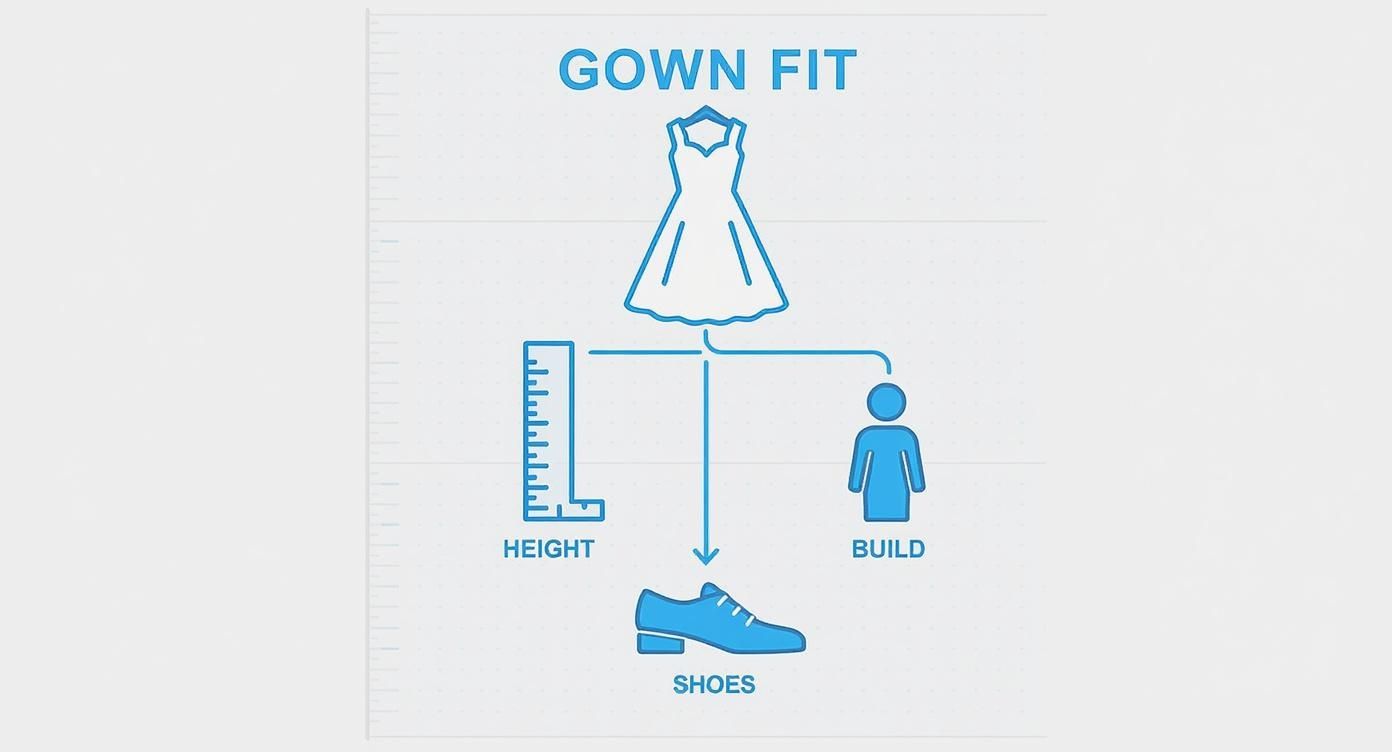
As you can see, your height is the main measurement for determining gown length, but paying attention to your build and footwear is what ensures the gown hangs correctly and feels comfortable.
Master's and Doctoral Gowns
Once you move into postgraduate studies, the regalia gets a noticeable upgrade. You can spot a master's gown by its unique sleeves. Instead of the simple pointed sleeves of a bachelor's robe, a master's gown features oblong sleeves that are closed at the wrist but have a slit for your arm to go through. It’s a subtle but immediate signal of a higher academic accomplishment.
The doctoral gown, however, is the most distinguished of them all. It's set apart by two unmistakable features:
- Plush Velvet Panels: Look for the three-inch-wide velvet panels, called "facings," running down the front of the gown.
- Velvet Chevrons: Each of the full, bell-shaped sleeves is adorned with three velvet bars, or "chevrons."
While this velvet trim is often black, it can also be a specific color that represents the graduate’s field of study. The sleeves themselves are much fuller than those on other gowns, adding to the dignified, commanding presence of a doctoral graduate. You can get a closer look by checking out our guide on differentiating graduation robe types.
When you’re ready to find the perfect regalia for your advanced degree, Gradshop has a complete collection of high-quality master's and doctoral gowns to choose from.
What to Wear Under Your Graduation Gown
Figuring out what to wear under your graduation gown feels like the final piece of the puzzle. You've already spent time getting the gown length just right, so the last thing you want is an outfit underneath that throws off the whole look. The name of the game is creating a polished, seamless style that lets you be the star of the show.
The golden rule here is pretty simple: your gown should be the longest part of your outfit. A dress hem or trouser cuffs peeking out from the bottom can look a bit untidy, especially in photos. I always suggest aiming for a hemline that sits comfortably above your gown’s mid-calf finish to keep everything looking sharp.
You also have to think about the gown's material. Most are made from lighter fabrics, and if you've got a white or light-colored gown, what you wear underneath can definitely show through. Bold patterns or super bright colors might be visible under bright sunlight or stage lighting. Playing it safe with solid, neutral colors is a move you won't regret.
Choosing the Right Footwear
Your shoe choice for graduation day is more strategic than you might think. You’ll be on your feet for a long time—standing, walking, and navigating stairs—so comfort is absolutely essential. And if your ceremony is outdoors on a grassy field? Stilettos are a recipe for disaster. You’ll just sink right in.
Instead, let's talk about options that are both stylish and practical:
- Block Heels: They give you a bit of height and a formal look but are sturdy enough for grass or uneven surfaces.
- Wedges: A classic for a reason. Wedges offer fantastic stability and are genuinely comfortable for hours of wear.
- Polished Dress Shoes or Flats: If comfort is your absolute top priority, you can't go wrong with a smart pair of dress shoes or elegant flats.
Key Insight: Your footwear should be comfortable enough to stand in for hours and stable enough to walk confidently across the stage. Test them out beforehand to ensure they won't cause any last-minute issues.
If you're looking for more ideas, we've put together a full guide with stylish and practical options for the best shoes to wear with a graduation gown.
Dressing for the Weather
Don’t get caught off guard—check the weather forecast a few days before the ceremony. An outdoor graduation in the summer heat means you’ll want light, breathable fabrics like cotton or linen under that heavy gown.
On the other hand, a cool spring morning or a heavily air-conditioned auditorium might have you wishing for an extra layer. The goal is to stay comfortable without adding a lot of bulk under the robe. A simple, well-fitting outfit ensures you’ll look and feel your best, letting you soak in the moment you've earned without any wardrobe distractions.
Avoiding Common Gown Fit Problems
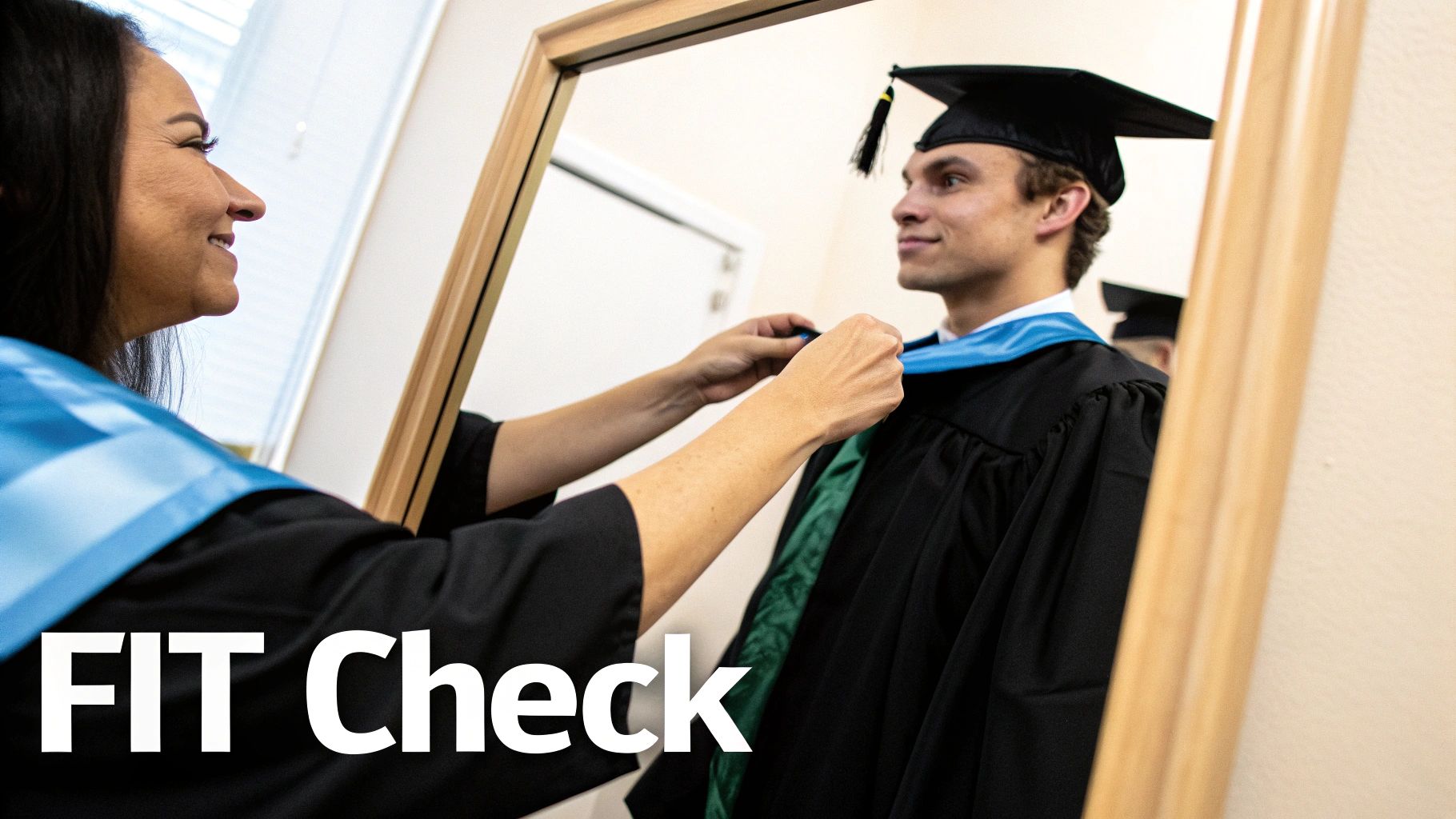
Let's make sure you sidestep the most common gown fit problems. Nothing ruins the moment like a gown that feels awkward or looks sloppy, and getting the fit right is the key to walking across that stage with complete confidence.
The biggest mistake I see students make is waiting until the morning of the ceremony to try everything on. Don't do it! The second your gown arrives, pull it out of the package and put it on. This simple step gives you plenty of time to catch any issues and find a fix, saving you a world of last-minute stress.
Once you have it on, don't just stand there. Move around. Sit down, stand up, raise your arms, and take a few steps. This little "test drive" will show you how the gown actually behaves in motion, revealing any hidden fit problems you might otherwise miss.
Performing a Quick Fit Check
With the gown on, run through a quick mental checklist. This goes way beyond just the length—you want to feel comfortable and unrestricted.
Start from the top and work your way down. Here are the most common trouble spots to look for:
- Shoulder Seams: The seams should land squarely on the edge of your shoulders. If they’re drooping down your arms, the gown's too big.
- Chest and Back: Can you zip it up easily? It shouldn't pull or feel restrictive when you move your arms. You want a comfortable, not constricted, fit.
- Sleeve Length: For bachelor's and doctoral gowns, the sleeves should hit just past your wrist. A little bit of your shirt cuff peeking out is the classic look.
- Neckline: It should lie flat and comfortably against your collarbone. You don't want it gaping open or feeling like it's choking you.
If you spot a major problem—like the gown is clearly a few sizes too big or small—get in touch with your supplier immediately. Most are great about arranging a quick exchange if you give them enough notice.
Key Takeaway: A perfect fit is about more than just the hemline. Check the shoulders, sleeves, and neckline as soon as your gown arrives. Giving yourself this buffer is the best way to ensure you have time to sort out any issues before the big day.
Making Minor Adjustments and Final Preparations
What if the fit is just a tiny bit off? You probably don't need a tailor. For a hem that’s an inch too long or a neckline that gapes slightly, a few safety pins placed discreetly on the inside can work wonders.
Finally, think about the gown's condition. It's almost guaranteed to arrive with creases from being folded and shipped. Wrinkles can make even a perfectly sized gown look messy and ill-fitting. A quick steam is the best solution (never, ever use a direct iron on these fabrics!). Taking a moment to learn how to prevent wrinkled clothes can also help. This final touch will ensure the fabric drapes correctly, giving you that sharp, polished look for all your photos.
Answering Your Last-Minute Gown Questions
Even with the best planning, a few nagging questions always seem to surface as graduation day gets closer. Let's walk through some of the most common queries about gown length and regalia rules so you can approach your ceremony with total confidence.
Can I Get My Graduation Gown Altered?
It's a logical question—we tailor other formal wear, so why not this? But in my experience, it's best to avoid altering your graduation gown. They're designed with a very specific, traditional cut, and the polyester fabric most are made from doesn't take well to tailoring. It can easily get damaged.
The good news is that the sizing charts are usually spot-on. If you measure your height correctly, you'll get a great fit. If it's just a tad too long, a few safety pins hidden on the inside hem are a much safer bet for a temporary fix than permanent alterations.
Expert Tip: Steaming is non-negotiable. A wrinkly gown never looks right, no matter how well it fits. A quick steam the day before will relax any creases from the packaging and let the fabric drape properly. Just be sure to never put a hot iron directly on the material.
How Long Are the Different Graduation Hoods?
The hood is one of the most significant parts of academic regalia, and its length is anything but random. It directly corresponds to the degree you've earned, symbolizing your level of academic achievement.
Here’s a quick breakdown:
- Bachelor's Hood: The shortest, coming in at 3 feet long.
- Master's Hood: A bit longer, measuring 3.5 feet.
- Doctoral Hood: The most distinguished at 4 feet long, signifying the highest academic accomplishment.
Beyond length, each hood is lined with your university's official colors and trimmed with velvet in a color that represents your specific field of study.
What's the Difference Between a Cap and a Tam?
You've probably seen both but maybe never thought about the distinction. The classic square mortarboard cap is what most people picture—it's the standard for high school diplomas as well as bachelor's and master's degrees.
The tam, on the other hand, is reserved exclusively for those who have earned a doctorate. This soft, velvet cap has multiple sides (often six or eight) and is typically paired with a gold tassel. It's the final piece of the academic puzzle, visually setting apart doctoral graduates.
At Gradshop, we're here to make sure you have everything you need to celebrate your milestone perfectly. Take a look at our complete collection of master's and doctoral gowns and all the accessories to go with them.