

When you're getting ready for graduation, nailing the gown length is key. The sweet spot is somewhere between your knee and your ankle. This isn't just an arbitrary rule; it's a long-standing tradition that ensures every graduate looks polished and uniform on their big day. It’s the kind of detail that makes the whole ceremony feel dignified and respectful.
Why Your Gown Length Is More Than Just a Rule

It’s easy to dismiss a graduation gown as just a simple robe, but getting the length right is the first step toward a smooth, memorable ceremony. A gown that fits correctly honors the weight of your academic achievement and helps create a cohesive atmosphere for the entire event.
Think about it this way: those graduation photos are forever. A well-fitted gown creates a timeless silhouette that will make you look sharp and proud years from now. But there's a more immediate reason to care about the fit—safety. A gown that's too long is a serious tripping hazard, especially when you're navigating stairs or walking across the stage to finally grab that diploma.
The Tradition Behind the Fit
Academic regalia is steeped in history, with specific guidelines designed to visually represent scholastic accomplishment. These traditions were standardized in the United States in the early 20th century, with precise measurements linked to each academic level.
For instance, the length of the hood worn with the gown signifies the degree earned. Bachelor's hoods are 3 feet long, master's hoods are 3.5 feet, and doctoral hoods are 4 feet long. Every detail has a purpose, rooted in the historic Intercollegiate Code of Academic Costume that still influences today's regalia.
Key Takeaway: The mid-calf gown length isn't just a modern preference. It's an evolution of centuries-old academic traditions designed to convey respect, unity, and accomplishment.
Practicality for the Modern Graduate
Tradition aside, the correct gown length is just plain practical. It gives you room to move comfortably and creates a clean, uniform look for the entire graduating class, no matter how tall or short someone is or what shoes they're wearing.
This standardization makes things much simpler for schools and helps every student feel like they're part of a unified group.
Ultimately, when your gown fits right, you can stop worrying about your wardrobe and focus on what truly matters: celebrating all your hard work. Understanding the impact of length and style is crucial, whether for a graduation gown or in general fashion, as highlighted by an ultimate length guide for perfect styles. By following these simple guidelines, you not only contribute to the ceremony’s distinguished feel but also ensure you’re comfortable and safe all day long.
How to Measure for Your Gown Accurately
Getting the right fit for your graduation gown is the single most important step, and luckily, it's simpler than you might think. Unlike sizing a suit or a dress, academic regalia is almost all about one number: your height.
To get the most accurate measurement, stand up straight with your back against a wall. It's best to have a friend or family member help with this part. Have them use a measuring tape to get the distance from the very top of your head straight down to the floor. Don't just guess or pull the number off your driver's license—we've seen how a couple of inches can throw off the entire look of the gown.
The Shoe Factor
Here’s a classic mistake we see all the time: measuring your height while barefoot. The shoes you wear on graduation day absolutely change how the gown will hang, so it's critical to measure yourself while wearing them.
Think about it—a 2-inch heel literally adds two inches to your height measurement. That small difference can easily bump you up into the next size bracket. To make sure your hemline isn't awkwardly short or so long you trip on stage, just follow these simple steps:
- Pick Your Shoes First: Before you even think about measuring, decide which shoes you'll be wearing for the ceremony.
- Measure With Them On: Put on those shoes and then take your head-to-floor measurement.
- Be Consistent: If you have a last-minute change of heart about your footwear, it's a good idea to re-measure just to be safe.
Taking this one extra step prevents the most common sizing headaches and ensures your gown's hem falls exactly where it should: somewhere gracefully between your knee and ankle.
Why Other Measurements Sometimes Matter
While your height is the main event for determining length, you might see fields for your weight or chest size. This information has nothing to do with the length—it’s all about the gown’s fullness. It helps ensure the fabric drapes correctly and closes comfortably without being too snug or looking like a tent.
For example, someone with a broader build might need a "Full Fit" size. This option provides more room across the chest and shoulders while keeping the length appropriate for their height. Giving this extra info guarantees you’ll have plenty of room to move, walk, and reach for that well-earned diploma. To see how all these pieces fit together, take a look at our complete graduation cap and gown size chart.
This collection of high school caps and gowns is a great example of what a proper fit looks like. You can see how the gowns are cut to suit different heights while creating that polished, uniform appearance every school wants.
Pro Tip: If you find yourself stuck between two sizes, it's almost always better to go with the slightly longer one. You can manage a gown that’s a touch too long, but there's no fixing one that's too short.
By taking just a few minutes to measure accurately—with your graduation day shoes on—you're setting yourself up for a totally stress-free experience. You can order with confidence, knowing your regalia will show up ready to wear, so you can focus on what really matters: celebrating your big achievement.
Decoding Gown Styles For Each Academic Level
While the perfect graduation gown length is pretty consistent across the board, the gowns themselves are anything but one-size-fits-all. Each step in your academic career is marked by its own distinct regalia, with specific design cues that signal your big accomplishment. Knowing what to look for is key to making sure you’ve got the right gear for your milestone.
The journey starts with the classic high school gown. It's all about simplicity—a clean front, straightforward sleeves, and a dignified look that creates a sense of unity for the entire graduating class. It's a timeless symbol of finishing your secondary education. You can check out a whole range of traditional and updated looks in our collection of high school caps and gowns.
Once you hit higher education, the bachelor's gown introduces its first real distinguishing feature: pointed sleeves. That's the main visual difference setting it apart from a high school or master's gown. The overall design is still elegant and understated, perfect for an undergraduate ceremony.
This visual is a great reminder of the essentials for getting that perfect fit, no matter which style of gown you're wearing.
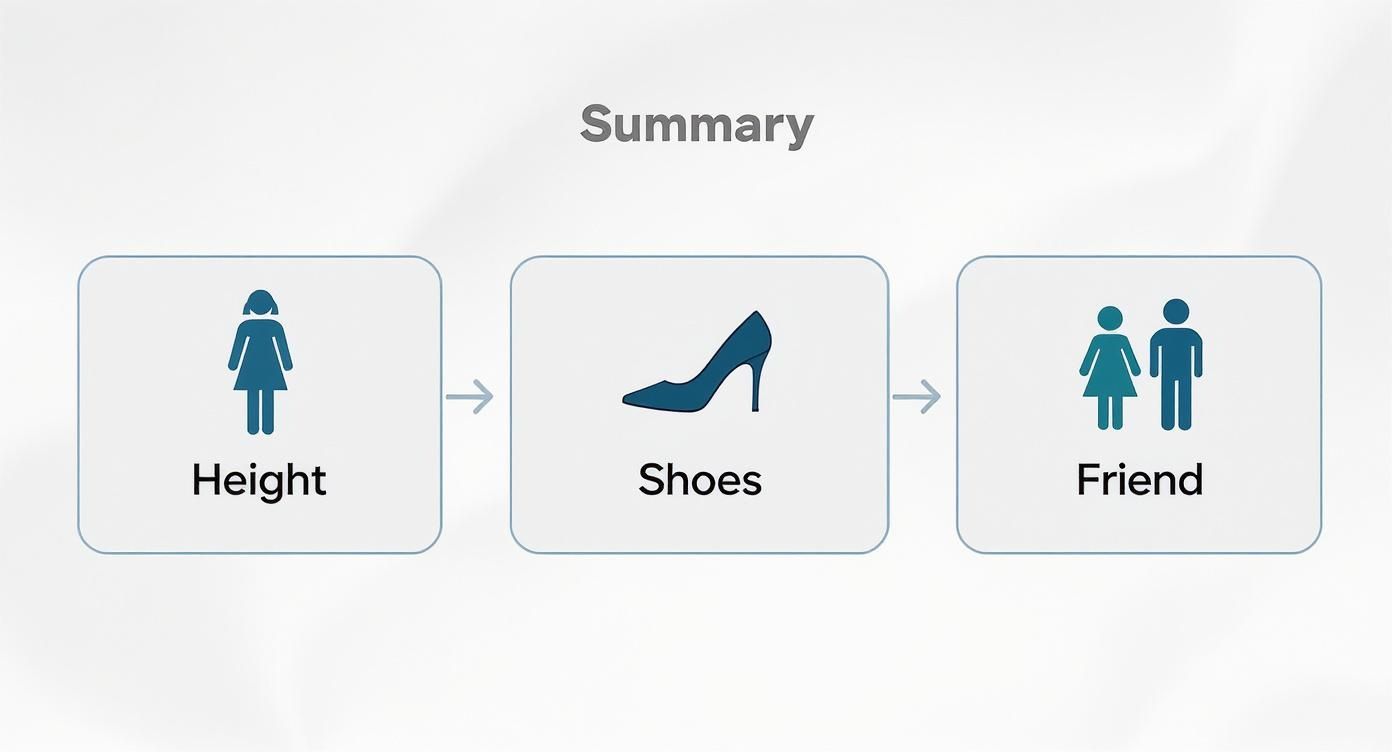
As the infographic shows, your total height (shoes included!) and a friend to help you measure are the two must-haves for getting it right.
Distinguishing Master's And Doctoral Regalia
When it comes to advanced degrees, the regalia gets noticeably more elaborate. It’s a direct reflection of the higher level of academic work you’ve put in. The master's gown, for instance, is immediately recognizable by its unique sleeves.
Instead of the pointed design you see on a bachelor’s gown, the master’s gown features oblong sleeves that are sealed at the end. There’s a distinct slit near the wrist where your arm passes through, creating a formal, draped effect. This is the single most definitive feature of master's regalia.
Finally, you have the doctoral gown, which is the most ornate of all academic robes. It’s designed to signify the very peak of scholarly achievement and comes with several distinguished features you won't see anywhere else:
- Full, Bell-Shaped Sleeves: Unlike the pointed or oblong sleeves on other gowns, doctoral sleeves are wide, flowing, and dramatic.
- Velvet Panels: You'll see rich velvet panels, called "facings," running all the way down the front of the gown.
- Velvet Chevrons: Three velvet bars, or chevrons, adorn each sleeve, which is the universal symbol of a doctoral degree.
The color of the velvet on a doctoral gown isn't just for show; it often signifies the specific field of study. For example, you'll see dark blue for a Ph.D. (Doctor of Philosophy), light blue for Education, or green for Medicine.
To make these differences crystal clear, here’s a quick side-by-side comparison.
Comparing Gown Features Across Degrees
This table breaks down the key characteristics that set each gown apart, from the sleeves to the overall look.
| Feature | Bachelor's Gown | Master's Gown | Doctoral Gown |
|---|---|---|---|
| Sleeve Style | Pointed sleeves, simple and traditional. | Oblong sleeves, closed at the end with a slit for the arm. | Full, bell-shaped sleeves with three velvet chevrons. |
| Front Design | Typically plain, with a simple zipper closure. | Plain front, similar to a bachelor's gown. | Velvet panels (facings) running down the front of the gown. |
| Overall Appearance | Clean, understated, and formal. | More distinguished than a bachelor's gown due to the unique sleeves. | The most ornate and decorative, signifying the highest academic achievement. |
As you can see, each academic level has a robe with its own story to tell.
These visual cues, from sleeve shape to velvet trim, are all part of a rich academic tradition. Recognizing them is crucial to making sure you’re wearing the proper attire. For an even deeper dive, you can learn more about how to differentiate between different types of graduation robes in our complete guide.
Whether you're ordering your first high school gown or selecting distinguished doctoral regalia, understanding these styles helps you celebrate your achievement with confidence. It’s about more than just getting the graduation gown length right; it’s about honoring the specific milestone you’ve worked so hard to reach.
Choosing The Right Shoes And Outfit For Your Gown
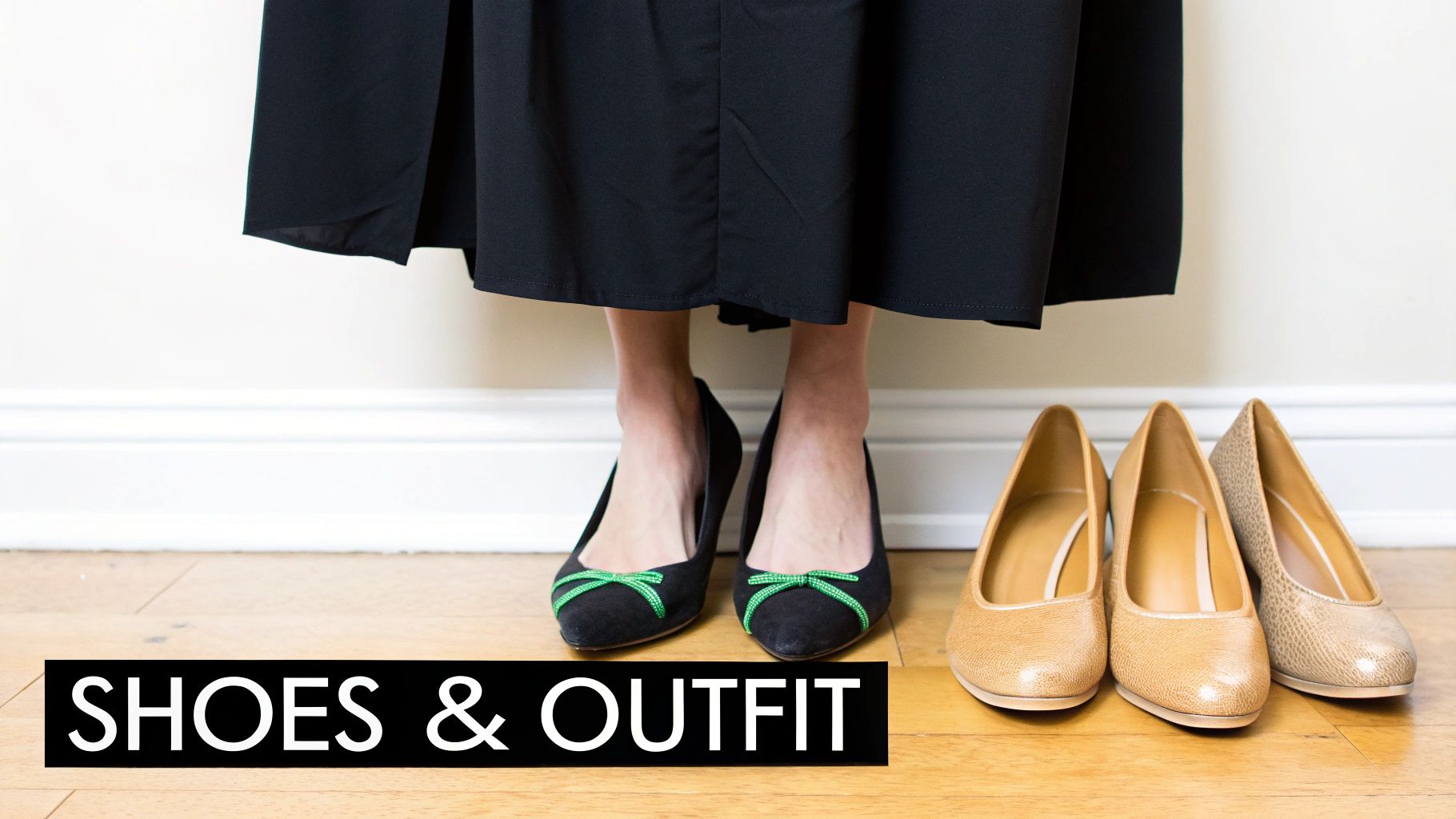
It’s easy to focus so much on the gown that you forget about what goes underneath, but your outfit choice is a bigger deal than you might think. What you wear affects your comfort on a very long day and how your gown hangs for photos. A little planning here goes a long way toward a polished, confident look.
The single most important factor that can throw off your gown's length? Your shoes. A pair of 3-inch heels will lift the hem 3 inches higher than a pair of flats would. This is exactly why we always tell people to measure their height with the shoes they plan to wear on the big day. If you don't, you might end up with a gown that looks awkwardly short.
Selecting Smart And Stylish Footwear
Trust me on this one: comfort is everything on graduation day. You'll be standing around for what feels like forever, walking long distances, and maybe even navigating a grassy field. Sky-high stilettos might look amazing, but they’re notorious for sinking into soft ground, which is the last thing you want to worry about when your name is called.
Here are some much better, yet still stylish, alternatives:
- Wedges or Block Heels: These are a graduate's best friend. You get the height and a dressy look without the dreaded lawn-aerating effect of a stiletto. Plus, they offer way more stability for that walk across the stage.
- Dressy Flats or Loafers: If you’re all about comfort, you can’t go wrong here. A pair of chic, elegant flats will let you glide through the day without a single ache.
- Low Heels: A modest 1- or 2-inch heel is the perfect compromise. It adds a bit of formal flair but is still practical enough to wear for hours on end.
Whatever you choose, make sure they are well broken-in before the ceremony. For an even deeper dive, check out our complete guide on what shoes to wear with a graduation gown.
Coordinating Your Outfit Underneath
Think of the clothes under your gown as the foundation. The idea is to pick something that complements your regalia, not competes with it. Pay close attention to necklines and hemlines to avoid any strange peeking-through situations. A crisp collared shirt, for example, looks fantastic showing just a bit at the gown's V-neck.
Many graduates opt for a classic white graduation dress that won’t be visible under the gown. For bottoms, you can't go wrong with dress pants or a skirt, as long as the hem is shorter than your gown's. This creates a clean, uninterrupted line, keeping all the attention on your academic attire.
Key Insight: The best outfit is one you completely forget you're wearing. Stick to simple, comfortable pieces that let your gown, cap, and any stoles or cords be the stars of the show.
Sidestepping Common Gown Mishaps
Even with perfect measurements, little fit issues can pop up. Maybe your gown arrives with stubborn wrinkles, feels a bit snug in the shoulders, or hangs just a hair longer than you expected. Don't sweat it. Most of these common problems are a breeze to fix, ensuring you look polished when you take that walk across the stage.
The most common culprit? A gown that’s too long and becomes a potential tripping hazard. This almost always happens when someone measures in flats but plans to wear heels for the ceremony. A couple of inches of heel height makes a massive difference in the ideal graduation gown length.
On the other hand, a gown that’s too short can look a little awkward. There’s no easy way to add fabric, which is exactly why measuring with your actual graduation shoes is the single most important step. Get that right, and you've dodged the most frequent fit mistake.
Quick Fixes for a Picture-Perfect Fit
The moment your gown arrives, try it on. If you spot one of these common issues, here’s how to get your regalia looking sharp without any last-minute panic.
- If your gown is too long: Step away from the scissors! The best and safest fix is a little fabric tape or a few well-placed safety pins. Just fold the hem underneath to the right length and secure it from the inside. This creates a temporary hem that won’t damage the material—a must if you're renting.
- If your gown feels too baggy: Remember, academic regalia is meant to be full and flowing, not form-fitting. But if it feels more like a tent, don't forget the power of steam. The heat and moisture relax the fabric, allowing it to drape properly against your body, which often solves the problem entirely.
- If your gown is a bit tight: If it feels snug across the shoulders or chest, double-check you ordered the right size. If it's just a little tight, think about what you’re wearing under it. A bulky sweater can be the difference-maker, so swapping to a thinner shirt might be all you need.
The Transformative Power of Steam
Seriously, don't skip this step. Gowns are shipped folded, and they will come out of the package with some serious creases. While hanging it in a steamy bathroom after a hot shower can help, a handheld steamer is your best bet for a truly smooth, professional finish.
Insider Tip: Steam your gown the day it arrives, then hang it up immediately. Giving the fabric a few days to hang and settle ensures it will drape perfectly on graduation day, free of wrinkles.
Taking care of these small details ahead of time saves you from any day-of stress. When you’ve sorted out the fit and prepped your gown, you can walk with total confidence, knowing your regalia looks as great as your accomplishment feels.
Your Top Graduation Gown Questions, Answered
It's completely normal to have a few last-minute questions, even after all the planning. We get it. From "Is this supposed to fit like this?" to "Can I even alter this thing?", getting some clear answers can really calm those pre-ceremony jitters.
Let's tackle some of the most common worries we hear so you can walk across that stage with total confidence.
Should My Gown Touch the Floor?
This is probably the number one question we get, and the answer is a firm no. Your gown should absolutely not touch the floor.
Ideally, the hem should land somewhere around your mid-calf—that sweet spot between your knee and your ankle. A gown that's dragging on the ground isn't just a fashion faux pas; it's a genuine tripping hazard, especially when you’re walking up and down stairs. You want people to see a bit of your shoes when you walk.
How to Know if Your Gown Really Fits
Once your regalia arrives, don't just hang it in the closet. The first thing you should do is try it on with the exact shoes you plan to wear on graduation day.
Check two key areas:
- Length: Does the hem hit that mid-calf mark?
- Sleeves: Do they end just before your wrist? You should be able to move your arms freely.
The gown should also zip or close easily without pulling or feeling tight across your shoulders and back. Try sitting down, standing up, and walking a few steps. If it feels like you're in a straitjacket, you might need to double-check the sizing chart.
Expert Tip: Academic gowns are sized almost exclusively by height. While your build might mean you need a 'Full Fit' size for more room, your height is the critical measurement that dictates the length.
What if the Fit Isn't Perfect? Alterations & Sizing
So, you tried it on and something's off. Now what? Can you just take it to a tailor?
Well, probably not. We almost never recommend permanent alterations, especially if you're renting your regalia. If the issue is that your gown is a little too long, your best bet is fabric tape. It's a fantastic, non-damaging way to create a temporary hem that no one will ever notice.
But if the gown is too short? Unfortunately, there's no easy fix for that, which is why getting that initial measurement right is so important.
A lot of people also wonder how their weight factors in. It’s a common point of confusion, but your weight or build doesn't actually affect the length of the gown—that's all height. Instead, it influences the gown's fullness. Most sizing charts will have a plus-size or "Full Fit" option. This just means the gown is made with more fabric for extra room across the chest and shoulders, ensuring it drapes properly and feels comfortable instead of restrictive.
At Gradshop, we've got you covered for every academic milestone. Take a look at our complete collections of high school caps & gowns, our distinguished master's and doctoral gowns, and a huge variety of custom graduation stoles to mark the occasion perfectly.